
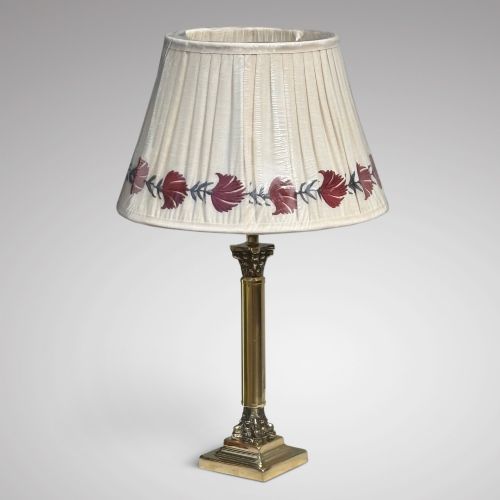


Corinthian Capital Lamp
A corinthian capital lamp brings classical architectural dignity indoors, translating ancient temple columns into stately lighting for a room.
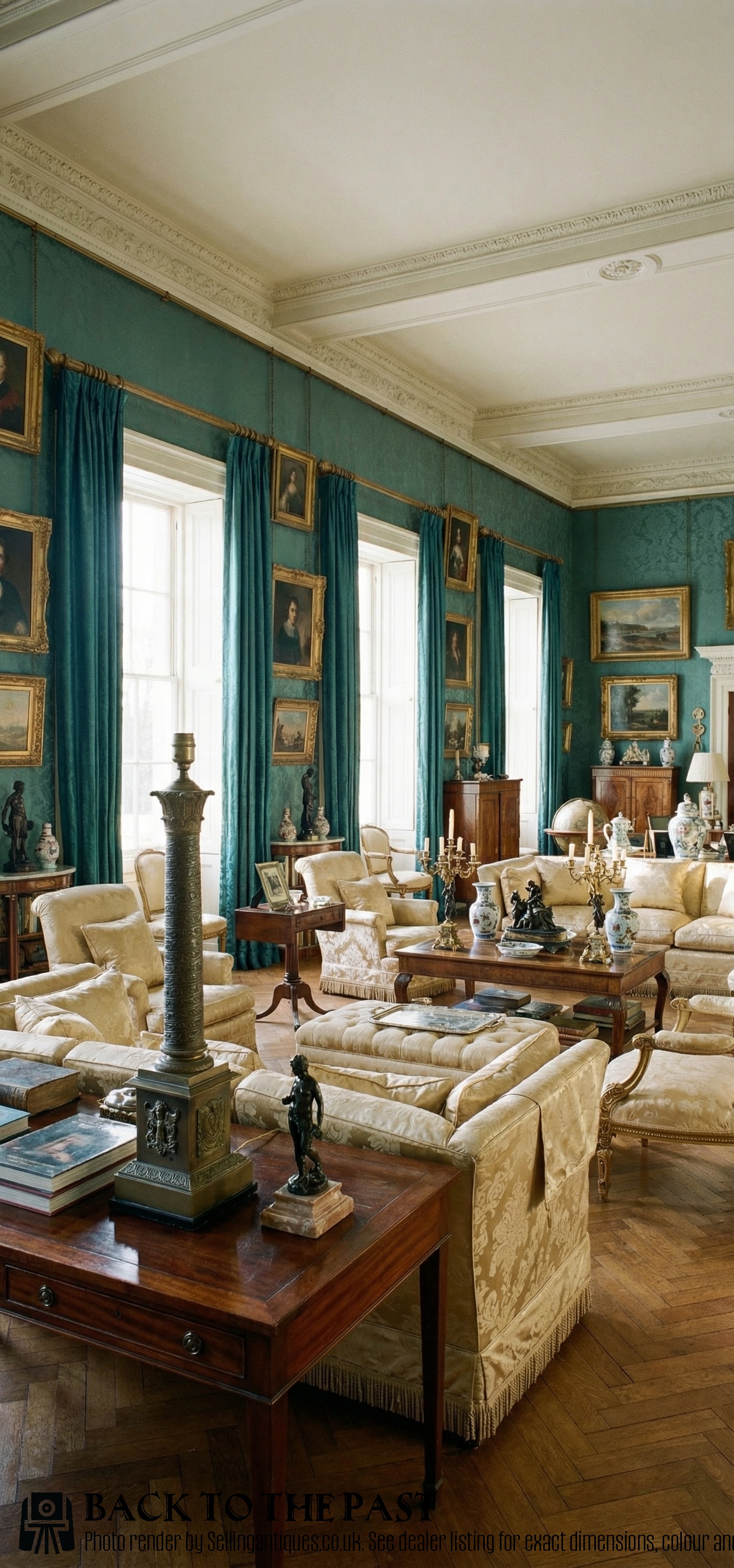
Corinthian Capital Lamp
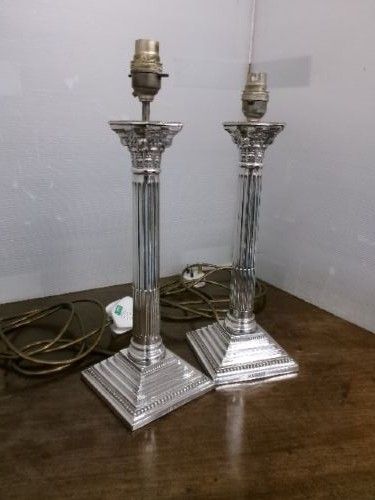
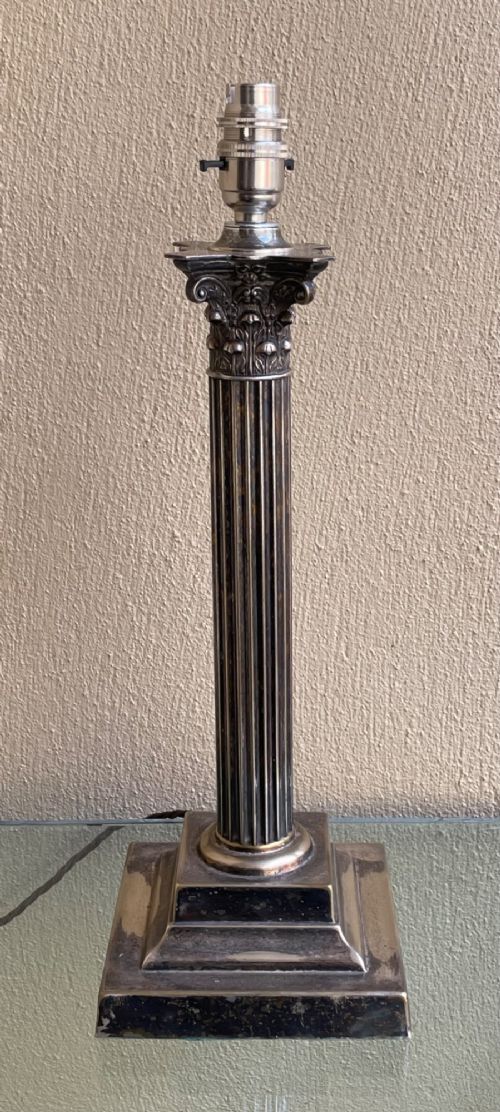
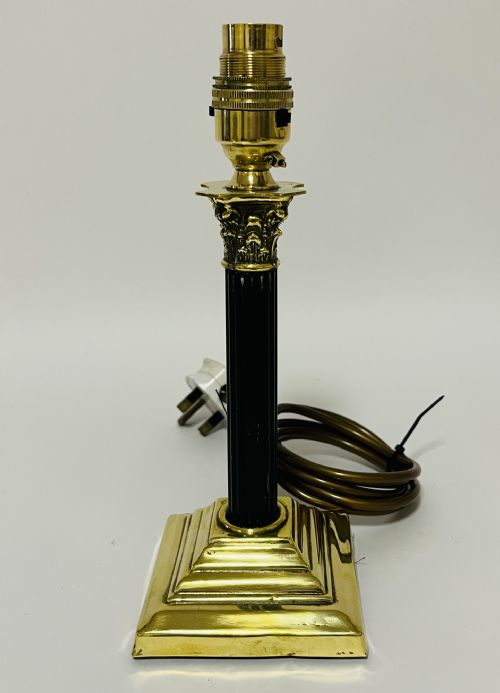
A corinthian capital lamp takes the form of a classical column topped with ornate acanthus leaves, serving as a striking focal point on a table or floor. When browsing these options, you encounter table lamps, lamp bases, and taller standard lamps adapted from architectural forms.
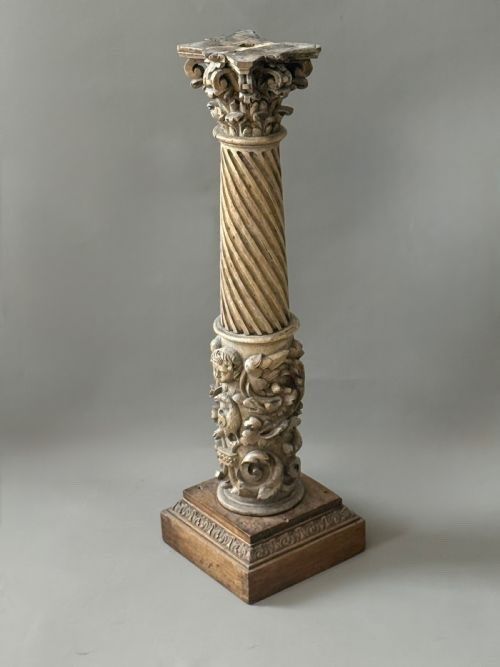
The selections span various periods including the Victorian era, Edwardian period, and the early twentieth century, alongside earlier seventeenth-century carved wooden pillars repurposed as bases. Neoclassical and Victorian Classical Revival styles dominate the pieces available on this page.
Formations range from modest table heights to monumental carved wooden pillars and standard lamps. Many examples appear in pairs, providing symmetry for mantelpieces or sideboards.
How they were made
Makers utilised cast brass, silver plate, and electroplated metals to construct the columns, often combining them with heavy metal bases for stability. Cut glass, opaline glass, and onyx feature prominently in reservoirs and shafts, introducing varied textures beneath the metal capitals.
Woodcarving and gesso techniques appear in earlier Continental Baroque examples, where timber takes the shape of elaborate architectural pillars. Metal components frequently demonstrate detailed casting for the intricate acanthus leaf patterns characteristic of the capital.
Some tall columns hide nineteenth-century oil mechanics right under their leafy crowns.
What varies in quality
The definition and crispness of the casting in the acanthus leaves separate standard work from superior examples. Sharply rendered metalwork indicates careful tooling and higher-grade materials.
The integration of secondary materials such as cut glass reservoirs, onyx shafts, or patinated brass surfaces alters the visual weight and sophistication of an individual piece. Proportion and scale also dictate distinction, particularly in taller standard lamps and monumental carved wooden pillars.
The Corinthian Capital Lamp Glossary
- Capital
- The topmost member of a column, carved here with the characteristic acanthus leaves of the Corinthian order. This architectural detail defines the entire aesthetic of the lighting.
- Reeded column
- A shaft decorated with parallel, convex semicircular mouldings running vertically up the length. This technique mimics classical stonework in metal or glass.
- Electroplated
- A metal object coated with a thin layer of silver using an electrical current. This process provided the sheen of solid silver at a lower cost during the nineteenth and twentieth centuries.
- Onyx
- A banded variety of chalcedony stone utilised for smooth decorative column shafts. Its natural striations catch light and introduce varied colour tones.
- Reservoir
- The container originally designed to hold oil before a piece was converted to electricity. Cut glass and opaline glass reservoirs often sit just beneath the metal capital.
Corinthian Capital Lamp: Frequently Asked Questions
Are these lamps converted from oil lamps?
Many examples began life as oil lamps before undergoing conversion to electricity in later decades.
Cut glass reservoirs and burner fittings often remain visible beneath the capital.
Do these lamps come in pairs?
Several listings comprise matched pairs, particularly among silver plated and brass table lamps.
Single examples also appear frequently across various periods.
What metals are typically used?
Construction relies heavily on brass, silver plate, and electroplated metals.
Patinated finishes and ormolu mounts occasionally appear on nineteenth-century examples.
How do I identify the period?
Victorian and Edwardian pieces frequently feature cast brass or silver-plated reeded columns with distinct neoclassical proportions.
Carved wooden pillars and seventeenth-century elements offer heavier, more rustic architectural forms.