





Nineteenth Century Porcelain Sculpture
Nineteenth century porcelain sculpture brings expressive human and allegorical forms into the room, created by major European and Japanese kilns during an era of extraordinary technical ambition.
Nineteenth Century Porcelain Sculpture
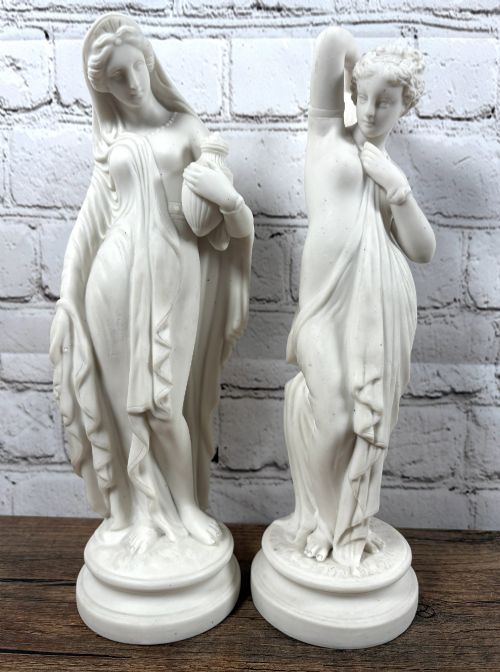
A nineteenth century porcelain sculpture captures the period's fascination with classical allegory, portraiture, and narrative figures, ranging from classical maidens and historical busts to orientalist studies. Collectors seeking these works will encounter diverse forms such as parian figures, glazed statuettes, and large centrepiece bowls across this selection.
The objects represented here span several distinct aesthetics of the era, including Victorian naturalism, Neoclassical revival, Art Nouveau curves, and Meiji period Japanese artistry. These pieces functioned primarily as sophisticated indoor ornaments, reflecting contemporary tastes for both classical learning and exoticism.
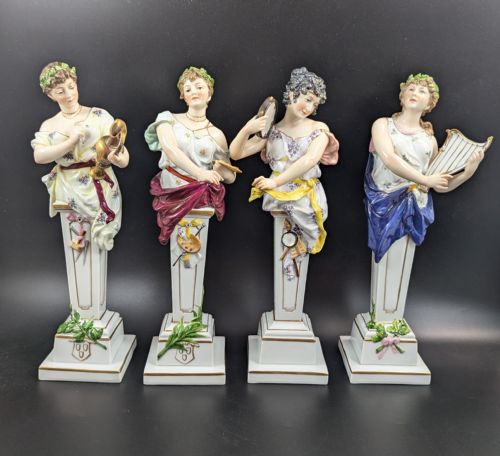
The most frequent incarnations on this page are cabinet figurines and parian ware busts depicting mythological subjects, historical figures, or traditional characters. They demonstrate the era's widespread mastery over ceramic bodies, whether finished in glossy enamel and gilt or left as unglazed biscuit.
How they were made
Makers utilised specialised ceramic compositions, most notably parian porcelain or bisque ceramic, which imitated the smooth texture and matte finish of carved marble without requiring post-firing glaze. This unglazed body allowed modellers to achieve remarkable subtlety in facial expressions and drapery folds.
Where colour and brilliance were desired, artisans applied polychrome enamel and gilt or gold leaf over the fired porcelain body, often returning the piece to the kiln for additional fixing. Glaze was also used selectively to highlight specific surfaces, contrasting with matte skin tones or textured textiles.
Nineteenth Century Porcelain Sculpture Retail Price Guide 2026
Typical asking prices for nineteenth century porcelain sculpture among the pieces listed under this phrase on Sellingantiques today, from the lower quarter to the upper quarter. They describe what is for sale here now, not the wider market.
Materials recorded across the selection include parian porcelain, bisque porcelain, enamel, and gold leaf, reflecting diverse nineteenth-century manufacturing techniques.
What varies in quality
The distinction between ordinary and exceptional work lies in the crispness of the modelling and the sensitivity of the hand-finishing, where master modellers ensured that fingers, hair, and drapery retained their sharpness after shrinkage in the kiln. Lesser pieces often display blurred details and thick, uniform applications of glaze that obscure the underlying form.
In painted and gilt examples, the precision of the brushwork and the purity of the gilding dictate the overall standard of the piece, separating factory output intended for mass markets from exhibition-quality sculpture. The weight and density of the ceramic body itself also signal the ambition of the original production.
Royal Worcester·Achille Mollica·Ernst Whaliss·Triebner Ens And Co
The Nineteenth Century Porcelain Sculpture Glossary
- Parian porcelain
- A fine-grained, unglazed porcelain developed in the nineteenth century to imitate carved marble. It fires to a warm, off-white hue with a slightly granular texture.
- Bisque porcelain
- Unglazed ceramic fired once to create a matte, porous finish similar to biscuit ceramic. It was widely utilised for portrait busts and classical figures.
- Gilt
- A thin layer of gold applied to the surface of porcelain or metal for decorative effect. It is often combined with rich enamel colours in Victorian designs.
- Enamel
- A decorative glass-like substance fused to the surface of porcelain during firing. It provides the vibrant polychrome decoration seen on many nineteenth-century figures.
- Centrepiece bowl
- A large, decorative vessel designed for the middle of a dining table or sideboard, frequently supported by sculptural figures or cherubs.
Nineteenth Century Porcelain Sculpture: Frequently Asked Questions
What is parian porcelain?
Parian porcelain is a dense, unglazed ceramic body created by British potteries in the nineteenth century to imitate carved marble. It requires careful firing and displays a smooth, matte finish that highlights sculptural detail.
Because it mimics stone so effectively, makers used it extensively for portrait busts and classical figures. It does not possess the glossy sheen of traditional glazed porcelain.
Are these sculptures marked?
Many pieces carry factory marks, impressed numbers, or painted signatures on the underside, though some bear only indistinct or paper labels that have worn away over time. These factory stamps help identify the kiln and occasionally the specific modeller.
Absence of a mark does not preclude authenticity, as many legitimate nineteenth-century figures relied on removable paper tags or were produced without stamps.
Where were these sculptures displayed?
Victorian households placed these figures on mantelpieces, sideboards, and occasional tables in parlours and drawing rooms. Centrepiece bowls occupied prominent positions on dining tables during formal meals.
They served as conversational ornaments that demonstrated the owner's cultural interests and aesthetic refinement. Their scale suited domestic interiors rather than grand public galleries.