

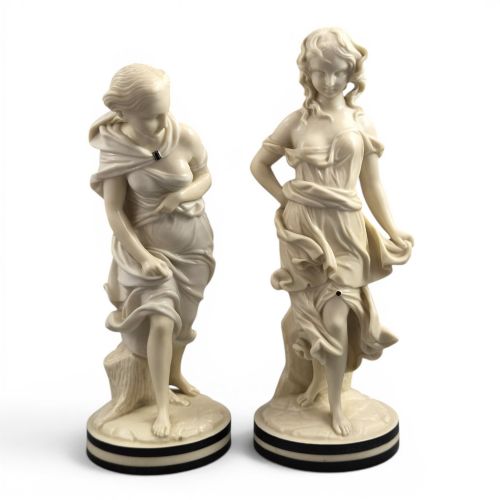


Royal Worcester Female Figure
These porcelain royal worcester female figure pieces capture neoclassical grace in fine ceramic, offering collectors timeless sculptural elegance from the Victorian era onward.
Royal Worcester Female Figure
A royal worcester female figure brings classic sculptural forms into domestic spaces, drawing heavily on classical mythology and historical dress. When searching this phrase, collectors encounter graceful depictions of maidens, dancers, and allegorical subjects rendered with delicate artistry.
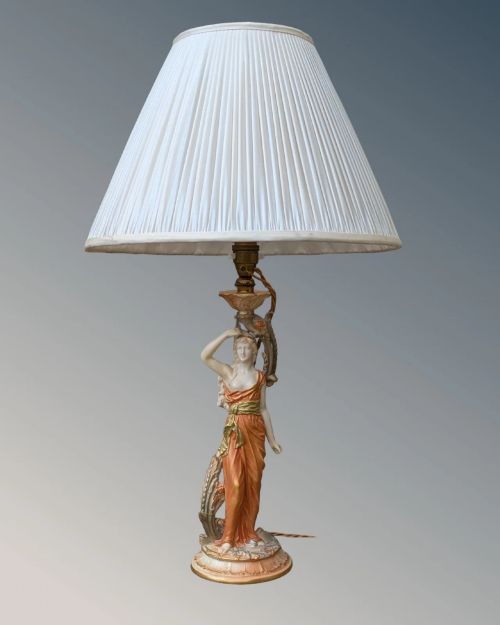
The pieces on this page span from the Victorian period through the early twentieth century, showing shifting tastes in costume and posture. Formats range from intimate cabinet figurines and pairs to converted table lamps incorporating brass elements.
Origins trace directly to the renowned Worcestershire factory, encompassing both standard porcelain bodies and specialised ceramic types. Buyers frequently meet subjects such as classical maidens, musicians, and figures posed with drapery or natural elements.
How they were made
Makers utilised fine porcelain and unglazed parian ware to achieve smooth flesh tones and crisp drapery folds. Parian ware provided a matte, marble-like finish popular during the nineteenth century for replicating classical sculpture.
Surface decoration frequently involved intricate enamel work and applied gilding or gold leaf to accent garments and accessories. Specialised techniques like shot enamel added subtle, shifting colour dimensions to the glazed surfaces of later Victorian and Edwardian works.
Royal Worcester Female Figure Retail Price Guide 2026
Typical asking prices for royal worcester female figure among the pieces listed under this phrase on Sellingantiques today, from the lower quarter to the upper quarter. They describe what is for sale here now, not the wider market.
Several ladies bravely share their pedestals with small, unbothered lizards.
What varies in quality
Model complexity and the finesse of the hand-painting dictate the standing of an individual piece. Earlier Victorian examples often demonstrate sharper detail in the moulding of hair and facial expressions compared to later mass production.
The application of gilding and enamel work creates distinction across the range, with superior pieces displaying precise brushwork and rich metallic accents. Preservation of delicate extremities such as fingers, drapery edges, and added elements like fabric or brass mounts influences desirability.
James Hadley
The Royal Worcester Female Figure Glossary
- Parian ware
- A fine white unglazed porcelain developed to imitate marble, often utilised for nineteenth-century classical figures. It fires to a smooth, matte finish that accentuates sculptural contours.
- Shot enamel
- A specialised glaze technique that produces an iridescent or shimmering colour shift across the ceramic surface. It creates varied tones depending on the angle of light.
- Neoclassical
- An artistic revival drawing inspiration from the classical art and culture of ancient Greece and Rome. This style heavily influences the posture, drapery, and themes of nineteenth-century ceramic figures.
- Gilding
- The application of gold leaf or gold paint to highlight specific details such as garment trims and borders. It provides a contrasting metallic sheen against the white porcelain body.
Royal Worcester Female Figure: Frequently Asked Questions
What periods do these figures cover?
The selections span from the Victorian era through the early twentieth century, encompassing pieces from the 1860s up to the 1930s. This timeframe shows the evolution of neoclassical themes within British ceramics.
Collectors will find works marked by distinct stylistic shifts, moving from mid-nineteenth-century parian pieces toward twentieth-century enamel and glazed porcelain figurines.
Were these figures used as lamps?
Certain pieces were later adapted or originally produced to function as table lamps, incorporating brass and fabric elements. These conversions merge sculptural artistry with practical household lighting.
Such items retain their core ceramic figure while integrating electrical fittings suited for domestic display.
Who designed these porcelain figures?
Notable modellers like James Hadley contributed significant sculptural designs to the factory during the Victorian period. His work includes popular paired figures and thematic depictions of women.
Factory modellers drew inspiration from classical antiquity, translating ancient sculptural traditions into refined Victorian ceramics.