




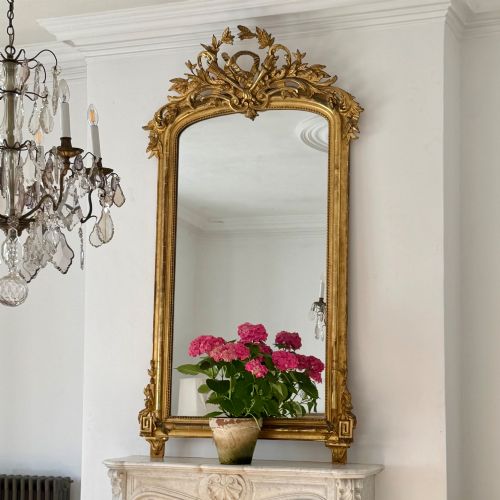


Nineteenth Century Pier Mirror
A nineteenth century pier mirror brings vertical light and architectural focus to a room, designed originally to hang on the wall space between windows.
Nineteenth Century Pier Mirror
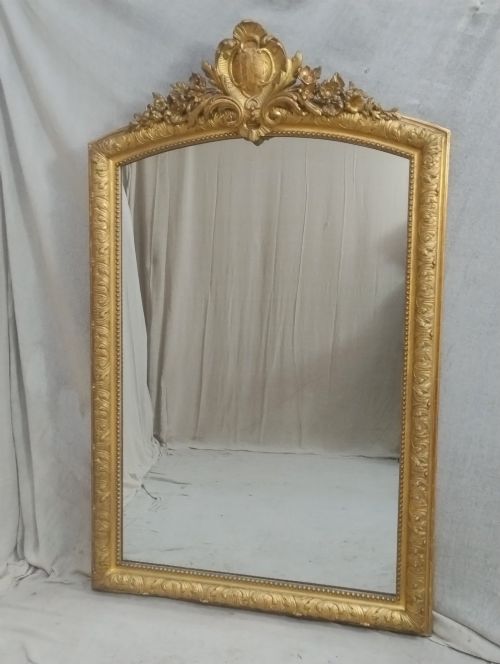
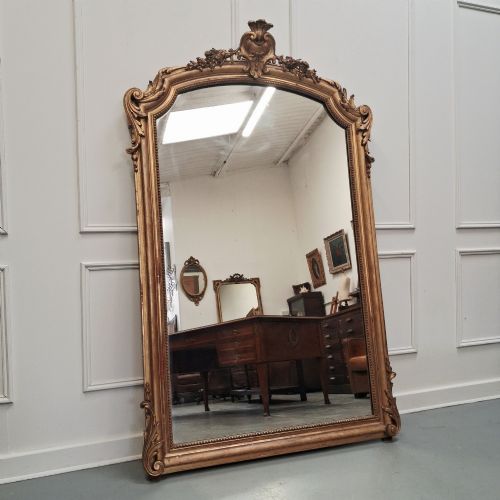
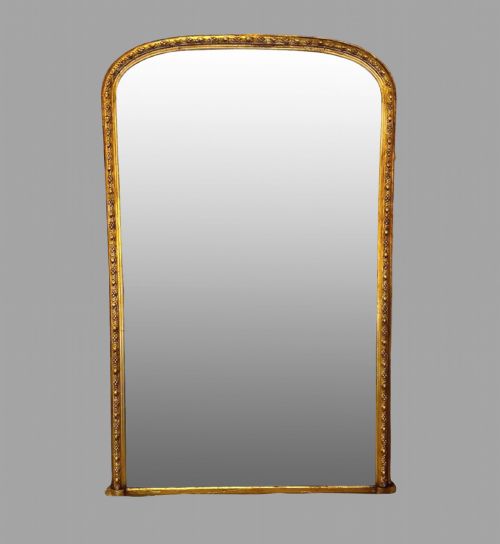
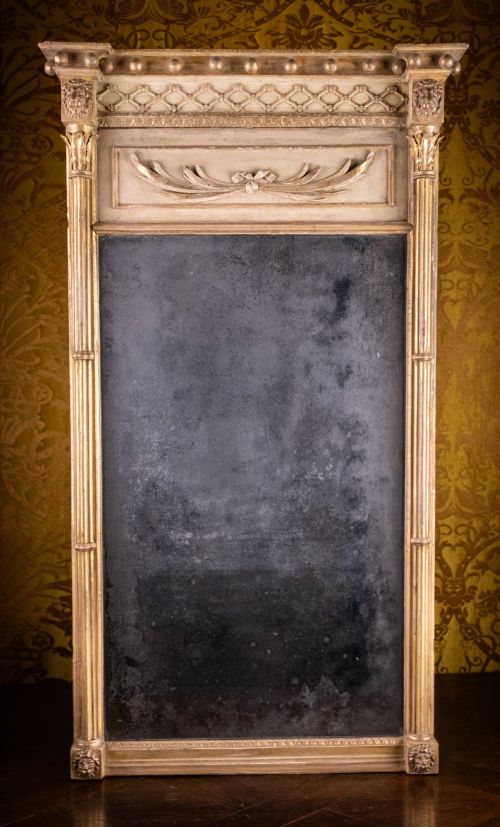
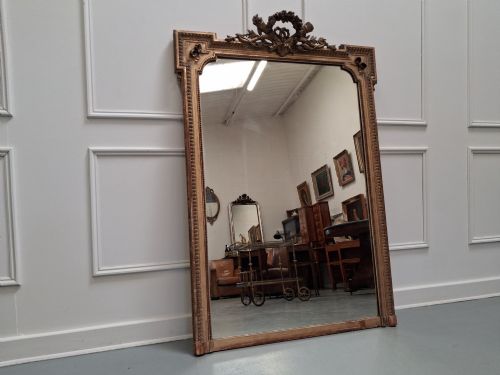
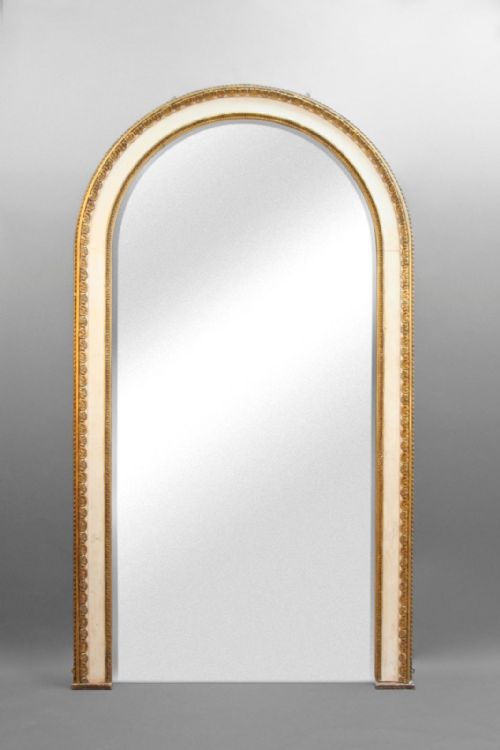
A nineteenth century pier mirror stands as a significant vertical wall glass, designed to fit the narrow wall space between two windows or above a console table. On this page, the predominant examples include tall French trumeau mirrors, substantial giltwood frames, and Regency designs featuring architectural proportions.
The selection ranges from early examples with mercury glass and lion masks to later Victorian and Empire revival styles incorporating carved wood, gesso, and painted finishes. Alongside traditional wall-hung glasses, the evidence includes related console tables and cabinets that historically formed a unified furnishing scheme with the mirror above.
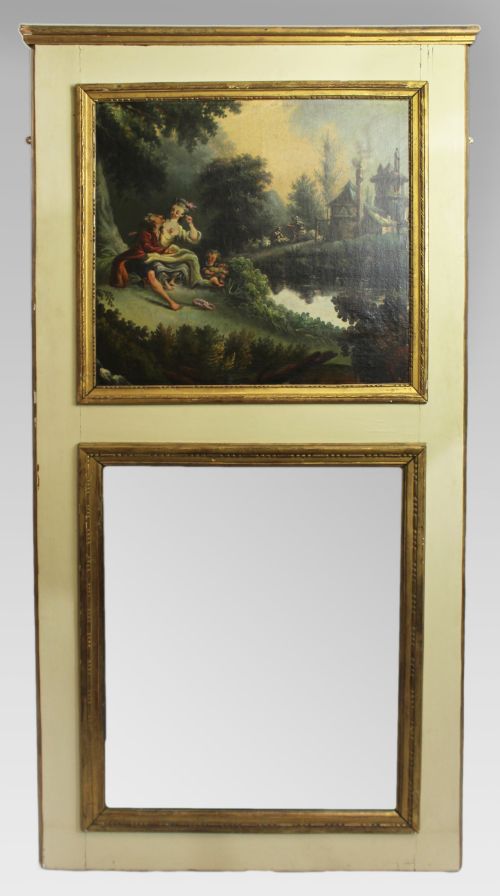
Originating across Britain, France, Sweden, and Italy, these pieces reflect the varied stylistic shifts of the eighteen hundreds. Buyers will encounter arched tops, divided two-section panels, pastoral oil paintings, and verre eglomise panels integrated directly into the upper sections of the frame.
Materials and technique
Makers constructed these frames predominantly from timber such as mahogany, rosewood, maple, birchwood, and walnut, often applying gesso to carved wooden elements to build up intricate relief ornamentation. Gilding with gold leaf or silver was then applied over the gesso, alongside painted and ebonised finishes.
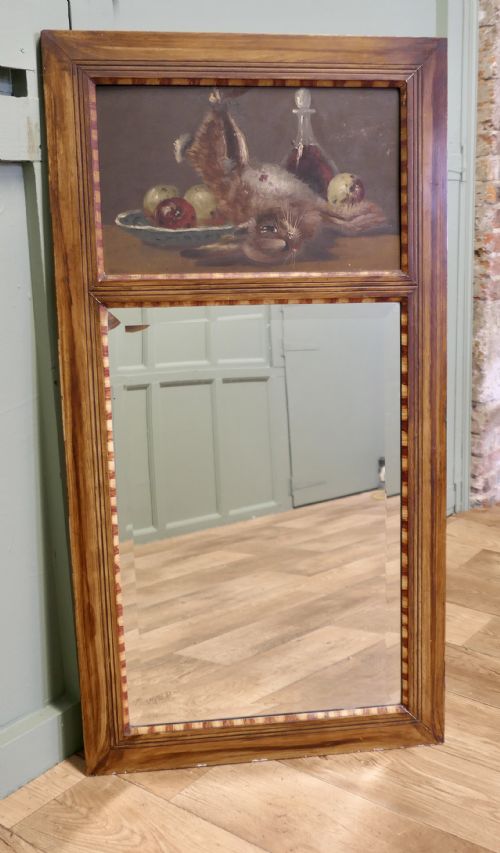
Early examples frequently utilise original mercury glass, which exhibits a distinctive depth and slight imperfection compared to later modern silvered glass plates. Trumeau variations integrate oil paintings on canvas or reverse glass prints directly into the wooden structure above the main mirror plate.
Distinctions in quality
The standard of carving and the crispness of the gesso detail separate the finest examples from standard production pieces, distinguishing hand-carved ornamentation from simpler moulded plaster. The depth and warmth of the original gilding or the preservation of original painted surfaces also define the upper tier.
Integrity of the glass plate matters significantly, with original mercury mirror plates retaining a characteristic clouding and dark speckling that indicates age. Furthermore, architectural cohesion, such as the inclusion of undamaged original reverse glass prints, oil paintings, or matching console tables, elevates the standing of a piece.
The Nineteenth Century Pier Mirror Glossary
- Pier mirror
- A tall vertical glass designed specifically for the wall space between windows. These mirrors frequently stood above low console tables or sideboards in nineteenth century interiors.
- Trumeau
- A decorative wall mirror featuring an upper panel containing an oil painting or a reverse glass print. They originated in France and combine artwork with functional looking glass.
- Gesso
- A plaster mixture applied to wood frames to create a smooth surface for gilding or deep relief carving. It allows for intricate decorative motifs.
- Verre eglomise
- A cold decoration technique where designs are painted and gilded on the reverse side of glass panels. It appears frequently in upper sections of Regency mirrors.
- Mercury glass
- An early type of mirror glass made by pouring a mercury and tin amalgam behind the glass plate. It produces a soft, uneven reflection with dark spots.
Nineteenth Century Pier Mirror: Frequently Asked Questions
Where should I hang a nineteenth century pier mirror?
These mirrors were originally scaled to hang on the narrow wall between two windows, where they bounced daylight back into deep rooms. They also suit placement above a low console table, sideboard, or mantelpiece.
Ensure the wall construction can support the substantial weight of these timber and glass pieces, using appropriate fixings to secure the heavy frame safely.
How do I identify a nineteenth century pier mirror?
Look for construction traits typical of the period, such as old backing boards, hand-cut screws, and timber frames made from mahogany, rosewood, or giltwood. The presence of original mercury glass with natural foxing is a strong indicator of age.
Stylistic cues like Regency lion masks, Empire columns, or French trumeau painted panels also help date the piece to the eighteen hundreds.
What is the difference between a pier mirror and an overmantel mirror?
A pier mirror is traditionally tall and narrow, built to occupy the vertical wall space between architectural openings or windows. An overmantel mirror is wider in proportion, designed specifically to sit horizontally above a fireplace.
While dimensions separate the two forms, nineteenth century makers occasionally adapted similar decorative vocabularies such as giltwood frames and carved crestings for both placements.