
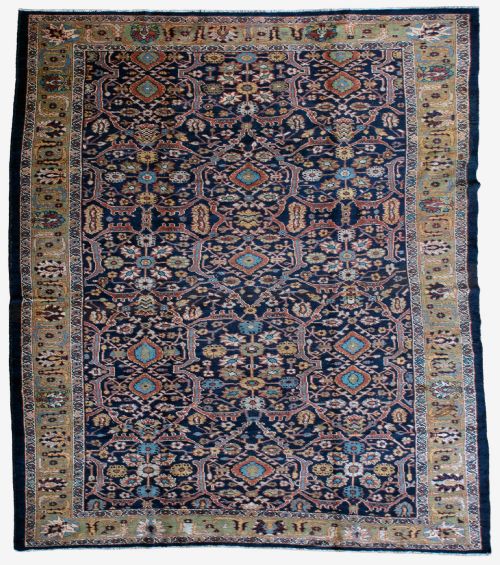
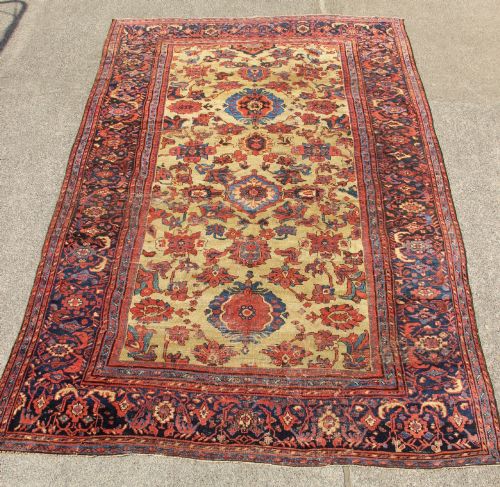
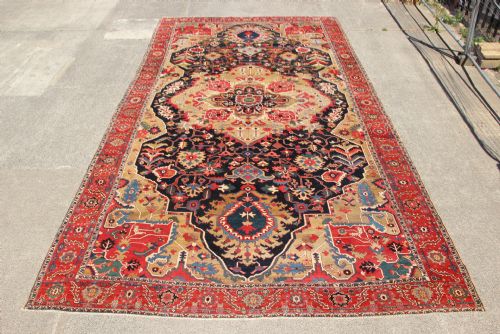
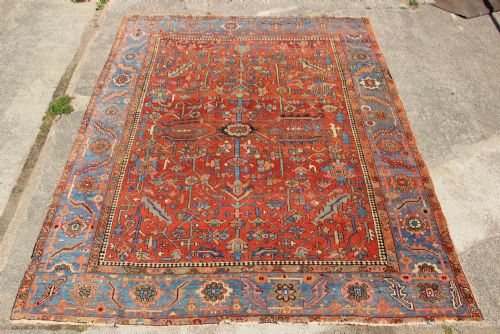


Nineteenth Century Persian Carpet
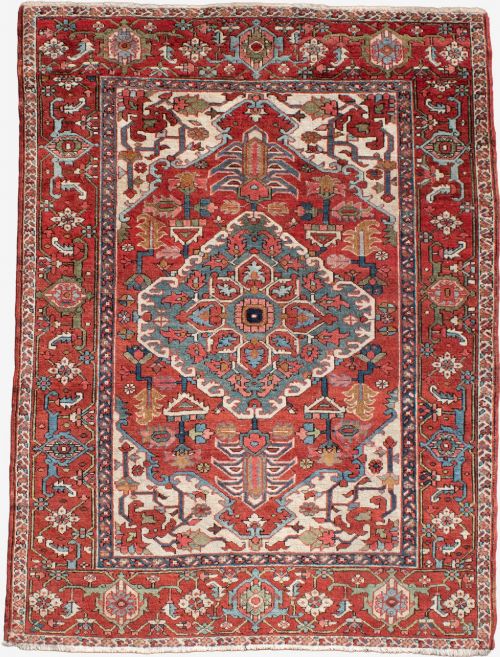
A nineteenth century persian carpet brings centuries of textile tradition into a room through intricate geometric patterns and rich natural dyes.
Nineteenth Century Persian Carpet
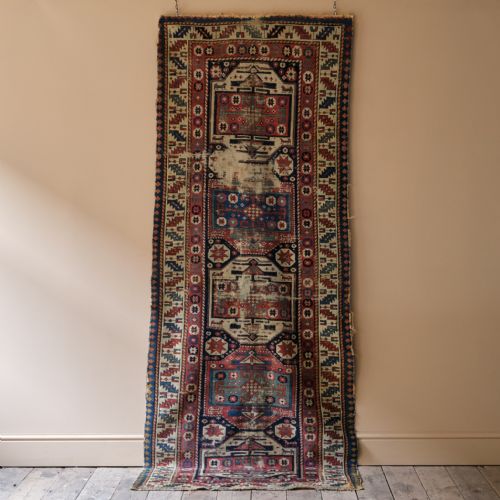
A nineteenth century persian carpet encompasses large room-size floor coverings as well as smaller tribal rugs created across various weaving centres and nomadic confederations. These textile creations originate from distinct regions and villages, bearing specific regional designs from Heriz, Serapi, Mahal, Fereghan, and beyond.
The pieces encountered on this page span several decades of the eighteen-hundreds and early nineteen-hundreds, reflecting traditional village production and commercial workshop output alike. Buyers will find wide formats ranging from room-size carpets down to runners and compact village formats.
Materials and construction methods
Makers utilised wool and hand-spun wool for the foundation pile, combining these animal fibres with cotton warps and wefts to build durable floor coverings. These materials were dyed using natural and vegetable dyes, producing earthy tones and deep terracottas that mellow gracefully over time.
Weavers employed traditional knotting techniques specific to their region or tribe, whether working in large commercial ateliers like Ziegler or producing smaller tribal pieces within confederations such as the Baluch and Shahsavan.
Listings feature wool, hand-spun wool, cotton, and natural vegetable dyes across numerous regional styles dating from eighteen-fifty to nineteen-twenty.
Assessing quality and execution
Quality rests upon the fineness of the weave, the clarity of the design drawing, and the depth achieved by natural and vegetable colour palettes. Finer knots and more purposeful drawing separate ambitious workshop commissions from standard village output.
The condition of the wool pile and the integrity of the foundation heavily influence desirability. Even wear across a hand-spun wool surface often enhances the visual character of these old carpets.
Ziegler and Co·Mohtasham Kashan·Hajji Jalili
The Nineteenth Century Persian Carpet Glossary
- Ziegler
- A nineteenth-century commercial enterprise that produced large-scale carpets in Persia, often adapting traditional patterns for Western markets.
- Soumak
- A flat-weaving technique that wraps weft threads around the warp to create a durable structure without a cut pile, often found on bag faces and small tribal pieces.
- Prayer rug
- A small format featuring a mihrab or arch design, traditionally used for individual daily prayers.
- Baluch
- A grouping of nomadic and semi-nomadic tribes producing distinctive small rugs with dark wools and geometric lattice motifs.
- Heriz
- A region in northwest Persia known for producing large, durable carpets featuring bold geometric medallions and strong corner spandrels.
Nineteenth Century Persian Carpet: Frequently Asked Questions
How do I clean a nineteenth century persian carpet?
Professional dusting and specialist hand-washing remain the safest methods for maintaining antique wool piles without disturbing natural dyes.
Avoid harsh chemical treatments and heavy water immersion to preserve the structural integrity of the cotton foundation.
Can I place these carpets in high traffic areas?
Many nineteenth century persian carpets were constructed for daily use using durable wool and sturdy cotton foundations.
Placing a quality rug underlay beneath the carpet will reduce friction and protect the pile from premature wear in busy hallways or reception spaces.
How do I tell a village rug from a workshop carpet?
Village rugs often display spontaneous, slightly asymmetric tribal motifs and varied natural dye lots woven on simpler looms.
Workshop carpets from centres like Tabriz or Fereghan typically exhibit more precise symmetry, finer knot densities, and highly refined floral drawings.
Why do natural dyes fade or change colour?
Natural and vegetable dyes react to decades of sunlight and atmospheric conditions, gently softening into a rich patina.
This gradual shift in tone is a normal characteristic of antique textiles and generally enhances the visual depth of the wool.