



Nineteenth Century Oriental Rug
Nineteenth century oriental rug examples bring tactile warmth and regional character into a room through hand-knotted pile and geometric motifs.
Nineteenth Century Oriental Rug
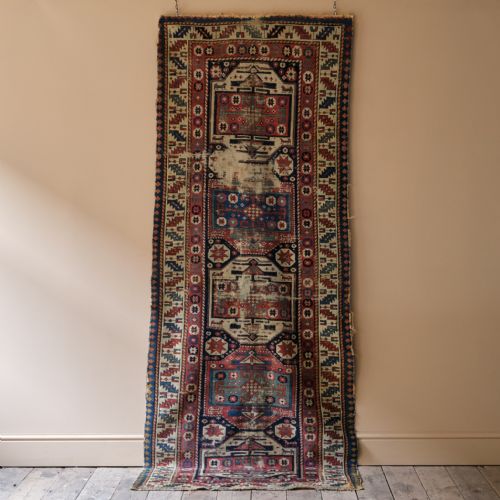
A nineteenth century oriental rug encompasses floor coverings and prayer rugs originating from Persian, Caucasian, Turkmen, and Anatolian weaving traditions. Buyers searching this category encounter diverse regional formats, ranging from long corridor runners to large decorative carpets.
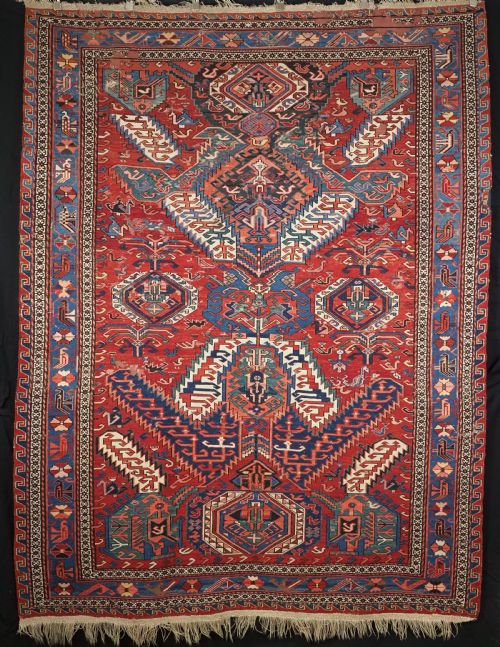
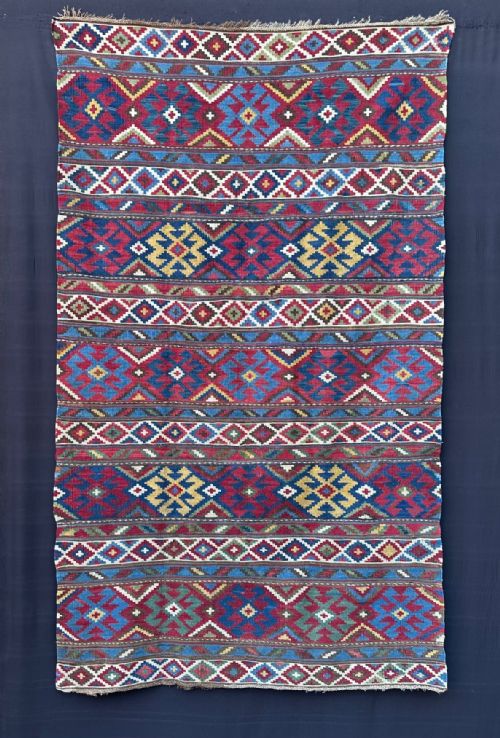
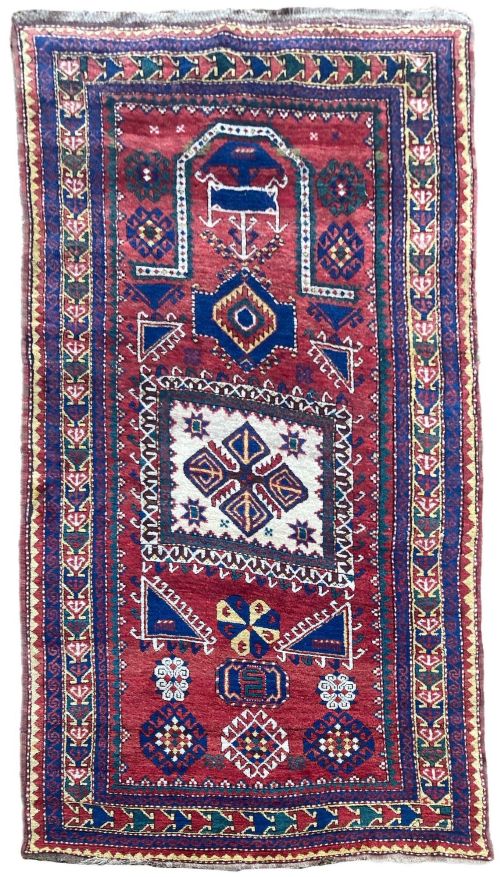
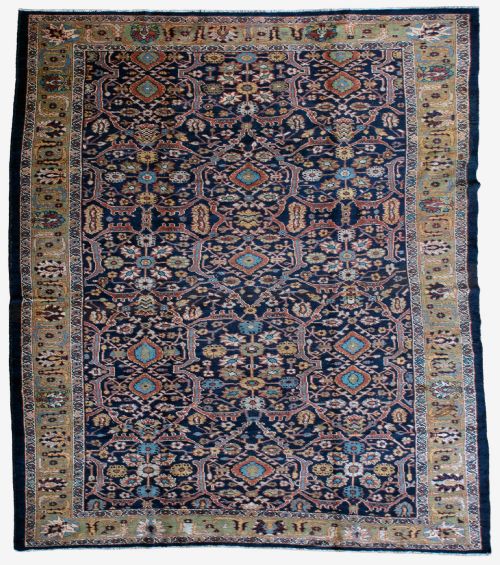
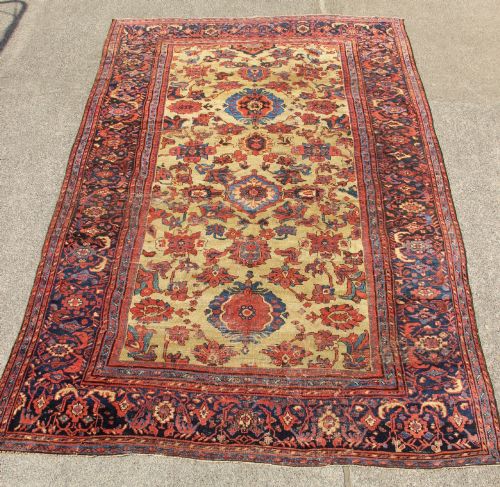
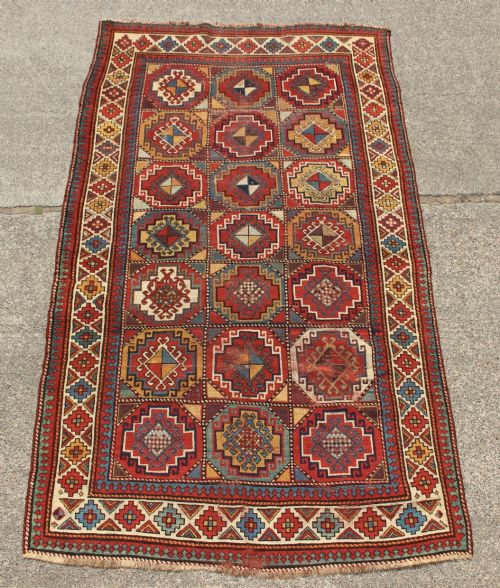
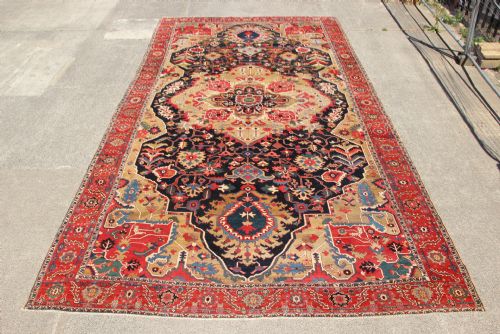
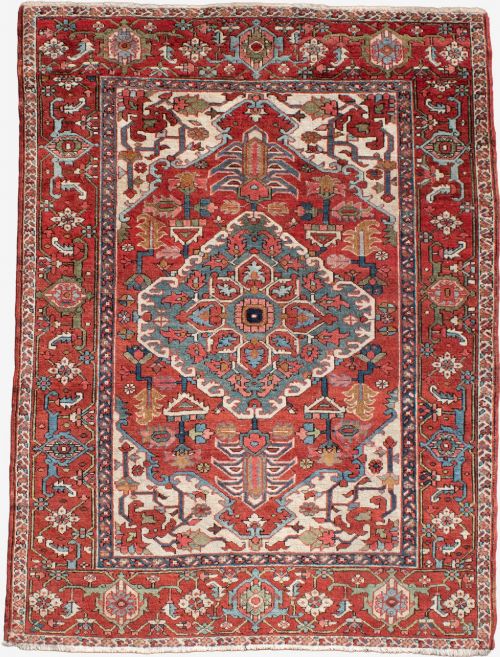
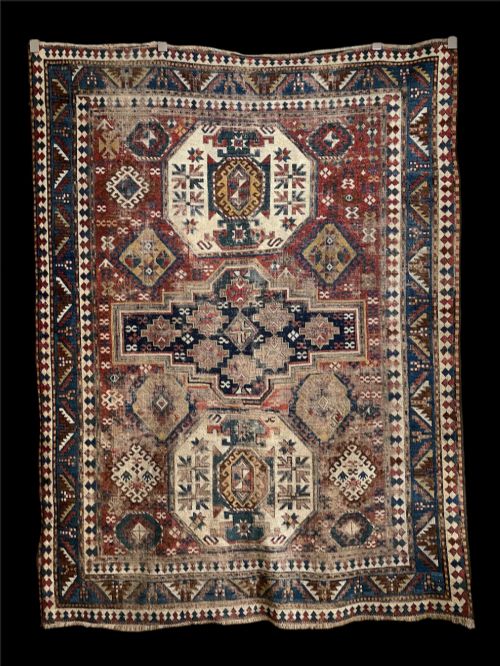
The pieces on this page heavily feature Caucasian village weaves such as Kazak and Soumak, alongside expansive Persian room-size carpets like Heriz and Mahal. Smaller tribal bag faces and prayer rugs also appear frequently among the selection.
Originating across the nineteenth century, these textiles reflect the distinct tribal and workshop aesthetics of regions spanning from Northern China to Western Persia and the Caucasus.
Materials and Construction
Weavers utilised wool and cotton as the primary structural foundations, frequently employing hand-spun wool for the pile to achieve durability and rich texture. Silk appears in select specialised examples.
Natural dyes provide the characteristic palette seen across these carpets, interacting with the wool over decades to yield deep, stable colour variations.
Current listings span the nineteenth century up to the early twentieth century, featuring wool, cotton, silk, and natural dyes across Persian, Caucasian, and Turkmen forms.
Assessing Quality and Execution
Quality rests in the precision of the drawing and the clarity of the design motifs, whether geometric Caucasian stars or flowing Persian floral fields. Superior execution shows in the crispness of the secondary ornament and balanced proportions.
The vitality and depth of the natural dyes distinguish finer examples, where subtle tonal shifts within the wool enhance the visual movement across the field.
The Nineteenth Century Oriental Rug Glossary
- Soumak
- A flat-weave textile technique where the coloured weft threads are wrapped around the warp threads, creating a textured surface without a cut pile.
- Prayer rug
- A small format rug featuring a mihrab or niche design at one end, traditionally used for individual prayer.
- Gul
- A medallion or repeated octagonal gully motif characteristic of Turkmen tribal weaving traditions.
- Warps
- The vertical threads stretched lengthwise on the loom that form the foundational skeleton of the rug.
- Mihrab
- The arched prayer niche design found at the top of specific regional rugs.
Nineteenth Century Oriental Rug: Frequently Asked Questions
How do I identify a Kazak rug?
Kazak rugs originate from the Caucasus and typically display bold, geometric medallion layouts executed in primary saturated colours like red, blue, and ivory. Their chunky wool pile and robust proportions set them apart from finer Persian workshop weaving.
Look for distinctive tribal motifs such as hooked polygons, stylized animals, and large star forms distributed across an open field.
Where were Heriz carpets made?
Heriz carpets come from the Northwest region of Persia, known for producing exceptionally durable room-size floor coverings. They frequently feature large, angular geometric central medallions supported by sturdy corner spandrels.
The cotton foundations and robust wool construction allowed these village weavers to produce substantial carpets capable of withstanding heavy daily use.
What is a Turkmen torba?
A torba is a small, wide tribal bag face produced by Turkmen nomadic groups, traditionally used for tent storage and domestic organisation. They often display structured rows of guls flanked by detailed border patterns.
These pieces showcase the meticulous miniature knotting and deep red palettes characteristic of nineteenth-century Turkmen textile art.
How should I care for an antique rug?
Antique wool and cotton rugs require gentle, regular vacuuming without a rotating beater bar to protect the hand-spun pile and fragile foundation threads. Professional specialist cleaning ensures natural dyes remain stable and protected.
Keeping the textile out of direct, continuous sunlight preserves the rich natural dye colours and prevents uneven fading across the wool fibres.