
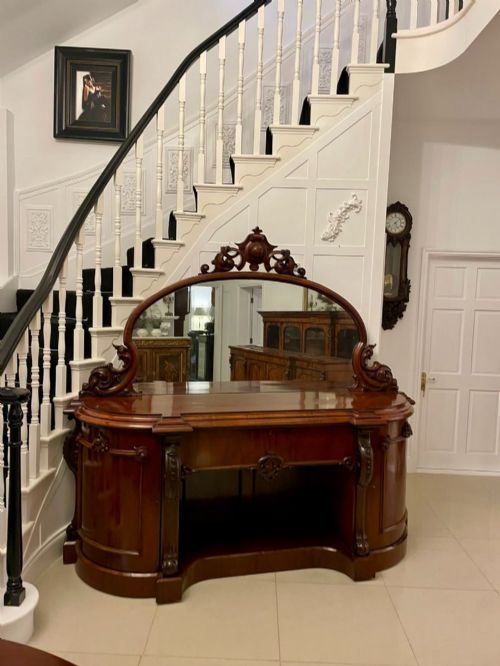
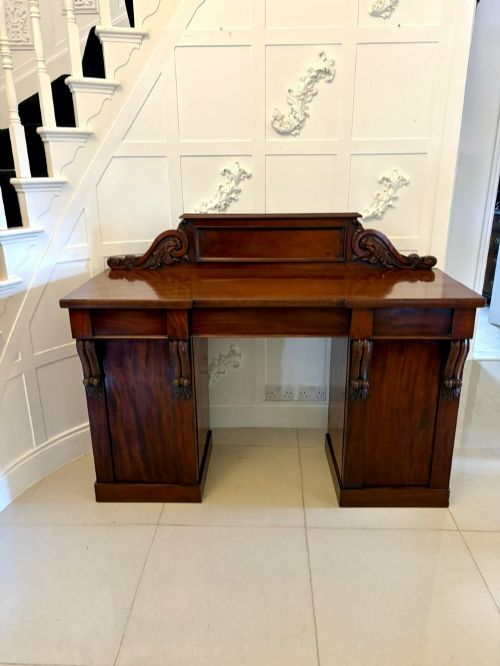
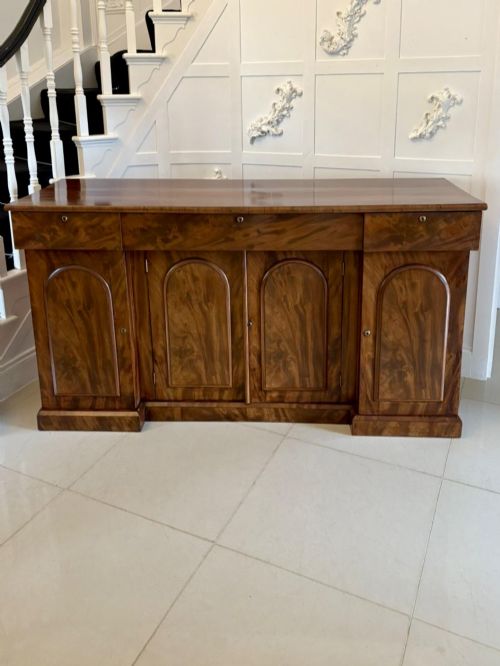
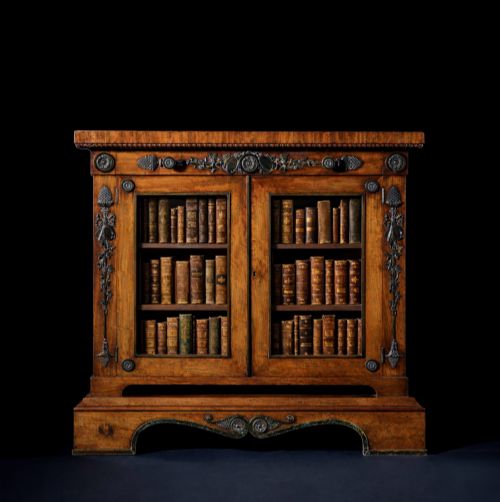
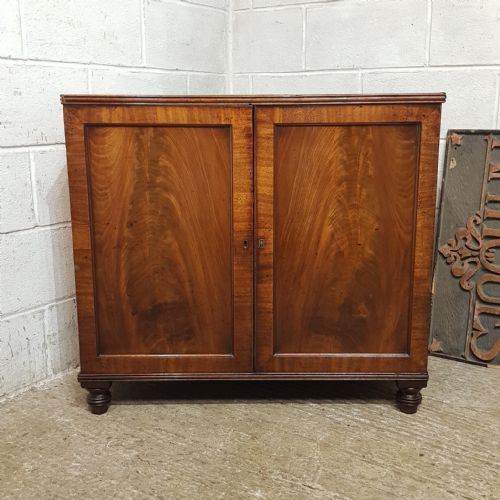

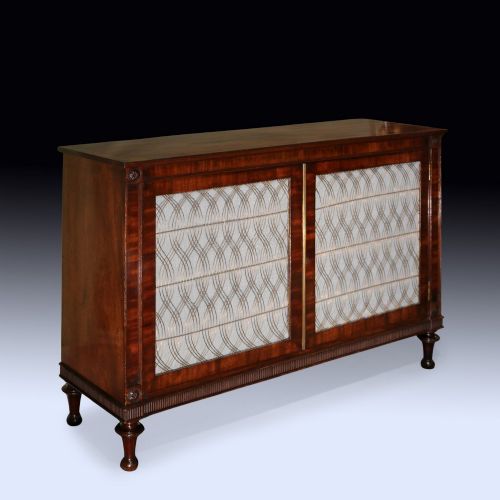
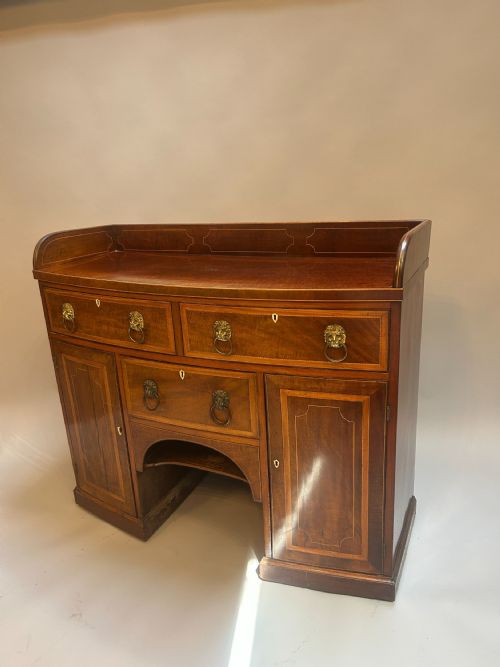


Nineteenth Century Mahogany Credenza
A nineteenth century mahogany credenza brings grand timber and generous storage to a dining room or hall.
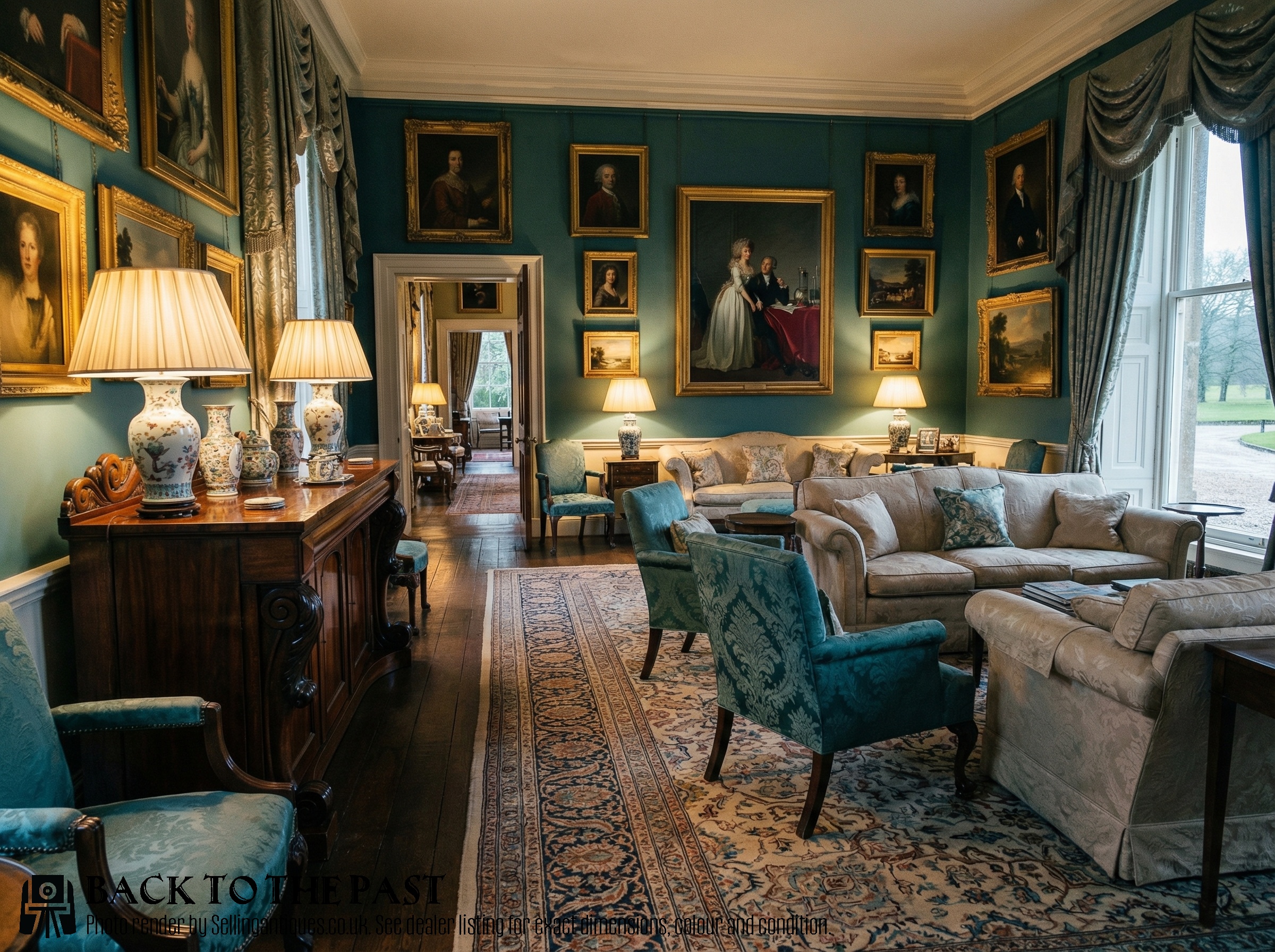
Nineteenth Century Mahogany Credenza
A nineteenth century mahogany credenza combines deep timber tones with enclosed storage, designed to stand flat against a principal wall. The form evolves through the Regency, William IV, and Victorian eras, shifting from compact low cupboards and chiffoniers to massive mirror-backed sideboards.
Buyers meet variations ranging from simple two-door side cabinets to breakfront sideboards fitted with brass grilles or carved mirror backs. Pieces appear in both restrained classical lines and ornate revival styles.
The archive records specific examples topped with white marble, connecting the lower cabinet form directly to the term credenza.
How they were made
Cabinet makers built these pieces using solid mahogany and figured veneers applied over secondary timbers, often selecting flame mahogany to create striking grain patterns across large door surfaces. Workshops enhanced the dark wood with boxwood and ebony inlay, brass stringing, and cast bronze mounts.
Glazed doors frequently feature brass wire grilles backed by fabric, while later Victorian iterations incorporate heavy carved elements and large architectural mirrors.
Some nineteenth century cabinets hid secret drawers behind decorative mouldings, keeping midnight correspondence safe from prying eyes.
What varies in quality
Quality rests upon the selection of timber veneers and the precision of the cabinet work, particularly around curved bow fronts and breakfront sections. Superior examples display continuous grain matching across doors and drawers, alongside refined brass inlay or crisp hand-carved ornamentation.
The integrity of internal construction, original brasswork, and the weight of the timber separate standard utility furniture from exceptional showroom pieces.
The Woodworkers Ltd Kilkenny·S Jamar
The Nineteenth Century Mahogany Credenza Glossary
- Credenza
- A low dining room cabinet or sideboard, frequently topped with marble in nineteenth-century examples. The form provides surface display space above enclosed shelving.
- Flame mahogany
- A decorative veneer cut from timber where the branch meets the trunk, producing a distinctive flickering grain pattern. Cabinet makers reserved this timber for principal door panels and drawer fronts.
- Chiffonier
- A compact sideboard or low cupboard developed in the Regency period, often fitted with a shelf on slender columns above the main body. It served smaller drawing rooms for the storage of books or tea.
- Breakfront
- A piece of furniture where the central section projects forward from the flanking cupboards. This architectural arrangement creates depth and shadow across the front elevation.
Nineteenth Century Mahogany Credenza: Frequently Asked Questions
How do I tell a Regency credenza from a Victorian one?
Regency pieces lean towards classical restraint, often featuring brass inlay, ebony stringing, and simpler geometric proportions. They prioritize clean lines and figured timber over heavy carving.
Victorian versions tend to be larger, incorporating arched panels, mirror backs, and heavier architectural mouldings. The carving becomes deeper and more naturalistic as the century progresses.
What rooms suit a mahogany credenza?
These pieces fit naturally into dining rooms for storing silver and linen, or grand hallways where their surface provides a focal point. Their flat backs allow them to anchor large wall spaces securely.
Squelched proportions in neat-sized Regency chiffoniers also suit smaller sitting rooms or libraries without dominating the floor area.
Did all credenzas have marble tops?
Marble tops appear specifically on certain credenzas and side cabinets recorded in the archive, adding a cool contrasting surface to the warm mahogany timber below. Many traditional sideboards and chiffoniers retained timber tops instead.
When marble is present, it is typically white or Carrara, providing a durable surface for serving food or displaying decorative objects.
What is the difference between a sideboard and a credenza?
While both provide storage in dining spaces, traditional sideboards often include banks of drawers flanking central cupboards. Credenzas specifically describe lower, more cabinet-like sideboard variants.
Nineteenth-century makers used various terms interchangeably in catalogues, but low cupboard forms with doors across the entire front lean firmly towards the credenza definition.