

Mahogany Buffet Cupboard
Mahogany buffet cupboard pieces offer sturdy storage and rich timber grain, bringing formal dining room utility and period character to domestic interiors.
Mahogany Buffet Cupboard
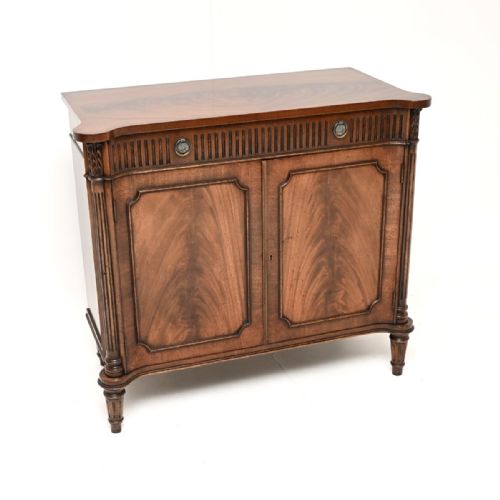
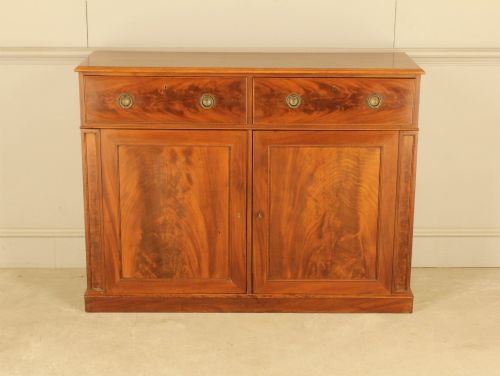
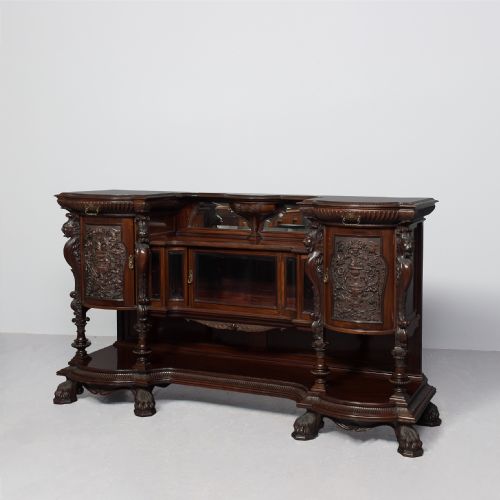
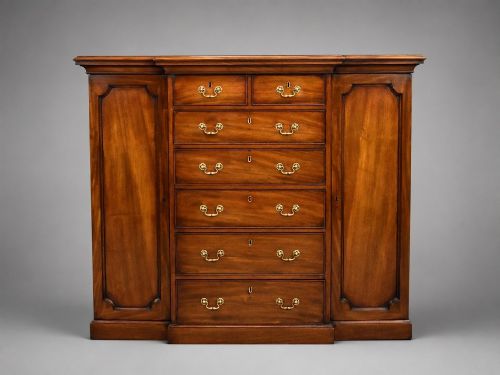
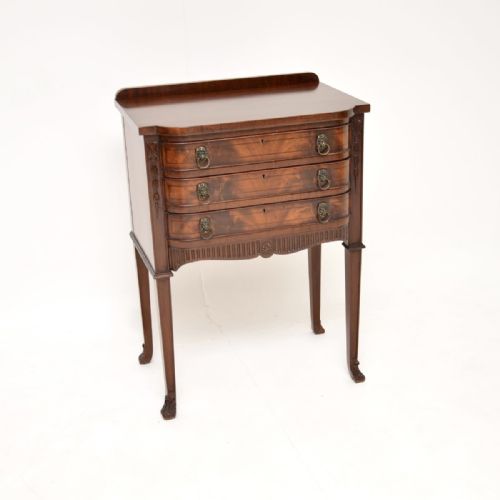
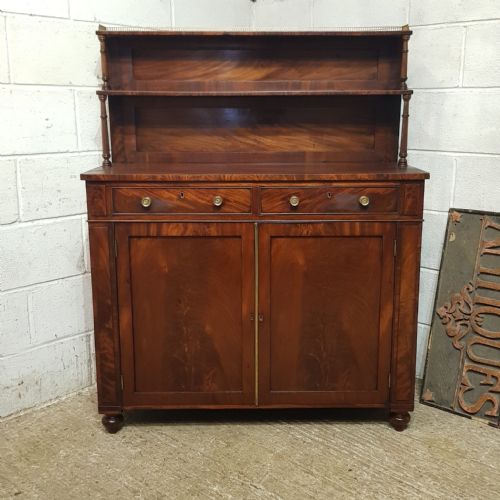
A mahogany buffet cupboard combines the serving surface of a sideboard with enclosed cabinet storage, serving as a functional focal point for dining spaces and hallways. Buyers searching for a mahogany buffet cupboard encounter forms spanning the Georgian, Regency, and Victorian eras, along with Edwardian and later revivals.
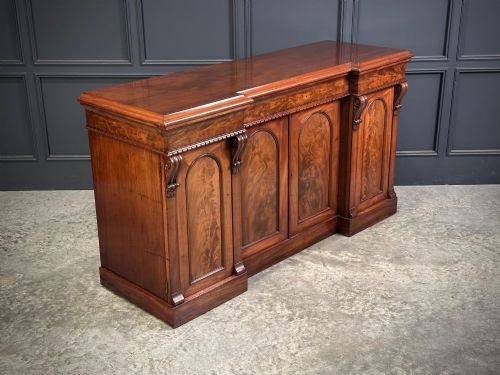
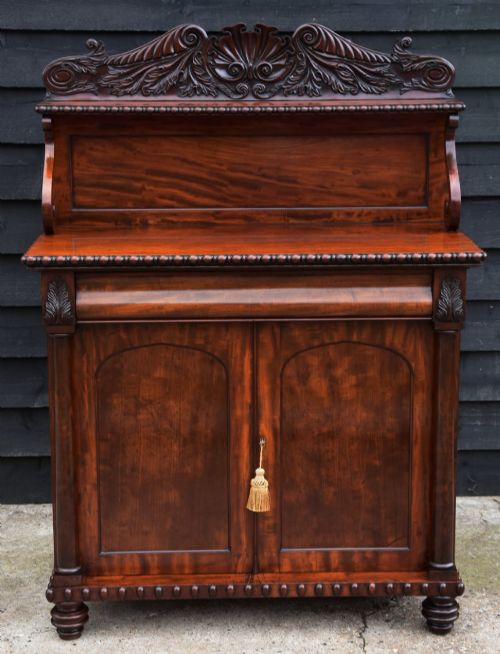
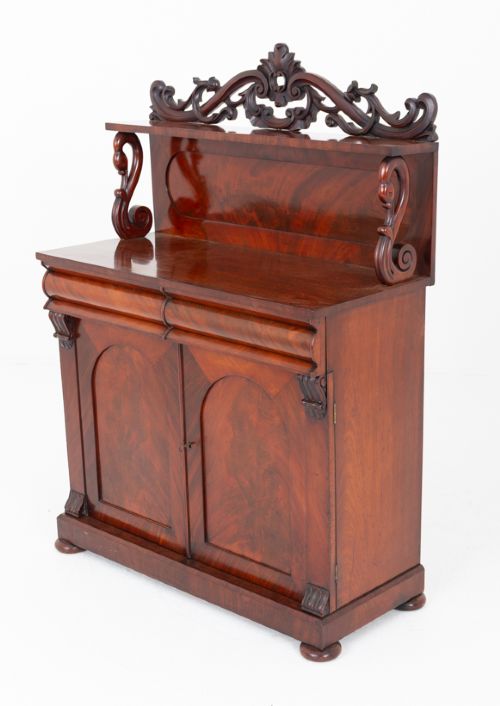
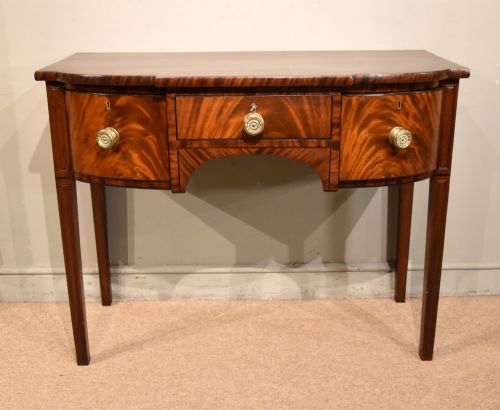
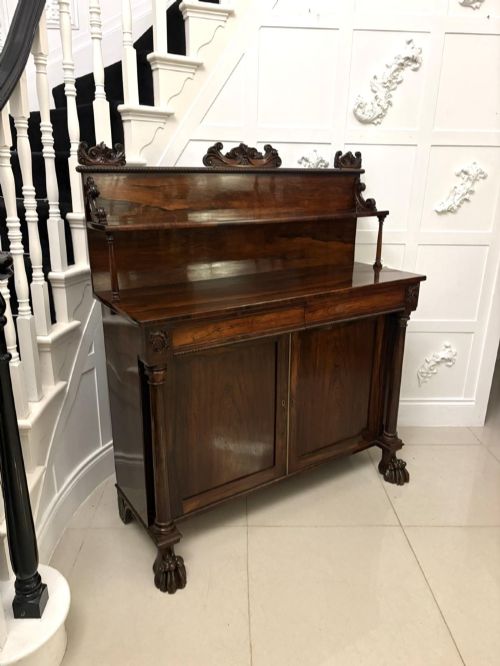
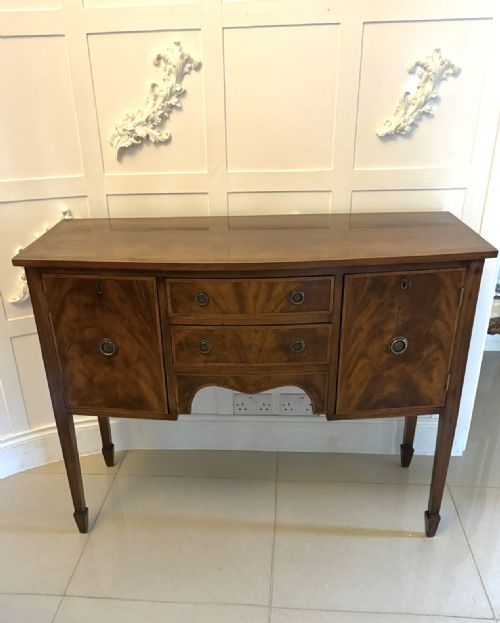
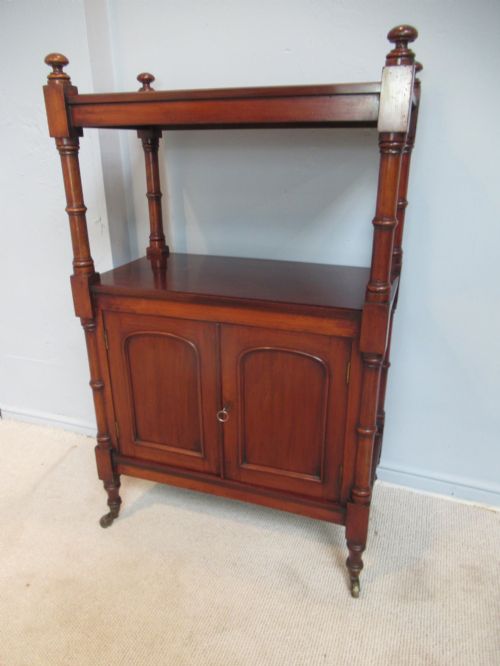
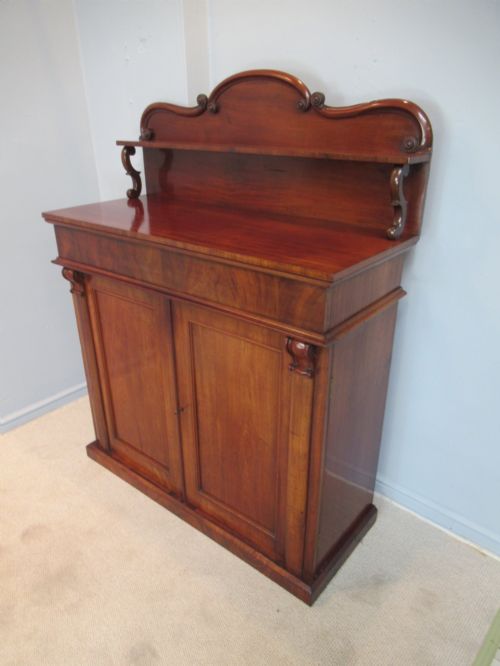
The selection ranges from compact chiffoniers and side cabinets with single or double doors to large breakfront and serpentine sideboards fitted with multiple cupboards. Pieces date from the early nineteenth century through to the twentieth century, including French Louis Philippe and Art Deco interpretations alongside British traditional formats.
Materials and construction methods
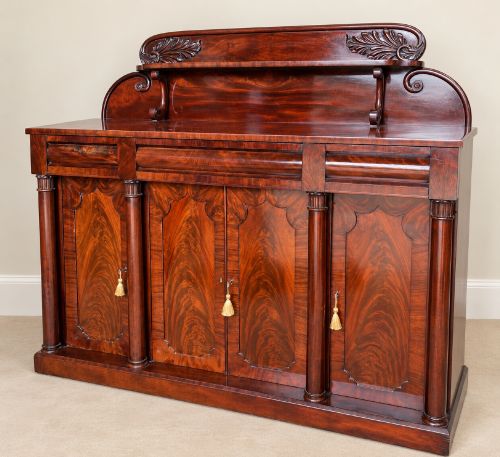
Cabinetmakers utilised solid mahogany and applied flame mahogany or curl-mahogany veneers over secondary timbers to create highly figured surfaces on door panels and drawer fronts. Brass fittings, including handles, key escutcheons and gallery rails, accent the warm reddish-brown timber tones across Regency and Victorian examples.
Structural elements frequently incorporate secondary timbers such as oak or pine for drawer linings and internal shelving. Surface finishing relies on French polish or traditional wax to seal the timber and highlight the natural grain patterns.
Listings feature mahogany buffet cupboards spanning the Georgian, Regency, Victorian, and Edwardian periods, alongside later twentieth-century iterations.
Evaluating craftsmanship and proportion
Quality rests in the selection of timber veneers, where book-matched flame mahogany displays symmetry and depth across large cupboard doors. Cabinet construction details, such as hand-cut dovetails on drawers and tight panel joints, separate standard utility pieces from finer cabinetmaking.
Proportion and decorative restraint dictate the standing of a piece within its period. Crisp carved mouldings, original brass hardware and well-balanced architectural lines elevate individual cabinets far above plain commercial workshop output.
Bowman Brothers
The Mahogany Buffet Cupboard Glossary
- Flame mahogany
- A veneer cut from the fork of the mahogany tree where the branch meets the trunk, producing a distinctive flickering flame pattern. This decorative figuring was highly prized by Regency and Victorian cabinetmakers.
- Chiffonier
- A low sideboard or cabinet featuring enclosed cupboard doors below a shelf or drawer structure. Originating in the Regency period, these pieces served as compact storage in dining rooms and parlours.
- Bowfront
- A convex, curved cabinet front that swells outward in the centre. This curved design softens the rigid geometry of standard rectangular sideboards.
- Serpentine
- A front contour characterised by a convex central section flanked by concave curves. This sophisticated shaping requires precise woodworking skill and appears on select Georgian pieces.
- Breakfront
- A large cabinet design where the central section projects forward from the flanking outer cupboards. This architectural arrangement creates depth and visual rhythm across long sideboards.
Mahogany Buffet Cupboard: Frequently Asked Questions
What is the difference between a sideboard and a buffet cupboard?
A sideboard traditionally provides an open top surface for serving food and displaying silver, whereas a buffet cupboard prioritises enclosed storage behind doors. Many antique examples combine both functions by offering a serving counter above secure cabinet space.
In period terminology, terms such as chiffonier, side cabinet and buffet overlap considerably. The physical presence of lockable doors distinguishes cupboard forms from simpler server tables.
How do I date a mahogany buffet cupboard?
Dating relies on architectural style, timber preparation and hardware construction. Georgian and Regency examples exhibit clean classical lines, subtle inlay and finer proportions, while Victorian pieces often feature heavier timber sections and more pronounced carving.
Secondary woods inside drawers and the method of hinge and lock manufacturing provide further clues. Later Edwardian and 1930s pieces typically reproduce earlier Georgian or Art Deco aesthetics with machine-standardised interior framing.
Where should I place a buffet cupboard in my home?
Dining rooms remain the traditional location for these pieces, where they house glassware, table linen and serving dishes. Their shallow depth also makes them practical additions to entrance hallways and spacious living rooms for general storage.
Placing the cabinet away from direct sunlight and strong heat sources protects the mahogany timber and French polished finish from fading or drying out over time.
How do I care for antique mahogany furniture?
Regular dusting with a soft, dry cloth prevents particle buildup on the polished surface. Applying a traditional beeswax polish occasionally helps nourish the timber and maintain a soft lustre without creating a synthetic buildup.
Avoiding moisture and using coasters or felt pads beneath objects placed on the top surface prevents water rings and scratches on the antique finish.