
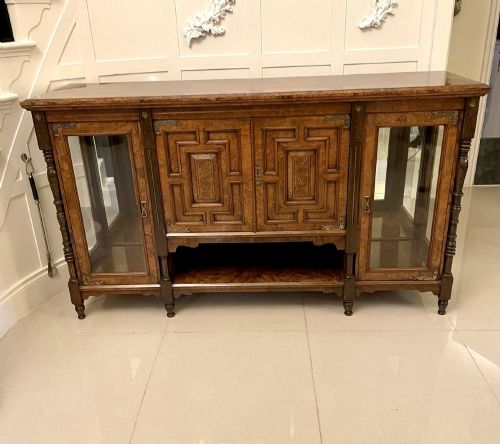
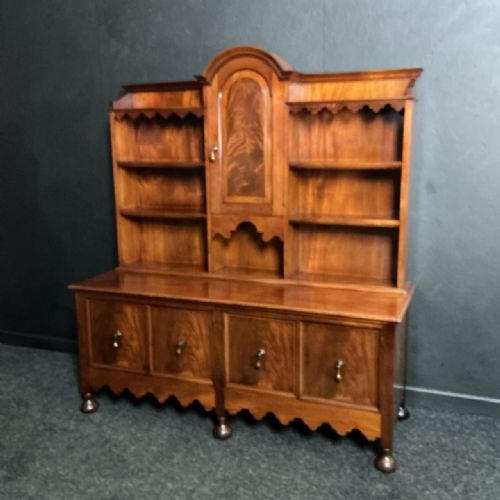
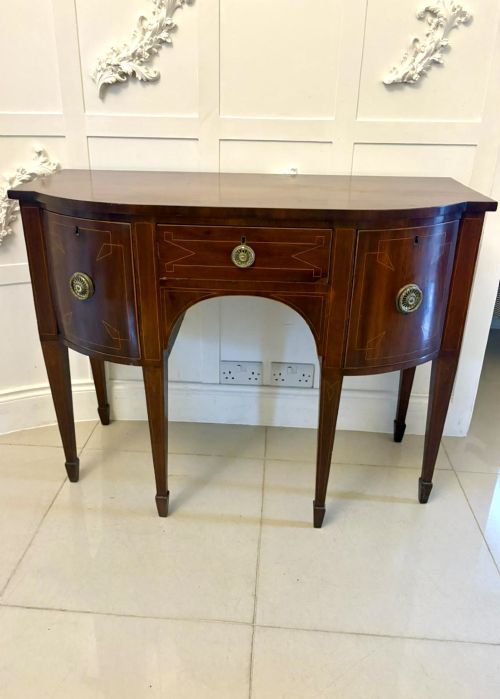
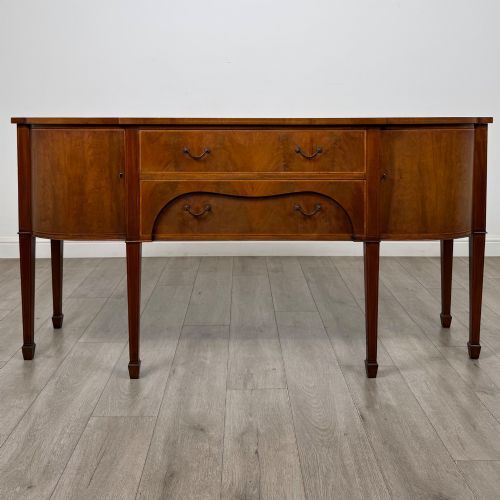
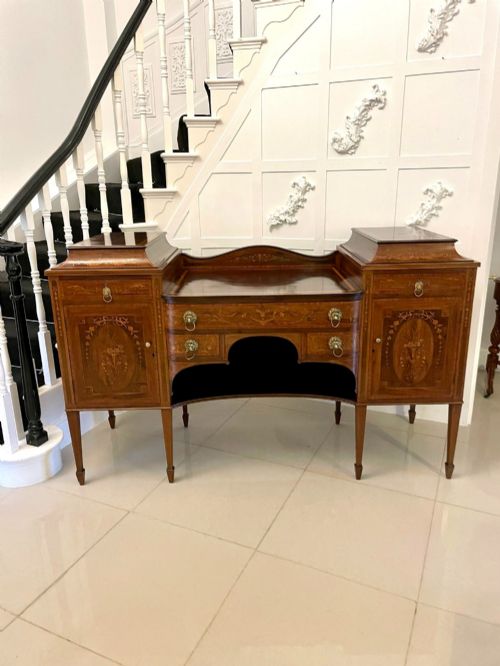
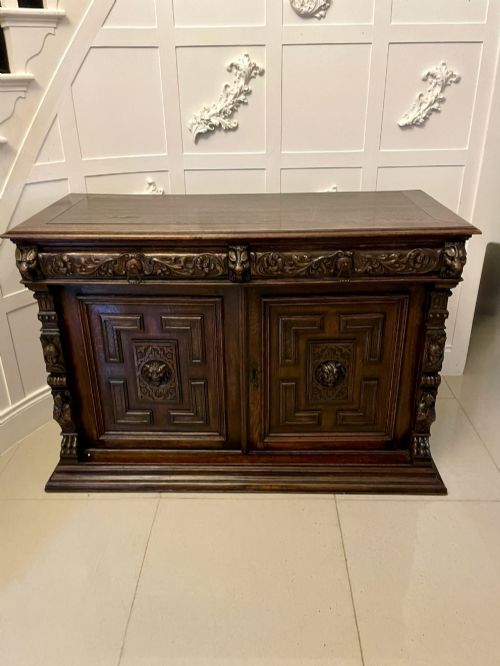
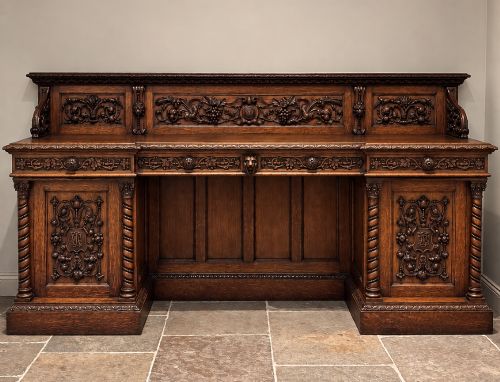
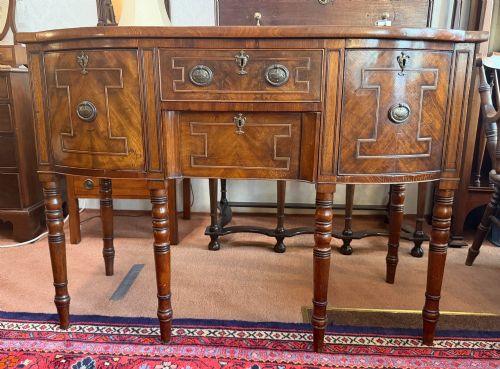
Brown Wood Dining Buffet
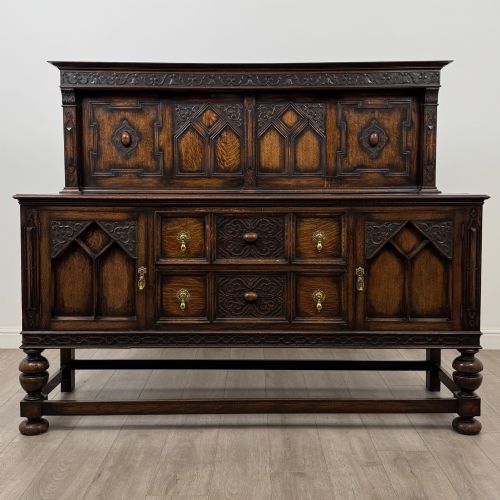
These brown wood dining buffet pieces offer timeless utility and rich timber grain, anchoring a traditional dining room with practical storage.
Brown Wood Dining Buffet
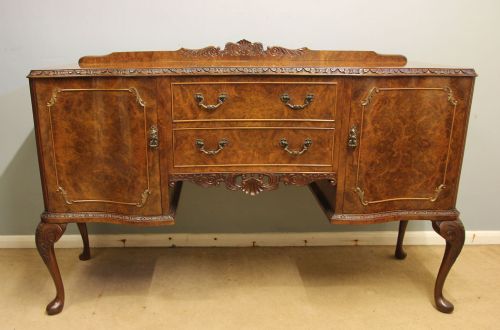
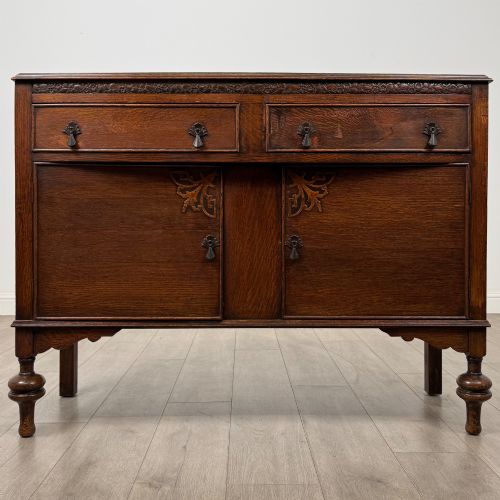
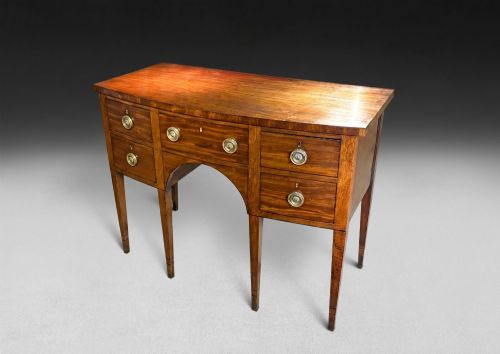
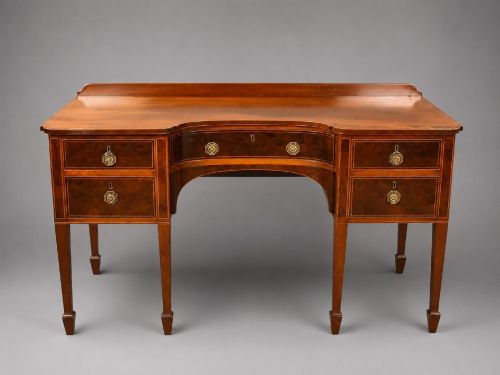
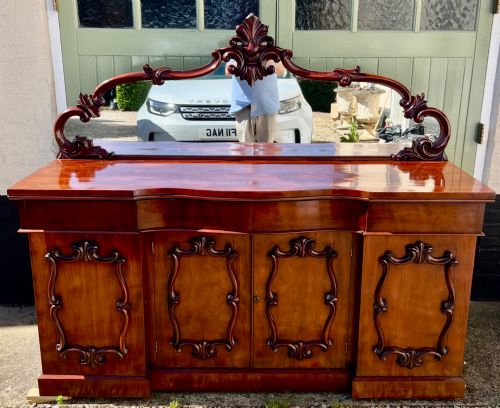
A brown wood dining buffet functions as a substantial storage and serving surface for the dining room, encompassing forms such as sideboards, servers, and credenzas. When exploring this selection, buyers encounter pieces spanning the Georgian, Victorian, and Edwardian periods, alongside later twentieth-century interpretations.
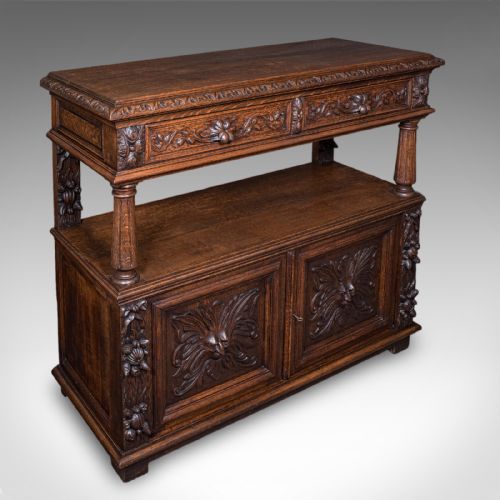
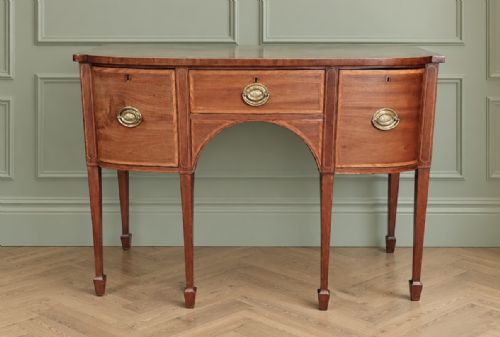
The most common formats on this page are mahogany sideboards featuring bow fronts or serpentine shapes, often enriched with satinwood inlay or marquetry. Oak examples also appear frequently, ranging from carved Victorian and Jacobean revival designs to sturdy Scottish and Gothic-influenced servers.
Makers and designers of these brown wood dining buffet pieces drew upon classical proportions, translating styles from George Hepplewhite and Thomas Sheraton into functional dining room furniture. Whether selecting a compact George III model or an expansive nineteenth-century credenza, buyers secure a piece rooted in historical cabinet-making traditions.
Materials and construction methods
Cabinet-makers relied heavily on solid and veneered mahogany, frequently selecting figured timber for drawer fronts and incorporating satinwood, boxwood, and marquetry inlay for decorative contrast. Oak served as the primary material for heavier carved pieces, while burr walnut provided rich, swirling grain patterns for later Victorian and serpentine servers.
Construction techniques evolved from eighteenth-century dovetailed drawer construction and delicate stringing to the robust carved ornamentation seen in nineteenth-century oak and Pollard oak pieces. Brass hardware, including handles and gallery rails, complemented the dark timber surfaces and provided structural support.
Nineteenth-century dining rooms required dumb waiters to hold extra plates discreetly, sparing guests from the relentless gaze of hired servants.
Assessing quality in antique storage furniture
Quality in a brown wood dining buffet rests primarily on the choice of timber and the precision of its conversion. Finer examples display carefully matched flame mahogany or burr walnut veneers that flow naturally across the facade, whereas simpler items utilise plain, uniform boards.
The crispness of the cabinet-making distinguishes standard production from exceptional work, visible in the tightness of dovetail joints and the delicacy of inlay or carving. Proportion and balance also govern worth, as master craftsmen achieved harmonious curves in bow-front and serpentine designs that lesser workshops struggled to replicate.
Hewetsons London
The Brown Wood Dining Buffet Glossary
- Bow front
- A convex, curved cabinet front that projects outward in a smooth arc. This shape became particularly popular on mahogany sideboards during the Georgian and Edwardian eras.
- Serpentine
- A front design featuring a convex central section flanked by concave curves, creating a subtle wave effect. It requires high skill in woodworking to execute properly on dining furniture.
- Marquetry
- Decorative patterns formed by inserting thin veneers of different coloured woods into a prepared surface. Craftsmen used this technique to create floral or geometric motifs on buffet doors and tops.
- Credenza
- A low dining room storage cabinet originally developed in Italy. In nineteenth-century British furniture, the term often overlaps with large sideboards featuring glass doors or central cupboards.
- Dumb waiter
- A tiered serving stand with revolving or stationary shelves used to hold dishes beside a dining table. Examples in this category date from the Regency and Victorian periods.
Brown Wood Dining Buffet: Frequently Asked Questions
Where should I place a dining buffet?
A brown wood dining buffet fits naturally against a main dining room wall, providing a convenient surface for serving food and displaying silver or ceramics during meals.
Because these pieces vary considerably in length and depth, measure your dining space carefully to ensure adequate clearance around chairs and walking paths.
How do I care for antique mahogany surfaces?
Maintain the finish of your brown wood dining buffet by dusting regularly with a soft cloth and applying a traditional beeswax polish sparingly to nourish the timber.
Keep the piece away from direct heat sources and strong sunlight to prevent the timber from drying out, cracking, or fading over time.
What is the difference between a sideboard and a buffet?
While the terms are often used interchangeably today, traditional sideboards frequently incorporate enclosed cupboards and drawers for cutlery, alongside serving surfaces.
Buffets generally emphasise lower storage and serving space, though many historical pieces blur these distinctions through the addition of stage-backs or superstructure shelves.
How can I tell a Georgian buffet from a Victorian one?
Georgian examples of a brown wood dining buffet typically display restrained classical proportions, elegant taper legs, and subtle satinwood stringing or straightforward mahogany veneers.
Victorian pieces tend to be heavier and more robust, often featuring rich burr walnut, elaborate carving, glass doors, or revivalist styling influenced by earlier eras.