


Nineteenth Century Fusee Clock
A nineteenth century fusee clock delivers the steady, even power of a chain-driven mechanism housed within polished mahogany or bronze.
Nineteenth Century Fusee Clock
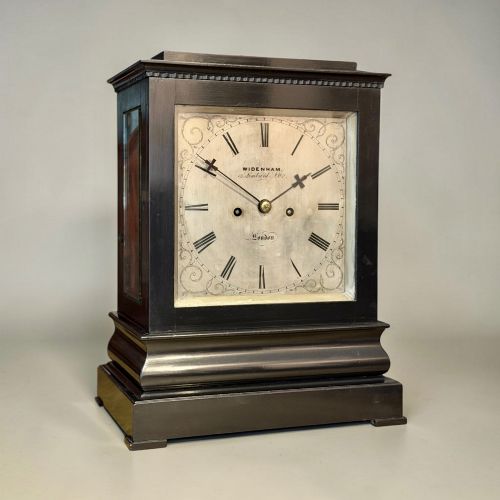
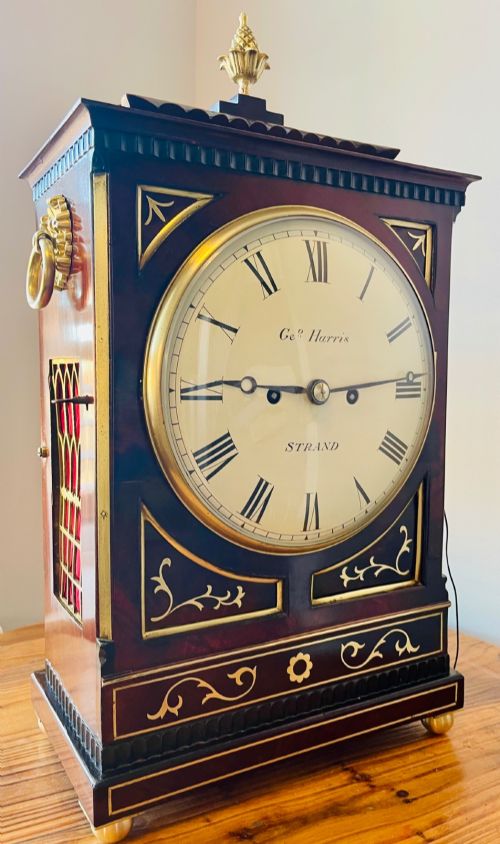
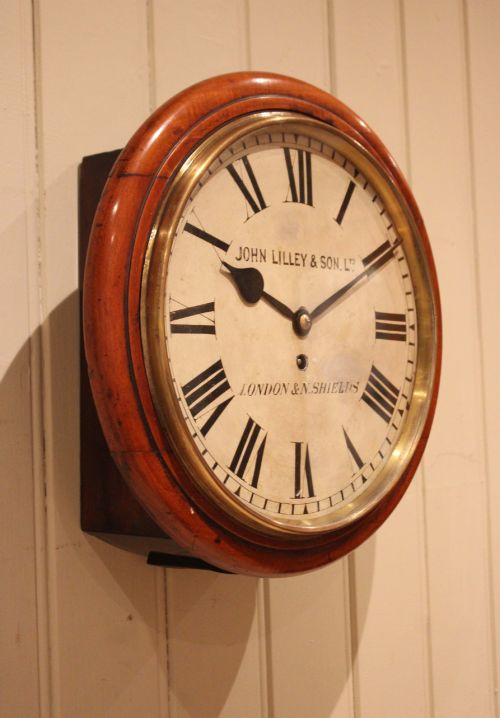
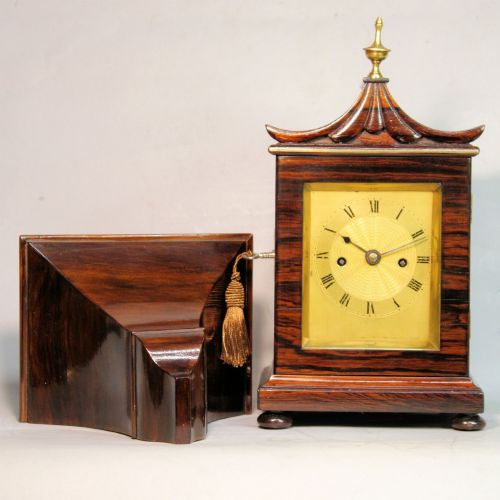
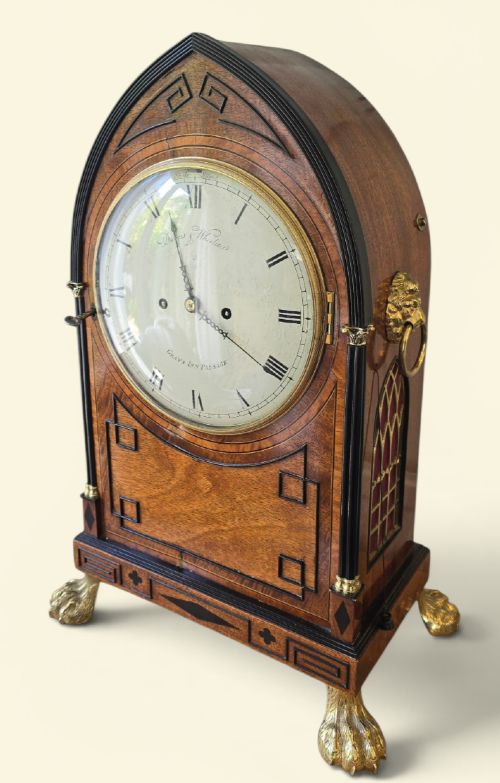
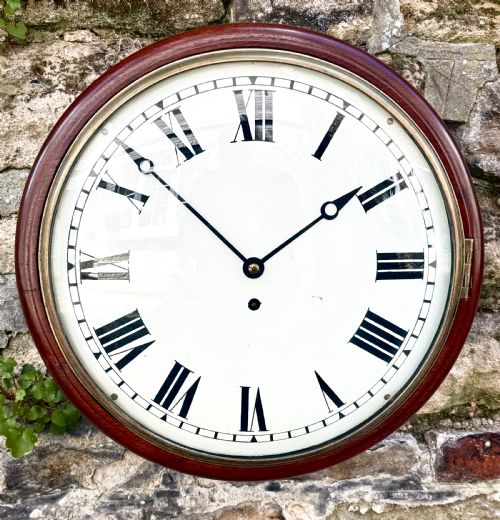
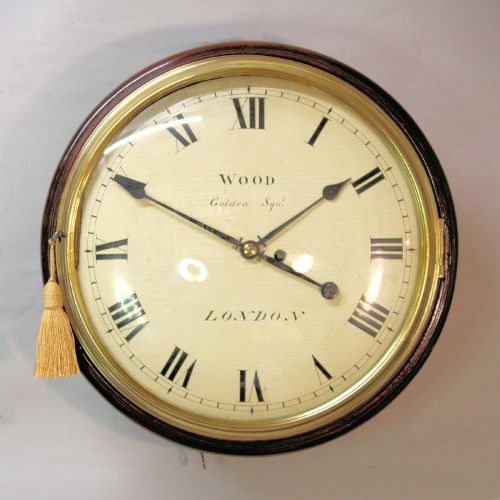
A nineteenth century fusee clock appears in several distinct forms across this selection, spanning wall-mounted dial clocks, bracket clocks, and library timepieces. The dial clocks range from simple school variants to grand drop-dial railway pieces, while bracket and table clocks often display richer woodwork and decorative mounts.
Makers from London and provincial towns fashioned these pieces through the Georgian, Regency, and Victorian eras, incorporating styles from Gothic Revival to Rococo. Buyers will frequently encounter mahogany cases alongside occasional examples in rosewood, ebonised wood, and gilt bronze.
Materials and construction
The defining mechanical feature of these pieces is the fusee, a cone-shaped pulley designed to equalise the declining pull of the mainspring as it unwinds. Workshops housed these precision movements inside solid timber carcases of mahogany or coromandel, often embellished with brass inlay, carved surrounds, or glazed bezels.
Dials were constructed from painted wood, silvered metal, or convex glass, whilst more ornate examples incorporated cast or gilt bronze ormolu mounts in decorative revival styles.
Several examples cleverly combine timekeeping with barometers, ensuring guests can check the air pressure while waiting for the hour to strike.
Factors that separate the range
Quality within these pieces rests upon the precision of the movement and the integrity of the case. Clocks featuring signed dials from known makers command greater interest due to the documented skill of their London and regional workshops.
The refinement of the cabinetry, from crisp wood carving and precise brass inlay to undamaged convex glass and well-preserved silvered dials, distinguishes finer examples from standard utility pieces.
Widenham of London·Desbois & Wheeler·Webster Cornhill London·Halliday & Rich·William Payne·Joseph Mansfield·Payne & Co. London·McCabe London·Edward Hannam·Thomas Gibbs Stratford
The Nineteenth Century Fusee Clock Glossary
- Fusee
- A conical pulley connected to the mainspring by a chain or cord, designed to maintain constant torque as the spring unwinds. This mechanical device is central to accurate timekeeping in British antique clocks.
- Bracket clock
- A portable clock designed to sit on a table, shelf, or dedicated wall bracket. Despite the name, many examples from this period functioned independently of wall supports.
- Drop dial
- A wall clock featuring an extended wooden trunk below the circular dial, often housing a visible pendulum or mercurial barometer. These were standard timepieces in offices, stations, and schools.
- Ormolu
- Gilded bronze used extensively for decorative mounts, bezels, and sculptural cases during the nineteenth century. It adds a bright metallic contrast to dark timber surrounds.
Nineteenth Century Fusee Clock: Frequently Asked Questions
How do I wind a fusee clock?
Wind the clock using the designated key inserted into the dial winding hole, turning it slowly until resistance is felt. Care must be taken not to overwind the mechanism.
Most nineteenth century movements require a weekly wind to maintain accurate timekeeping across the eight-day duration.
Where were wall dial clocks used?
Railway stations, offices, and schools frequently utilised drop-dial wall clocks for clear time reading. Their robust mahogany cases protected the mechanism from heavy public use.
Domestic spaces also employed smaller dial clocks in hallways and kitchens for daily scheduling.
What is the difference between a timepiece and a striking clock?
A timepiece measures the hours without sounding an alarm or striking bells, operating solely with a going train. This simpler mechanism reduces internal wear.
Striking clocks feature an additional train of gears to chime the hours or quarters, requiring separate winding for the strike function.
How can I identify the age of the case?
Case styles often reflect the reigning design period, moving from Georgian architectural proportions to ornate Victorian Gothic or Rococo revival motifs. Wood selection, such as figured mahogany or rosewood, also aligns with prevailing nineteenth-century fashions.
Signatures inscribed on the dial or movement backplate often provide a direct link to the active dates of the maker.