
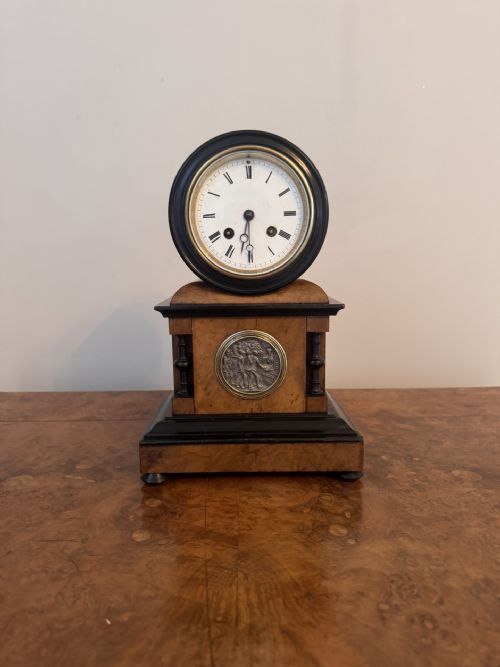
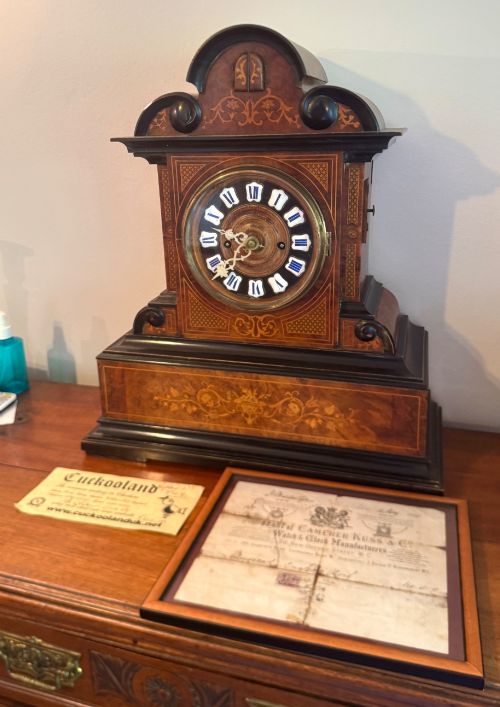


Victorian Ebonised Mantel Clock
A victorian ebonised mantel clock brings dark wood polish and steady mechanical brass into a room.
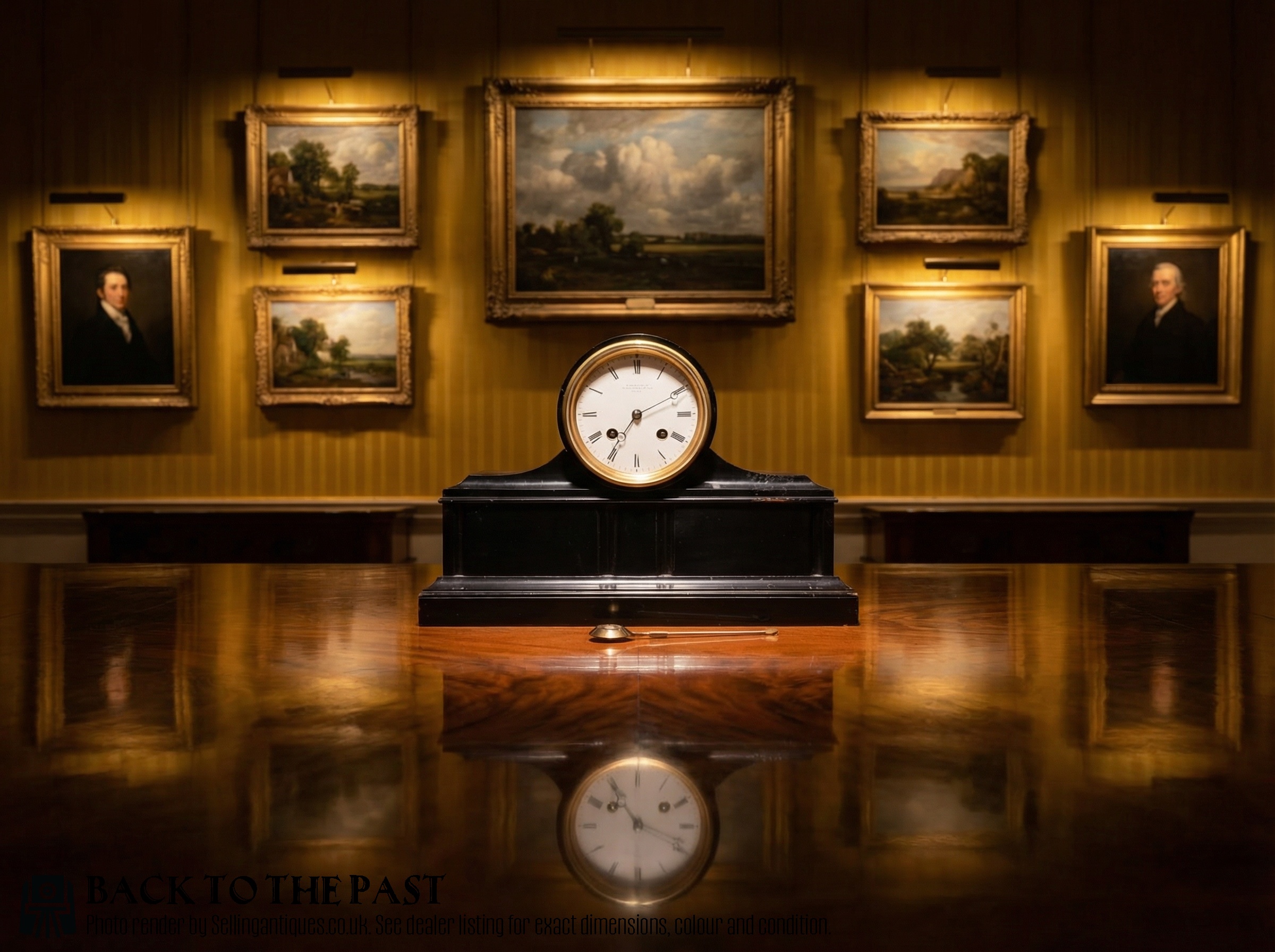
Victorian Ebonised Mantel Clock
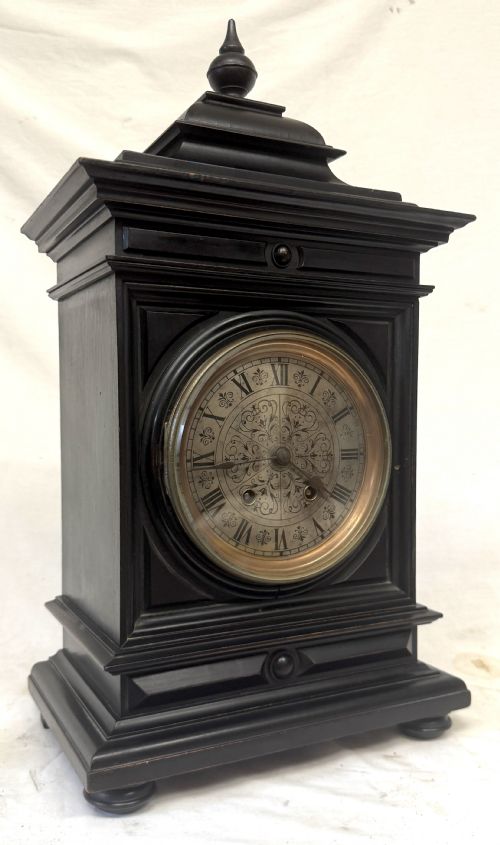
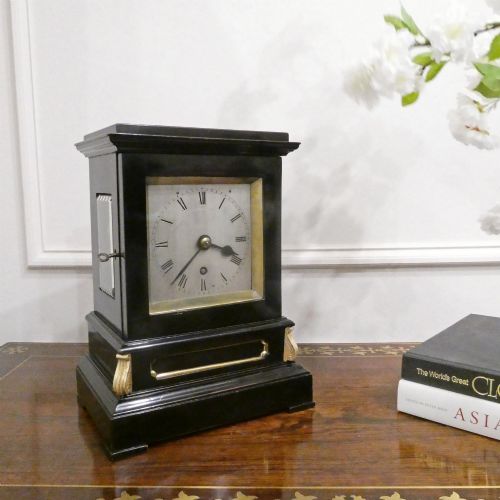
A victorian ebonised mantel clock combines dark-stained timber cases with visible brass dials and intricate movements made during the nineteenth century. These pieces range from simple library timepieces to large bracket clocks with multiple bells and chimes.
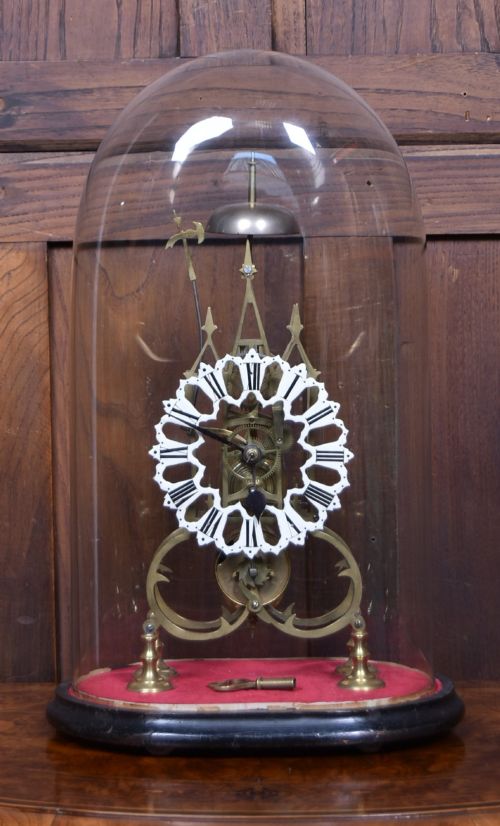
Buyers meet variations spanning the eighteen-fifties through to the eighteen-nineties, alongside related forms such as portico clocks and skeleton movements housed beneath glass domes.
The style draws on French design, Aesthetic Movement principles and classical revivals, meaning cases often mix ebonised wood with ormolu mounts, burr walnut marquetry or gilt bronze details.
Materials and Construction
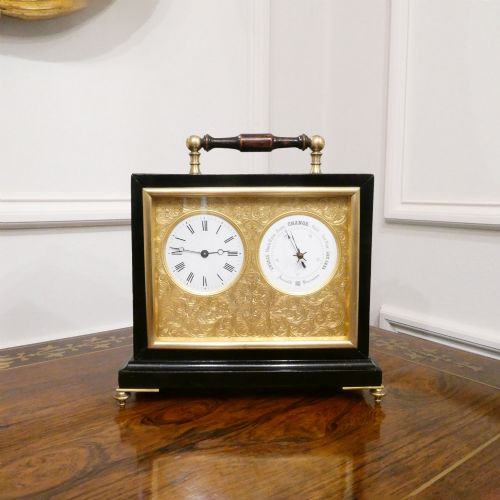
Cases utilise timber stained or painted black to imitate ebony, frequently combined with brass, gilt bronze, ormolu, and glass components. Dial faces often feature silvered bronze, white enamel, or brass chapters protected behind hinged bezels.
Movements rely on mechanical fusee or spring-driven gear trains, sometimes incorporating chiming mechanisms, bells, and gongs. Enclosed glass domes and cloches frequently accompany delicate skeleton or portico clocks to protect the brasswork.
Listings feature Victorian and Edwardian periods alongside materials such as ebonised wood, ormolu, burr walnut, and brass.
Assessing the Workmanship
Quality rests in the precision of the brass movement and the crispness of the case carving, inlay, and ebonising. Finer examples display meticulous marquetry, heavy cast ormolu mounts, and signed dial plates.
Simpler timepieces focus on straightforward fusee reliability, whereas top-tier bracket and chiming clocks exhibit complex multi-bell gear trains and heavier brass components that demonstrate superior nineteenth-century engineering.
Lenzkirch·Phillips Brothers·Arnold and Frodsham·Thomas A Paris·Payne and Co·Charles Frodsham·Barraud and Lunds·Henry Marc
The Victorian Ebonised Mantel Clock Glossary
- Ebonised
- Timber treated to resemble heavy, black ebony wood. This finish was widely applied to fruitwood or pine during the nineteenth century.
- Fusee
- A conical pulley used in mechanical clocks to maintain steady tension on the gear train as the mainspring unwinds. It ensures consistent timekeeping.
- Ormolu
- Gilt bronze ornamentation applied to clock cases and dials. The technique involves coating base metal with a mercury and gold amalgam.
- Bracket Clock
- A portable clock designed to sit on a table, shelf or dedicated bracket. Many nineteenth-century examples feature arched tops and carrying handles.
- Skeleton Clock
- A timepiece with an open metal frame that exposes the gear train and escapement to view. These pieces are frequently displayed beneath glass domes.
Victorian Ebonised Mantel Clock: Frequently Asked Questions
How do fusee movements work?
A fusee movement uses a conical drum and a cord or chain to equalise the pull of the mainspring. As the spring loses tension, the chain moves to a wider part of the cone to maintain steady power.
This mechanical arrangement helps the clock keep accurate time throughout its running cycle between windings.
Where should I place a mantel clock?
These clocks belong on sturdy flat surfaces away from direct sunlight, dampness, and strong drafts. A stable mantelpiece or heavy sideboard provides the necessary support for proper pendulum or balance wheel operation.
Level placement ensures the escapement beats evenly without stopping.
Why are some clocks under glass domes?
Glass domes protected delicate skeleton and portico movements from household dust, smoke, and moisture. Keeping the mechanism clean reduced wear on the brass gears.
These transparent covers also allowed the intricate internal mechanics to remain visible while safeguarding fragile components.
How do I date an ebonised clock?
Dating relies on stylistic clues, dial signatures, and movement construction types seen across the nineteenth century. Aesthetic Movement pieces and specific case motifs point towards the eighteen-eighties, while fusee library clocks often date to the eighteen-fifties.
Maker signatures and engraved serial numbers on the backplate provide further chronological markers.