


Antique Drum Mantel Clock
An antique drum mantel clock brings striking circular form and precise nineteenth-century mechanics to a desk or shelf.
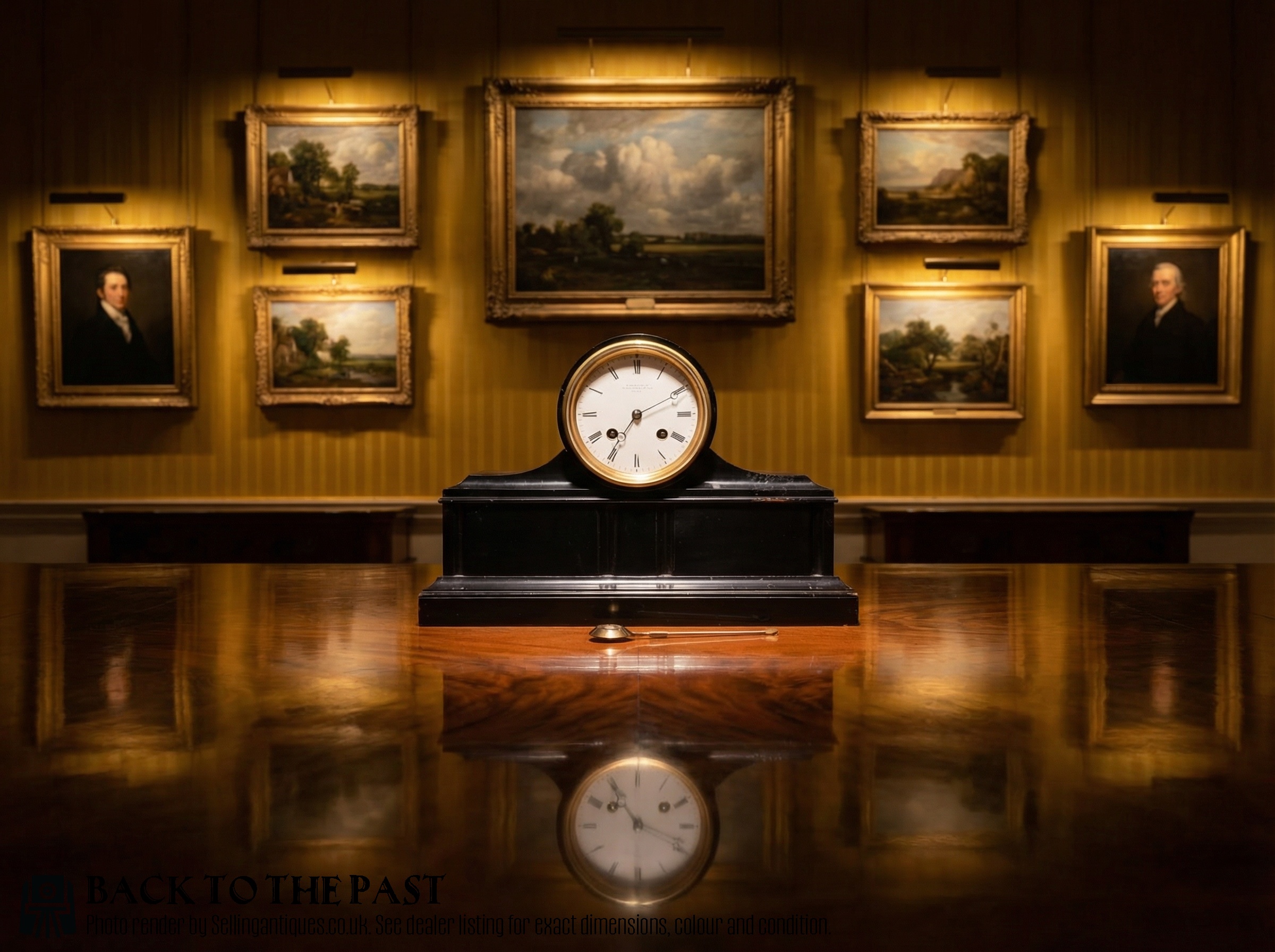
Antique Drum Mantel Clock
When you search for an antique drum mantel clock, you are looking at circular timepiece heads mounted upon architectural or sculptural bases. These pieces emerge predominantly from the nineteenth century, capturing Victorian and Regency sensibilities alongside French revival styles.
You are most likely to meet French drum head designs featuring porcelain plaques or gilt bronze mounts on this page. Other common forms include single fusee movements housed in green marble or ebonised wooden cases.
Materials and construction
These clocks combine heavy metals like brass, ormolu, and gilt bronze with polished stone casings such as black slate and marble. Enamel dials and Sevres porcelain panels frequently provide the face and decorative highlights.
Clockmakers utilised mechanical movements including single fusee and eight-day systems to drive the timekeeping. Glass covers protect delicate enamel dials and hands from dust and damage.
Antique Drum Mantel Clock Retail Price Guide 2026
Typical asking prices for drum mantel clock among the pieces listed under this phrase on Sellingantiques today, from the lower quarter to the upper quarter. They describe what is for sale here now, not the wider market.
Listings feature nineteenth-century pieces spanning the Victorian and Regency periods, utilising brass, marble, and gilt bronze.
How quality varies
The sophistication of the metalwork and the precision of the movement separate standard pieces from superior examples. Finely chased ormolu mounts, crisp brass inlay, and painted porcelain panels elevate the visual impact of a clock.
Maker reputation and case material integrity also dictate worth. Solid marble and dense slate housings demonstrate greater durability and substance than lighter builds.
Japy Freres·Henry Berkeley Square London·D Robertson of Perth
The Antique Drum Mantel Clock Glossary
- Drum head clock
- A timepiece featuring a circular drum-shaped housing for the movement, often raised on a plinth or base. This distinct silhouette defines the category.
- Single fusee
- A mechanical clock movement using a cone-shaped pulley and chain to ensure even tension as the mainspring unwinds. This mechanism improves timekeeping accuracy across the power reserve.
- Ormolu
- Finely ground high-carat gold applied to a bronze base using a mercury amalgamation technique. It produces a rich golden finish found on decorative French clock mounts.
- Sevres porcelain
- Soft-paste porcelain produced by the historic French royal manufactory, celebrated for hand-painted details and rich colour grounds. These panels frequently decorate clock plinths and dials.
- Fusee
- A conical drum used in mechanical clocks to equalise the torque of the mainspring as it runs down.
Antique Drum Mantel Clock: Frequently Asked Questions
What is a drum mantel clock?
A drum mantel clock is a timepiece featuring a circular drum-shaped case that holds the dial and movement. These are usually mounted on decorative rectangular or architectural bases.
They sit comfortably on fireplace mantels, shelves, or desks as both functional timekeepers and decorative objects.
How do single fusee movements work?
A single fusee movement uses a conical pulley attached to a cord or chain that connects to the mainspring. This compensates for the dropping tension of the spring as it unwinds.
Such systems help maintain consistent force on the escapement, delivering more accurate timekeeping throughout the running period.
Where were these clocks made?
Many of these clocks originate from nineteenth-century French workshops and English makers. French pieces often utilise ormolu and Sevres porcelain, while English examples frequently feature marble and brass.
Stylistic cues like lions masks and gilt mounts point directly to these European production centres.
How should I care for an antique clock?
Keep your clock away from direct sunlight, dampness, and fluctuating temperatures that can affect wooden cases and metal components. Professional servicing every few years ensures the mechanical parts remain clean and lubricated.
Wind the movement gently using the correct key, avoiding over-winding to protect the mainspring.
How do I identify a Victorian clock?
Victorian clocks often display robust materials like black slate, ebonised wood, and heavy brass mountings. Their design draws on various historical revivals popular during the nineteenth century.
Maker signatures on the dial or movement backplate frequently confirm the period of production.