
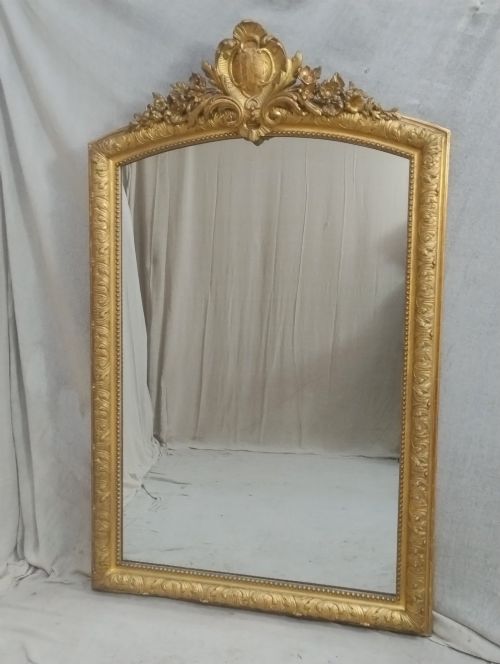


Nineteenth Century Carving
Nineteenth century carving brings together walnut, mahogany, oak and giltwood shaped by hands from the Victorian, Regency and William IV periods into mirrors, chairs, tables and figures.
Nineteenth Century Carving
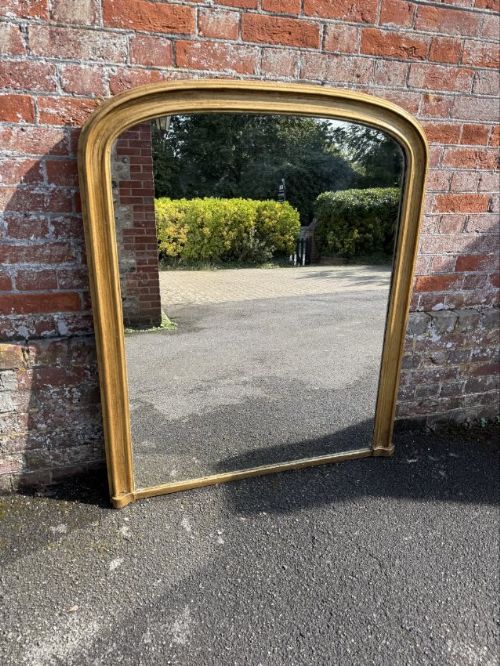
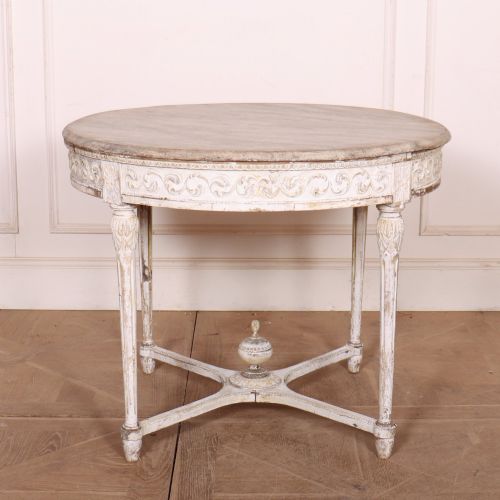
Buyers seeking nineteenth century carving encounter a broad mix of furniture, mirrors and decorative objects spanning the Victorian, Regency and William IV eras. The selections on this page lean heavily towards seating, console tables, overmantel mirrors and chests of drawers produced across Britain, France, Sweden and China.
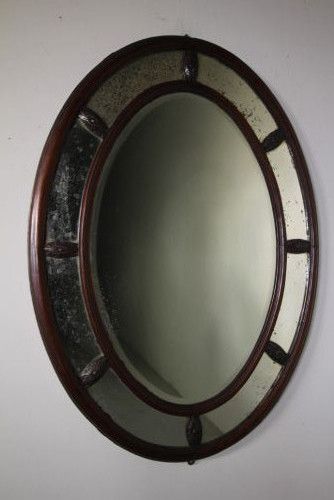
The objects take many forms, from dining chairs and library armchairs to carved wood and gesso arched mirrors, oak collectors cabinets and rosewood card tables. Alongside these furniture pieces sit specialist items like artist lay figures, ceremonial ewers and devotional figures.
Origins vary widely, encompassing English country house pieces, French gilt mirrors, Biedermeier display cabinets and Qing Dynasty carved hardwood sculptures. This variety reflects the diverse domestic and decorative uses of carved wood and stone across the nineteenth century.
Materials and methods
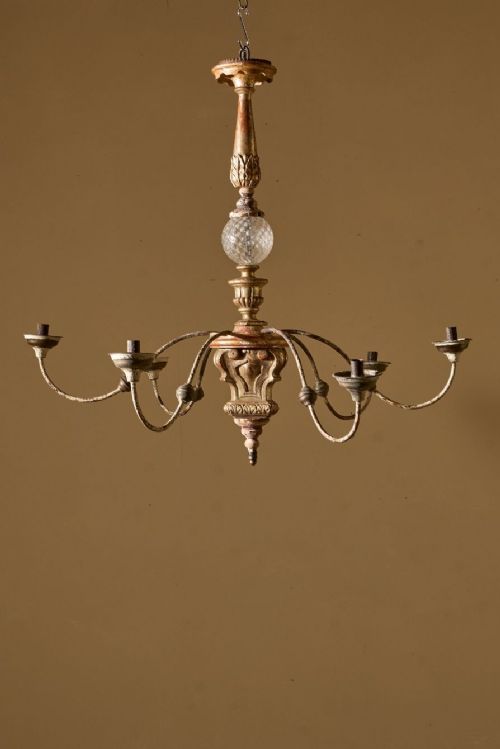
Makers utilised dense timbers such as mahogany, walnut, rosewood and oak, often pairing them with brass inlays, gesso and giltwood surfaces. These materials provided the structural integrity needed for intricate detailing on dining chairs, console tables and large overmantel mirrors.
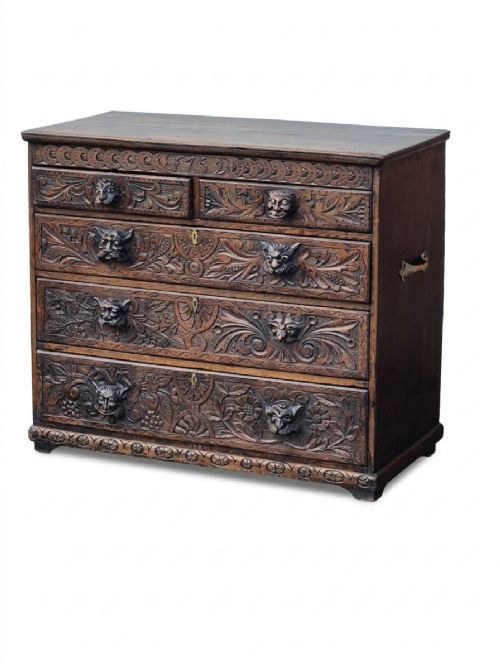
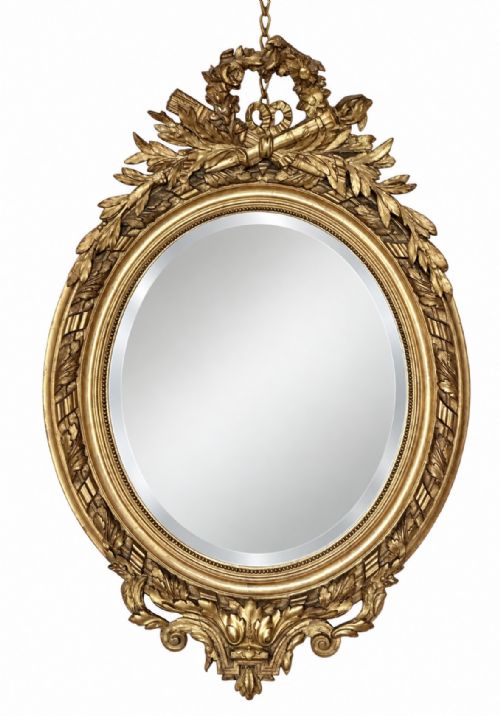
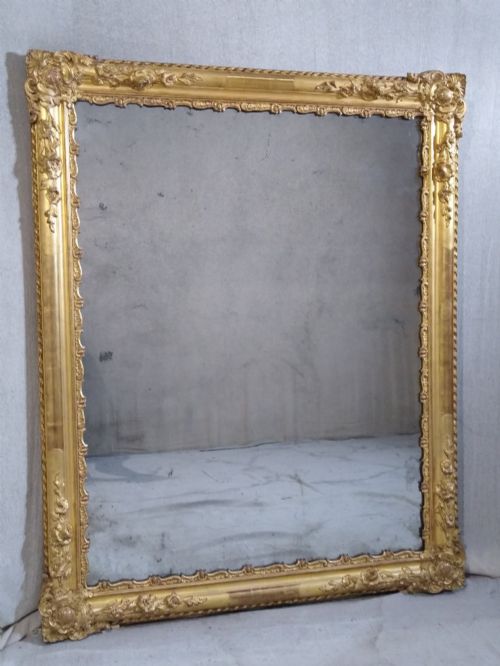
Techniques relied on skilled hand chiselling and joinery to achieve deep relief work, such as the acanthus leaf decoration seen on Victorian gilt mirrors and the grotesque motifs found on chest of drawers. Hardwoods were turned, carved and polished by hand to highlight the natural grain.
Surface treatments ranged from French polishing on rosewood and walnut to burnished gilding over gesso grounds on mirrors and frames. In pieces like artist lay figures and small cabinets, precise articulation and joinery united form with function.
The documented periods span the Georgian era, Regency, William IV, Victorian, French Second Empire, and Qing Dynasty.
Judging quality in carved pieces
Quality rests in the crispness of the hand-carved detail and the depth of relief work across the timber or gesso. Sharp, undercut foliage and well-defined figures demonstrate superior hand skill compared to soft or shallow moulding.
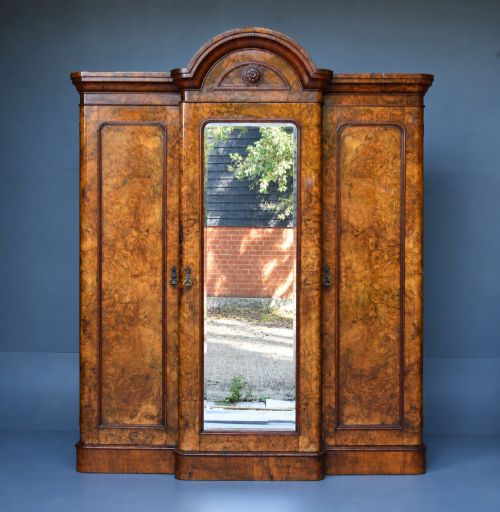
The choice and preparation of the primary wood dictate the visual strength of each piece, with finely figured mahogany, burr walnut and rosewood elevating standard forms into high-grade seating and tables. Construction integrity, such as traditional joinery in chairs and cabinets, supports long-term durability.
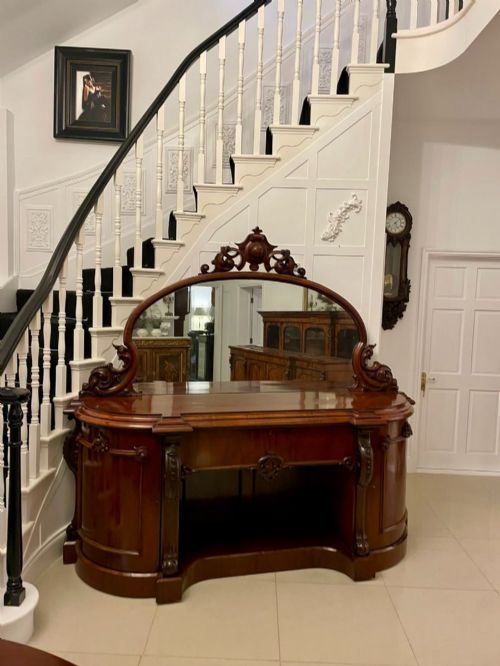
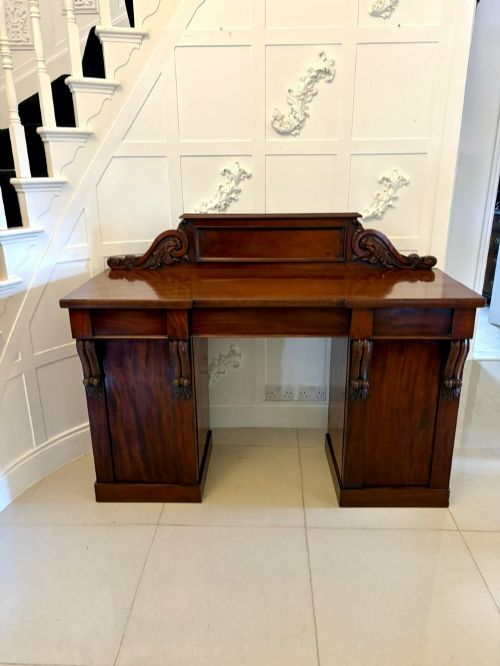
Originality of surface finish, whether the patination on a mahogany sideboard or the intact gilding on a French overmantel mirror, preserves the integrity of the period maker's work.
The Nineteenth Century Carving Glossary
- Gesso
- A plaster-like mixture applied to wood as a base for gilding or painting. It provides a smooth surface that carvers could shape before laying gold leaf.
- Gueridon
- A small decorative table originating in France during the seventeenth century and continuing through the nineteenth. These tripod or pedestal tables frequently featured carved wooden supports.
- Acanthus
- A classical decorative motif based on the Mediterranean plant of the same name. Carvers utilised this leaf pattern extensively on Victorian mirrors and furniture legs.
- Bar Back
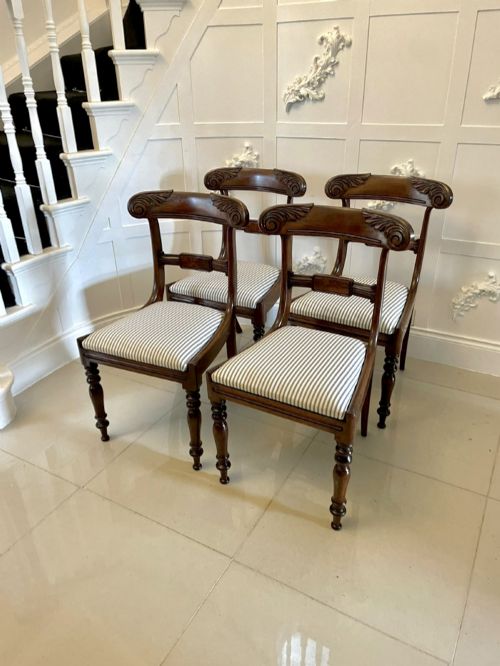
- A dining chair style with a curved top rail resembling the top rail of a bar or yoke. It was common in William IV and Regency seating.
- Prie Dieu
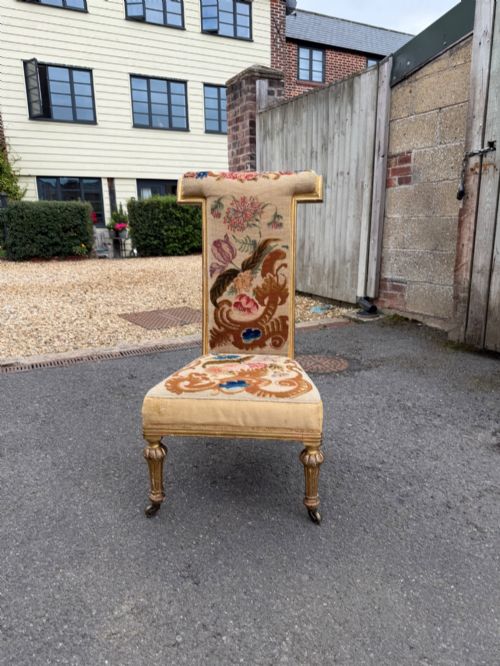
- A small devotional desk designed for kneeling during prayer, equipped with a sloping top and a padded shelf. Nineteenth century examples often incorporated carved wood panels.
Nineteenth Century Carving: Frequently Asked Questions
How do I date a carved wooden piece?
Dating relies on examining the timber species, construction methods, and stylistic cues present in the piece. Secondary woods and tool marks often reveal the manufacturing period.
Comparing the decorative motifs, such as Regency brass inlay or Victorian grotesque carving, against established period styles helps narrow down the decade of production.
Where were these carved objects made?
The items originate from workshops across Britain, France, Sweden, and China. Regional preferences dictated the choice of materials, such as oak and mahogany in Britain or walnut in France.
Trade and export also distributed items like Qing Dynasty carvings and Tibetan ceremonial vessels internationally during the nineteenth century.
How should I care for nineteenth century carved furniture?
Keep carved wooden pieces away from direct sunlight and sudden temperature shifts to prevent the timber from splitting. Regular dusting with a soft, dry cloth preserves the finish.
Avoid commercial polishes containing silicone, choosing instead traditional beeswax applied sparingly to nourish the exposed wood grain.
What is the difference between Regency and Victorian carving?
Regency carving often leans towards classical restraint, incorporating brass inlay, rosewood, and restrained classical motifs influenced by ancient Greece and Rome. Proportions tend to be linear and architectural.
Victorian carving embraces heavier forms, dramatic depth, and naturalistic details like acanthus leaves and grotesque figures, utilising walnut, oak, and elaborate giltwood frames.