




Nineteenth Century Carpet
A nineteenth century carpet brings room-anchoring presence and rich dye palettes into a home.
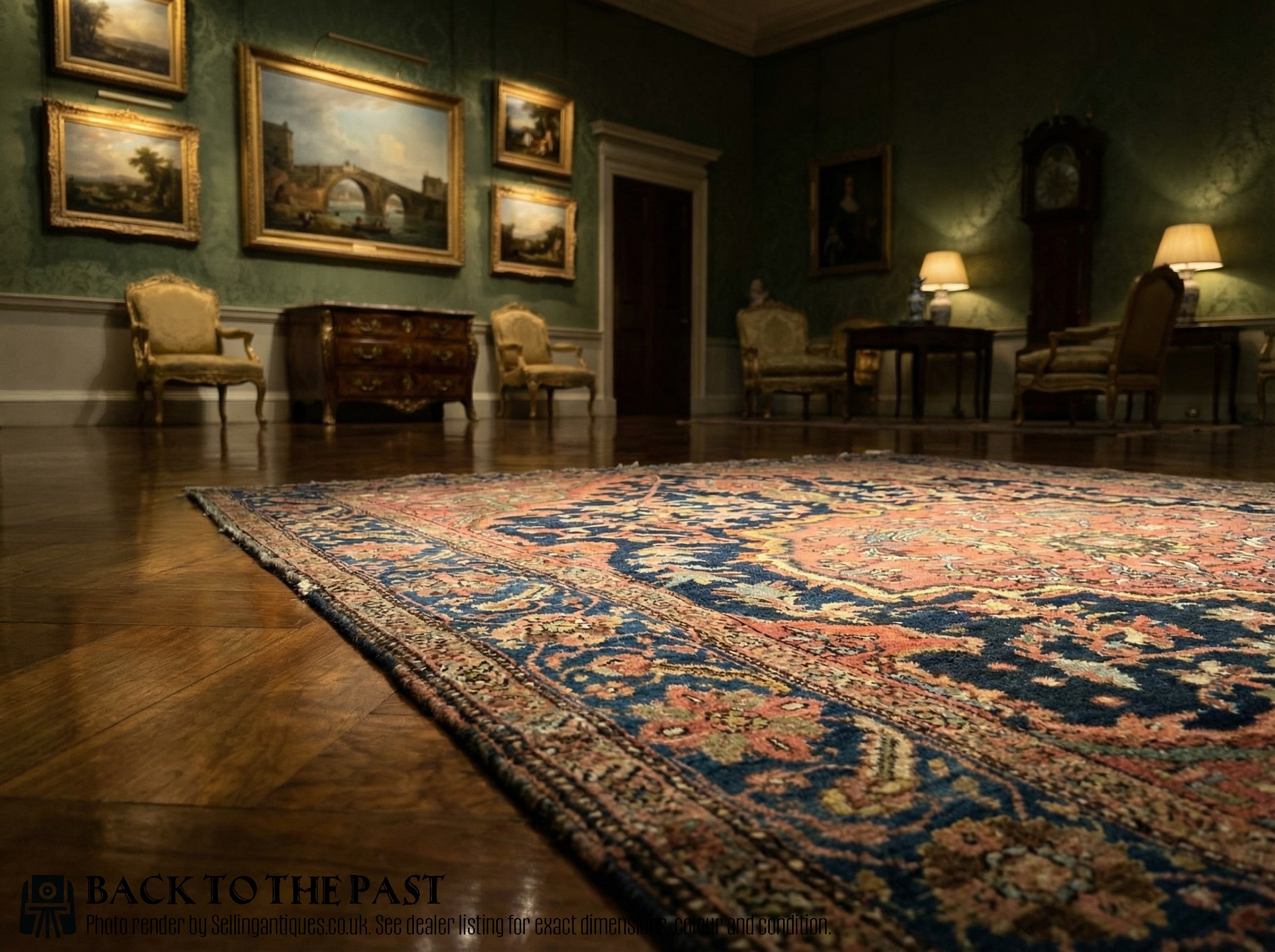
Nineteenth Century Carpet
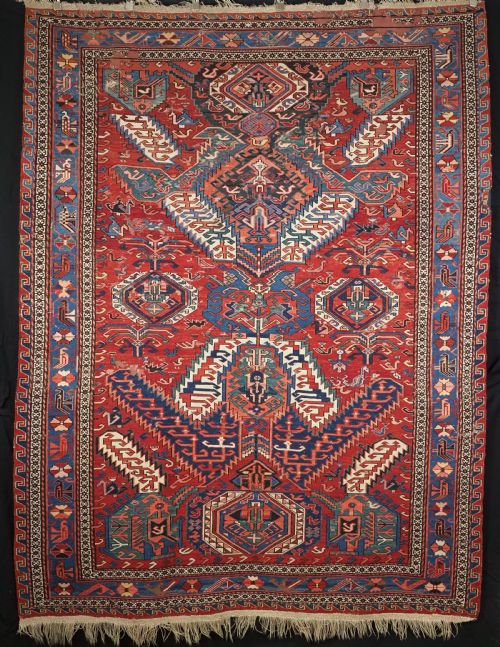
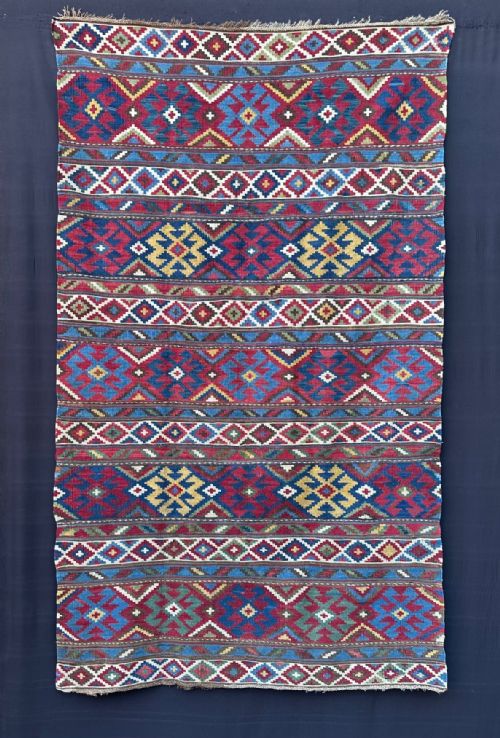
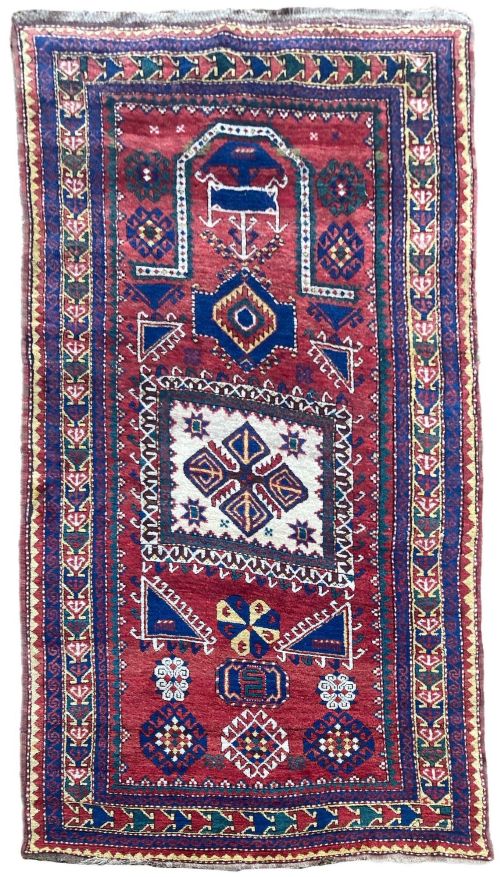
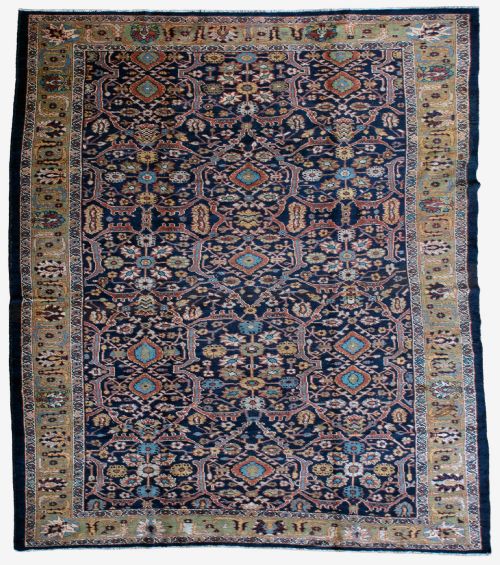
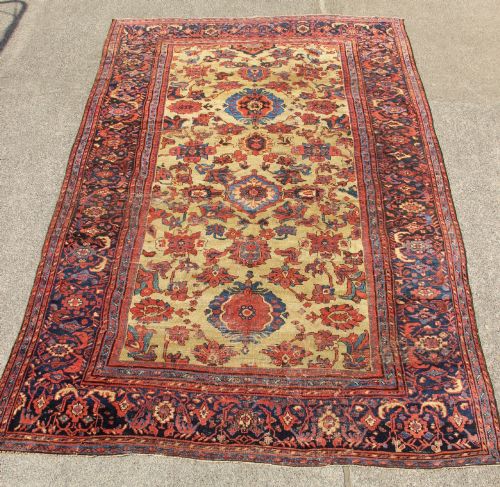
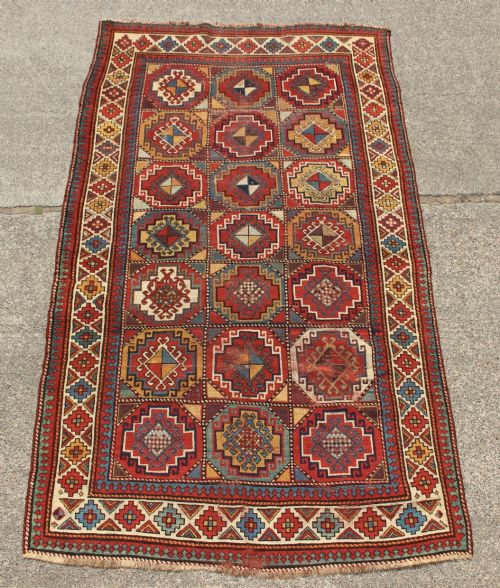
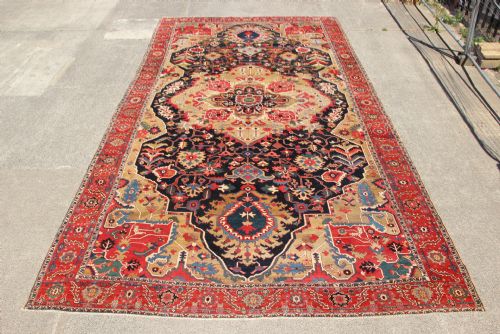
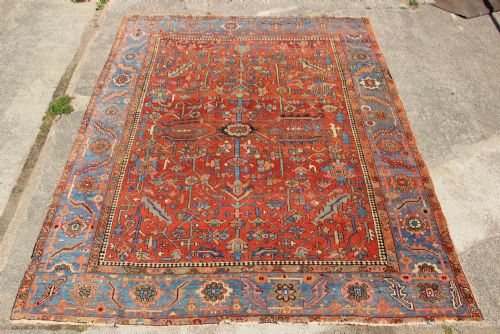
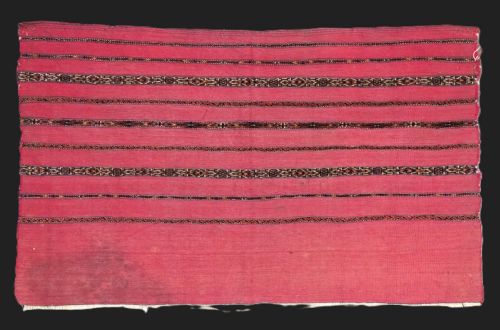
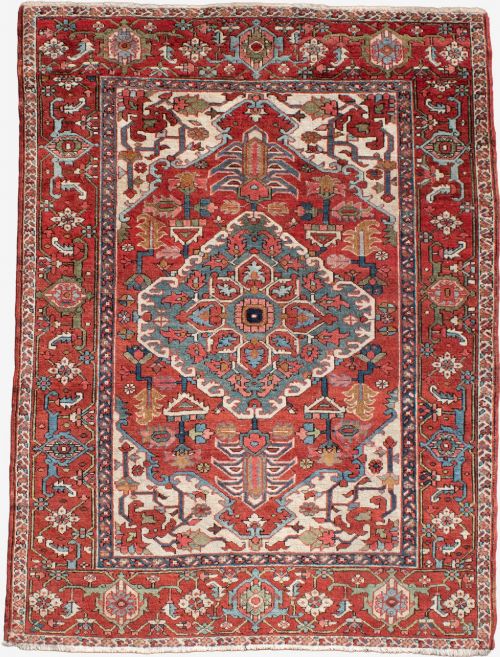
A nineteenth century carpet encompasses hand-knotted floor coverings and flatweaves originating from Persian, Caucasian, Turkmen, and Anatolian workshops and tribes. These textiles arrive in formats ranging from small prayer rugs and tribal bag faces to room-sized Mahal, Heriz, and Ushak carpets.
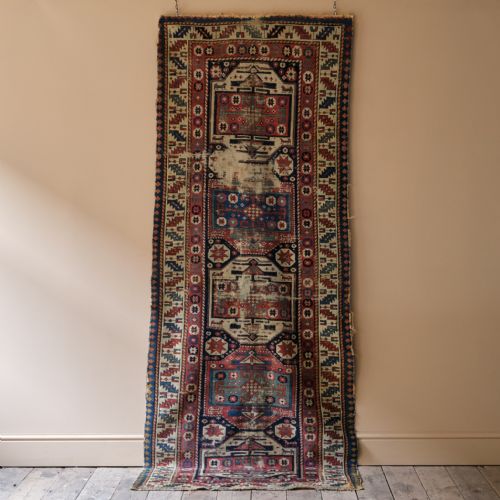
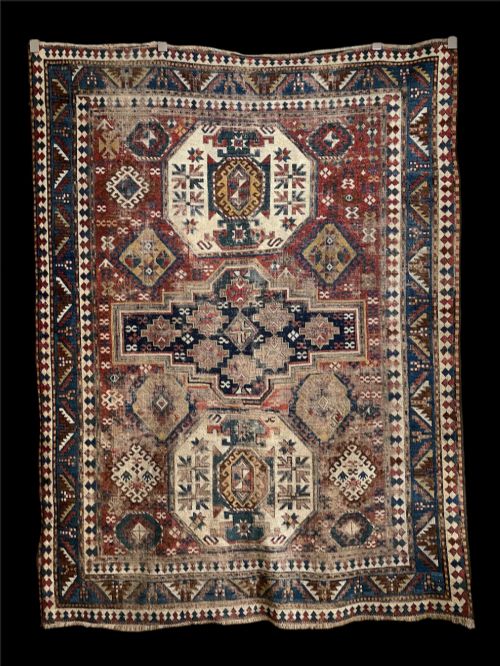
The pieces available on this page reflect the aesthetic diversity of the period, spanning village designs with geometric medallions to finely drawn city formats. Buyers encounter everything from runner rugs and corridor carpets to grand room-scale examples woven across Persia, the Caucasus, and Central Asia.

How they were made
Weavers constructed these carpets predominantly using wool and cotton foundations, often knotting pile wool by hand onto cotton warps and wefts. Natural dyes provided the deep terracotta, ivory, and polychrome palettes seen across surviving examples.
Techniques varied between nomadic tribal weaving, such as soumak and kilim flatweaves, and settled workshop traditions utilising intricate pile knots. Regional structures determined whether a piece emerged as a pliable bag face or a heavy, room-sized floor carpet.
Nineteenth Century Carpet Retail Price Guide 2026
Typical asking prices for nineteenth century carpet among the pieces listed under this phrase on Sellingantiques today, from the lower quarter to the upper quarter. They describe what is for sale here now, not the wider market.
Listings feature wool, cotton, and silk materials dyed with natural colours across Persian, Caucasian, and Turkmen styles.
What varies in quality
Quality rests upon the precision of the drawing, the depth and saturation of the natural dyes, and the fineness of the weave. Tighter knot counts and balanced proportions distinguish accomplished village and workshop output from standard production.
The handling of traditional motifs, such as Lezghi stars, dragon designs, or tribal guls, dictates the artistic merit of each piece. Superior examples display crisp geometry, harmonious colour transitions, and intact original borders.
The Nineteenth Century Carpet Glossary
- Soumak
- A flatweave technique involving wrapping weft threads over warps to create a durable, textured surface. It frequently appears on Caucasian and tribal pieces.
- Gul
- A medallion motif repeated across Turkmen and central Asian carpets. These octagonal or polygonal forms often signify specific tribal lineages.
- Prayer rug
- A small format textile featuring a mihrab or arch design intended for devotional use. Konya and Kazak examples frequently adopt this layout.
- Warps
- The vertical threads stretched across a loom that form the structural skeleton of a carpet. Cotton and wool served as the primary foundation materials.
- Kazak
- A style of geometric rug woven by village and tribal groups in the Caucasus. These pieces typically showcase bold primary colours and rectilinear animal or plant motifs.
Nineteenth Century Carpet: Frequently Asked Questions
How do I identify a nineteenth century carpet?
Examination of the materials, structural foundation, and dye palette reveals the age and origin of these textiles. Natural dyes and hand-spun wool offer primary indicators of period production.
Regional designs, such as Heriz medallions or Turkmen guls, help narrow down the specific workshop or tribal group responsible for the weave.
Where were these carpets originally woven?
Production centred across Persia, the Caucasus, Anatolia, and Central Asia. Village weavers and nomadic tribes contributed distinct regional styles to the global market.
City workshops in centres like Ushak, Agra, and Kashan produced larger room-scale carpets tailored for export.
How should I care for an antique rug?
Regular gentle vacuuming without a rotating brush prevents dust accumulation within the wool pile. Professional cleaning by specialists in antique textiles preserves the integrity of natural dyes.
Keeping the carpet out of direct sunlight prevents fading of the saturated terracotta and indigo tones.
What is the difference between a rug and a carpet?
Size and intended placement traditionally distinguish a rug from a carpet. Smaller formats like prayer rugs and torba faces served functional or decorative roles in tents and rooms.
Larger room-sized pieces, such as Mahal and Ushak carpets, anchored substantial floor spaces in formal interiors.