

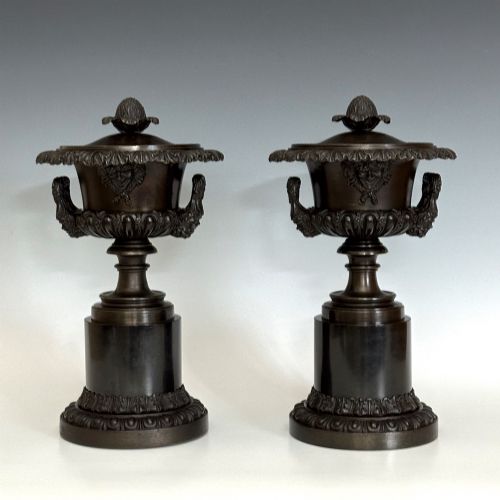
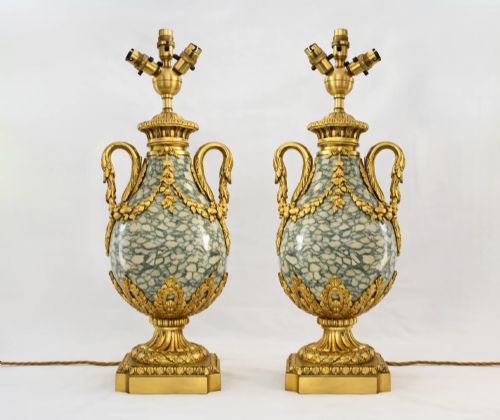


Nineteenth Century Bronze Vase
Nineteenth century bronze vase designs combine cast metal with porcelain, marble, and enamel to create decorative urns, lamps, and centrepieces.
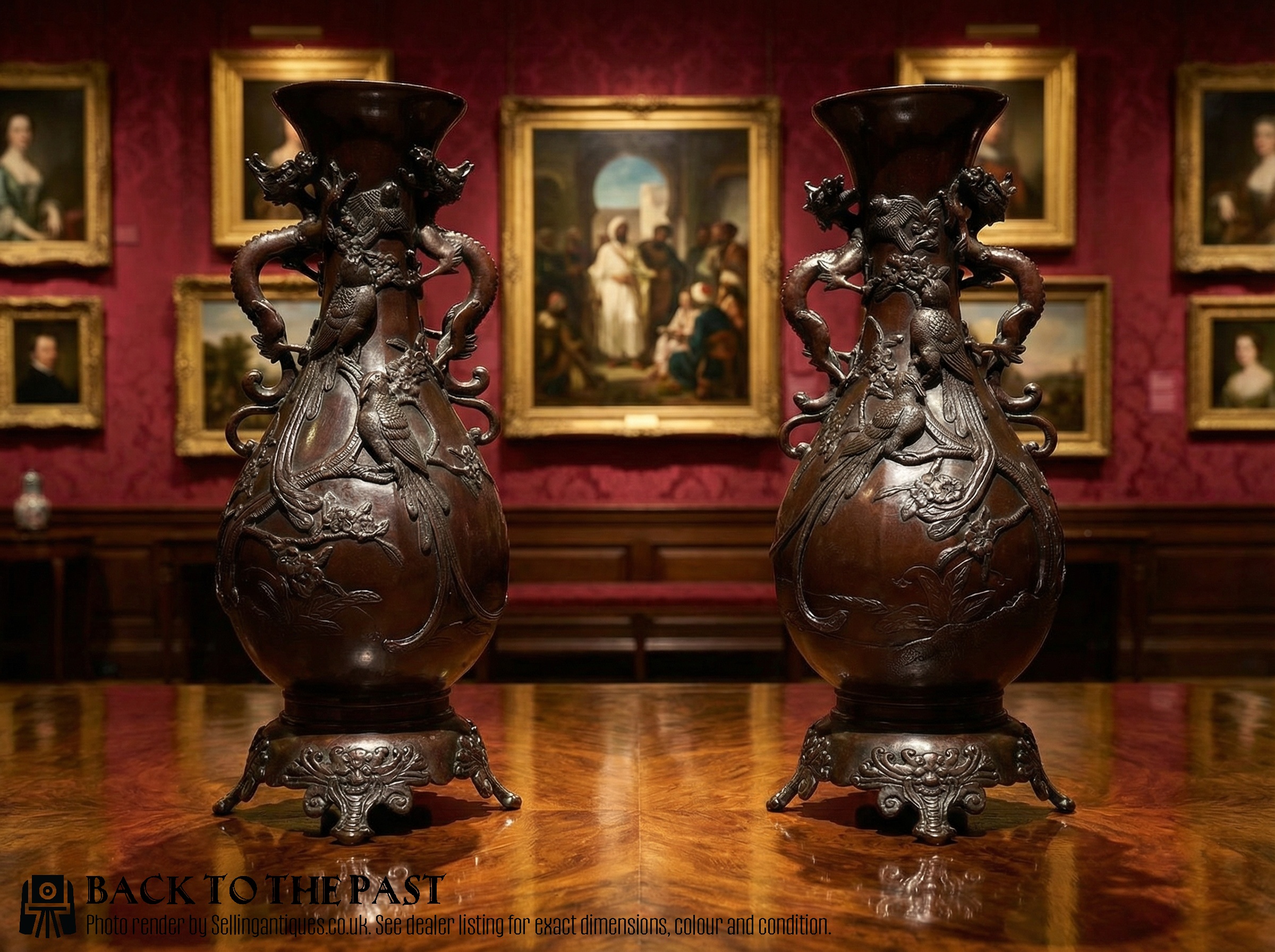
Nineteenth Century Bronze Vase
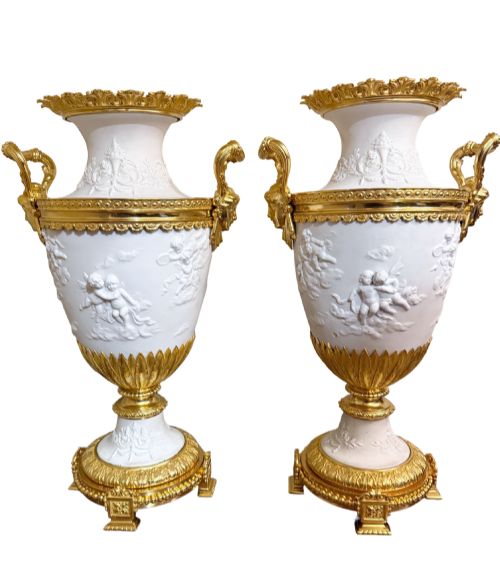
When you search for a nineteenth century bronze vase, you encounter decorative vessels, urns, and lamps that frequently incorporate porcelain, marble, and gilt mounts.
The most common pieces on this page are French and Asian works from the Victorian era, spanning styles from Renaissance Revival to Japanese Meiji and Qing periods.
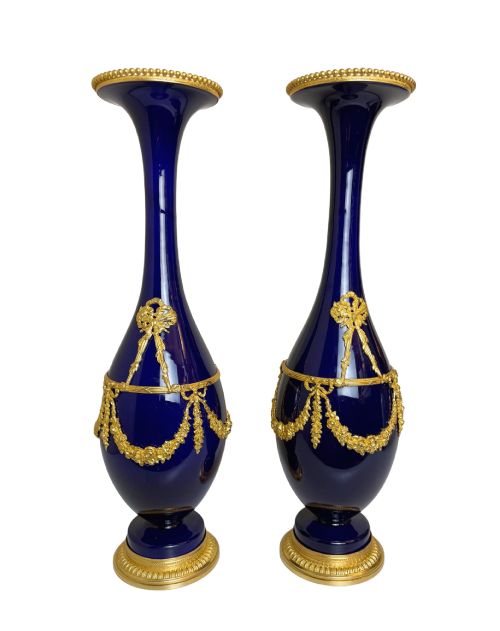
Many items survive as matched pairs designed for mantelpieces, often featuring classical campana shapes, handles, and lidded covers.
How they were made
Makers utilised lost-wax or sand casting methods for the bronze components, finishing the metal with patination, silvering, or gilding known as ormolu.
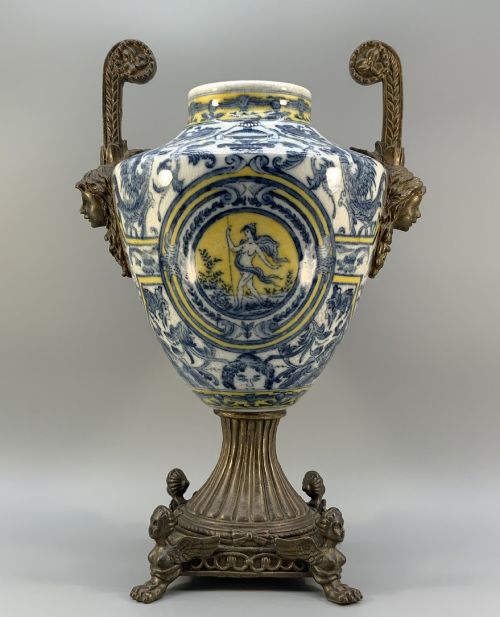
Composite pieces combine cast bronze mounts with imported porcelain bodies, such as Sèvres style ceramics, or carved stone bases in siena marble.
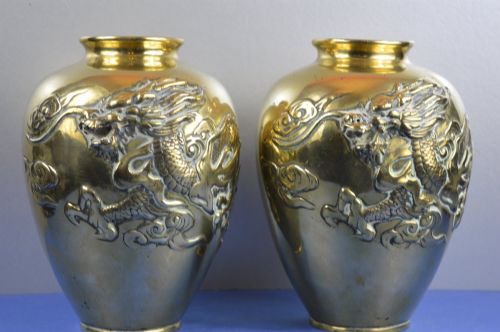
Some bronze dragons guard mantelpieces with fierce expressions, proving that nineteenth-century desks needed more mythical beasts.
What varies in quality
The crispness and depth of the metal chasing set superior castings apart from simpler, softer production.
Quality rests in the harmony of mixed media, where bronze mounts fit porcelain or marble bodies with exact precision.
Barbedienne Paris·Clodion
The Nineteenth Century Bronze Vase Glossary
- Ormolu
- Gilt bronze, where a layer of finely ground gold is amalgamated with mercury and applied to cast brass or bronze.
- Campana
- A classical bell-shaped vessel with a flaring rim, widely utilised for urns and vases.
- Cassolette
- A decorative vase or urn featuring a reversible lid that can function as a burner or solid container.
- Cloisonné
- An enamelwork technique where metal wire forms compartments on a bronze body before filling with coloured paste.
Nineteenth Century Bronze Vase: Frequently Asked Questions
What is a nineteenth century bronze vase?
These pieces are decorative metal vessels produced across the eighteen-hundreds, often incorporating classical urn forms or mixed materials like porcelain and marble.
Many examples were manufactured in France and Asia for interior display, sometimes later converted into table lamps.
How were they used?
Nineteenth century bronze vases served primarily as ornamental garnitures on mantelpieces, credenzas, and tables within wealthy domestic interiors.
Some lidded versions functioned as cassolettes or urns, while others were later adapted to hold electrical fittings for lighting.
How do I identify French revival styles?
French revival pieces incorporate historical motifs such as Louis XVI or Renaissance ornamentation, utilising cast ormolu mounts alongside porcelain.
Maker signatures or foundry stamps occasionally appear on the bronze bases or underneath the mounts.
What is Grand Tour style?
Grand Tour pieces replicate classical antiquities encountered by travellers visiting archaeological sites in Italy and Greece during the nineteenth century.
These items are typically rendered in patinated bronze or marble, taking the form of campana urns or classical vases.