
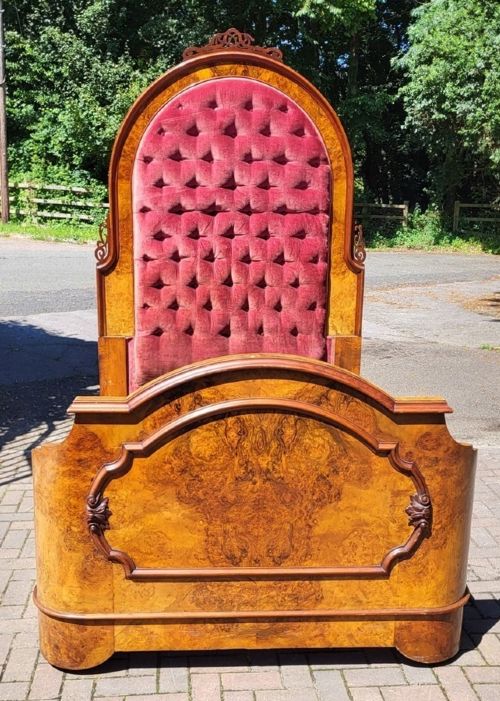


Nineteenth Century Bedstead
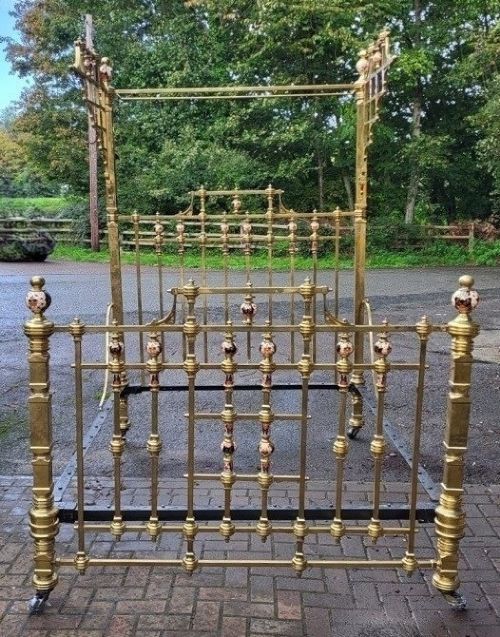
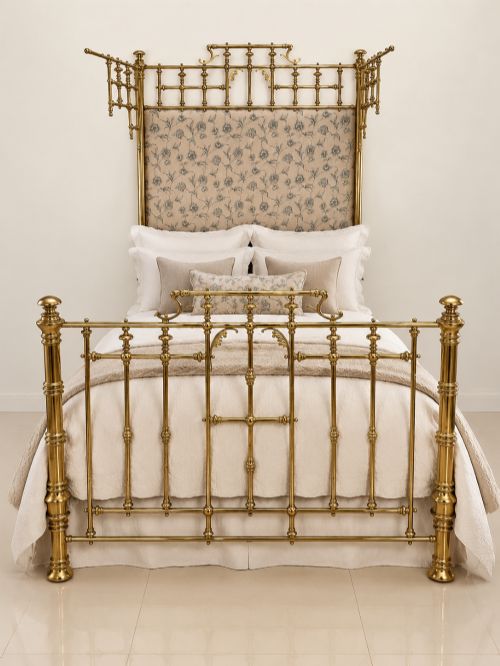
These nineteenth century bedstead examples bring Victorian and Regency presence to a room, offering substantial timber frames and gleaming brass structures built for daily use.

Nineteenth Century Bedstead
A nineteenth century bedstead serves as the central anchor of a bedroom, bringing the architectural weight and craftsmanship of the Victorian and Regency periods into a modern home. The examples gathered here span iron, brass, mahogany, and burr walnut, reflecting the diverse material tastes of the nineteenth century.
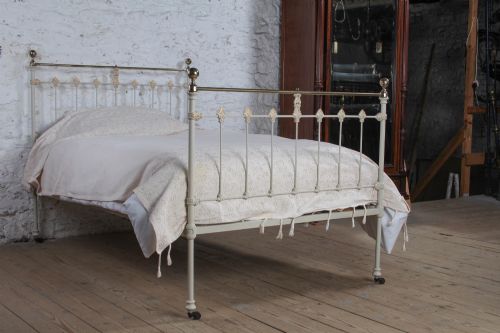
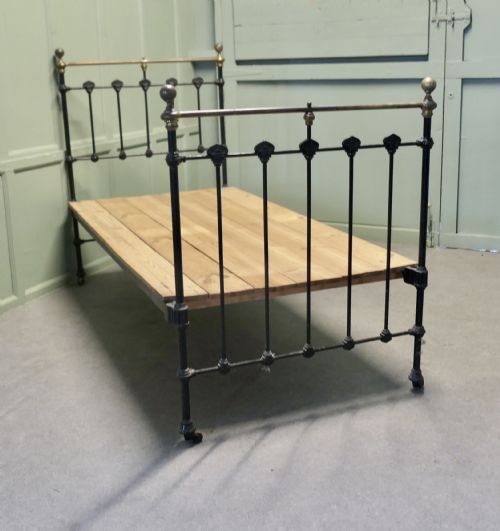
Buyers will most frequently encounter sturdy iron and brass combinations alongside generous double and king-size timber frames. These pieces range from simple single beds to ornate half tester and four-poster configurations.
Origins stretch across British Victorian workshops and French ateliers, showing regional preferences for Ormolu details, button-back upholstery, and polished hardwoods.
Materials and Construction
Metal bedsteads combine heavy cast iron with polished brass tubing and detailed castings, joined by sturdy side rails designed to support considerable weight. Timber frames utilise dense hardwoods such as mahogany, satinwood, and burr walnut, often polished to a deep lustre that highlights the natural grain.
Upholstered elements employ traditional padding secured with deep buttoning, while French pieces incorporate cast or hand-chased Ormolu mounts fixed directly to the woodwork.
Nineteenth Century Bedstead Retail Price Guide 2026
Typical asking prices for nineteenth century bedstead among the pieces listed under this phrase on Sellingantiques today, from the lower quarter to the upper quarter. They describe what is for sale here now, not the wider market.
Design styles span Victorian, Regency, French Empire, Arts and Crafts, and Art Nouveau periods.
Assessing Build and Proportion
Quality reveals itself in the structural integrity of the joints and the original thickness of the brass or timber used in the frame. Superior examples display crisp casting details on metalwork and finely matched wood veneers across the headboards and footboards.
The presence of matching side rails and original ironwork significantly elevates a piece, ensuring it retains its intended proportions and stability.
Shapland and Petter
The Nineteenth Century Bedstead Glossary
- Half Tester
- A bedstead featuring a canopy that extends only partway over the head of the bed, supported by the headboard rather than full posts.
- Ormolu
- Gilded bronze mounts applied to furniture for decorative effect, common in French Empire styling.
- Burr Walnut
- Timber taken from the warted growth of a walnut tree, producing a swirling grain pattern highly prized for veneered panels.
- Side Rails
- The horizontal metal or wooden bars connecting the headboard and footboard to support the mattress frame.
Nineteenth Century Bedstead: Frequently Asked Questions
Will a nineteenth century bedstead fit a modern mattress?
Many nineteenth century bedstead designs were built to sizing standards that differ slightly from modern mattresses. Standard UK double or king sizes often require minor adjustments or custom mattress widths to sit correctly between the side rails.
Checking the internal width and length dimensions before purchase ensures a secure fit for contemporary bedding.
How do I assemble an antique metal bed?
Most iron and brass bedframes utilise a wedge-lock or bolt-in system where the side rails slot directly into the corner brackets of the headboard and footboard. Tapping the joints gently with a rubber mallet helps seat the metal components securely without damaging the finish.
Ensuring the frame is square on a level floor prevents stress on the side rails.
Can I polish antique brass safely?
Polishing depends entirely on whether the brass retains its original protective lacquer or has developed a darkened patina over decades. Using a mild, non-abrasive metal cleaner restores brightness without stripping the underlying texture of the cast components.
Applying a soft cloth prevents scratching the polished surfaces.
How do I care for mahogany bed timber?
Mahogany requires consistent indoor humidity levels to prevent the solid wood and veneers from drying out or splitting. Dusting regularly with a dry cloth and applying natural beeswax periodically maintains the polish.
Keeping the bedstead away from direct heat sources protects the timber finish.