
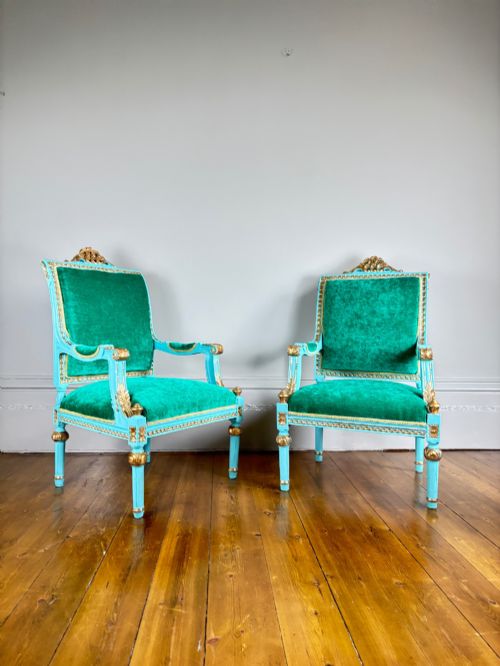
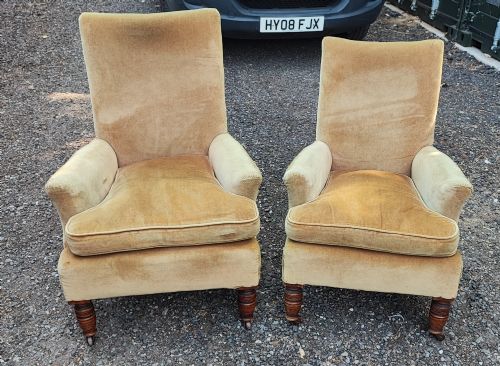
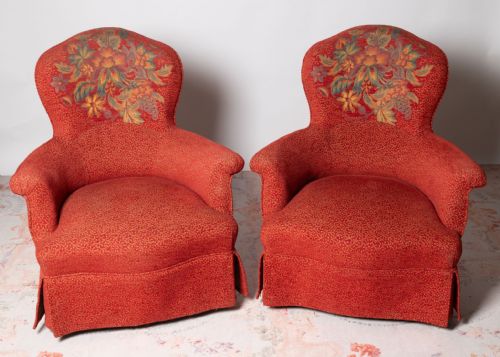
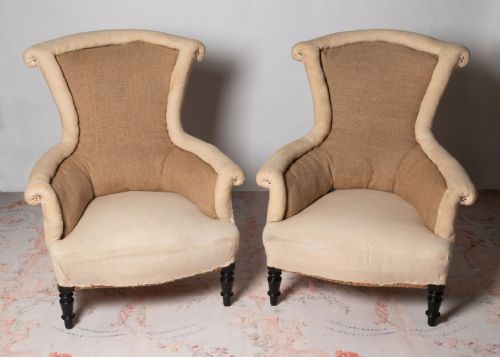
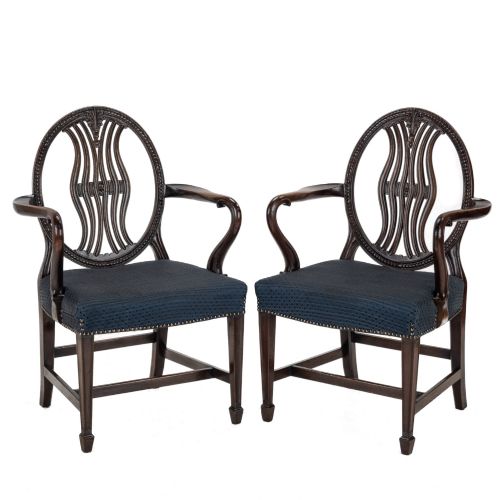


Nineteenth Century Armchair Pair
A nineteenth century armchair pair brings matched seating to a room, offering wood frames and upholstered seats from periods spanning Regency to Edwardian.
Nineteenth Century Armchair Pair
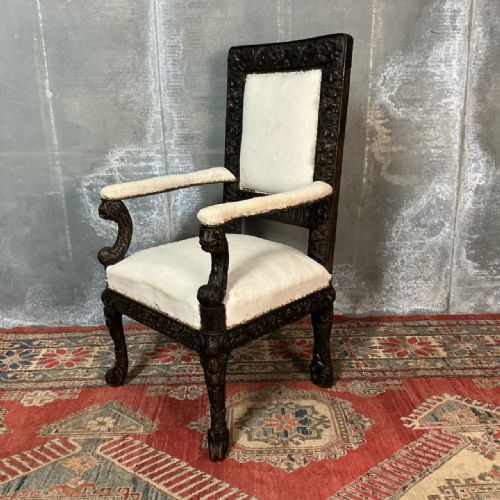
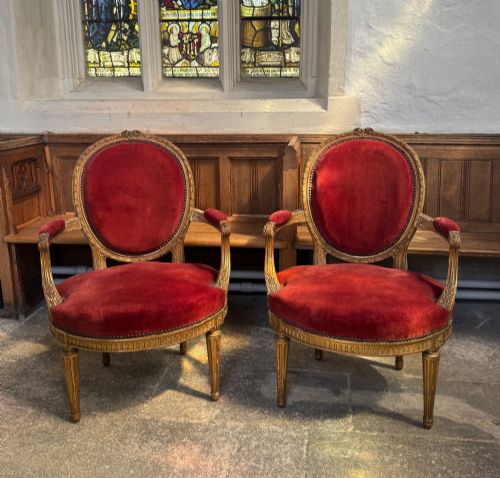
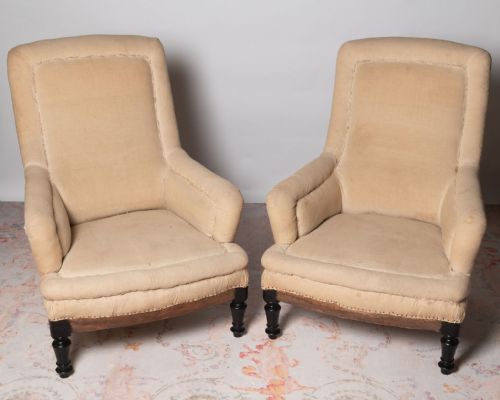
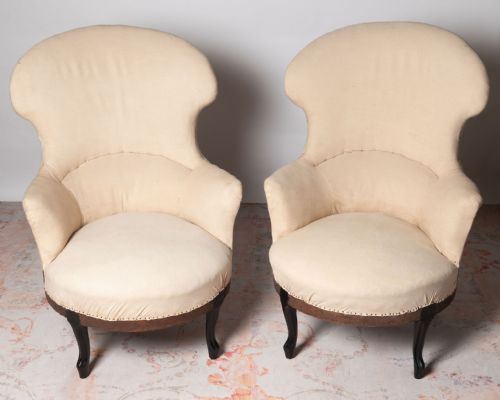
A nineteenth century armchair pair spans forms ranging from heavy library and salon chairs to lighter elbow seats and open armchairs. English and French workshops produced these dual seating options across the Regency, Victorian, and Edwardian periods.
Buyers encounter mahogany, walnut, and rosewood frames alongside giltwood and oak interpretations. Styles stretch from Gothic Revival and Aesthetic Movement to Louis XVI and Baroque Revival.
Sets include morning room chairs, bergères, and occasional salon pieces intended to flank a fireplace or anchor a formal room. Matched pairs survive from domestic settings and large estate suites alike.
Materials and construction methods
Makers utilised solid timbers including mahogany, walnut, oak, rosewood, and yew, often shaped with carved details or turned supports. Giltwood finishes required layered gesso and gold leaf applied over carved wooden substrates.
Upholstered versions relied on webbing, stuffing, and springs covered in velvet, leather, or patterned fabric. Frame joinery used traditional mortise and tenon techniques to support daily weight.
Faux bamboo frames let nineteenth century makers bring miniature jungle vibes into polite British drawing rooms.
Distinctions in craftsmanship and design
The standard of carving dictates visual success, where crisp lines in mahogany or giltwood outshine soft, shallow moulding. Timber selection matters, as figured mahogany or dense walnut displays superior grain depth.
Structural integrity depends on tight joints and stable frames that have endured decades of use. Original upholstery remnants or sympathetic reupholstery preserve the intended proportions of the arms and back.
Howard and Sons·Johnstone and Jeanes·Henry Thomas Peters
The Nineteenth Century Armchair Pair Glossary
- Giltwood
- Timber coated with gold leaf over a prepared gesso ground. This finish appears on decorative salon chairs and revival seating.
- Elbow chair
- A seating piece with low arms designed to support the elbows. These items served dining rooms and studies during the Regency period.
- Carver
- An armchair matching a set of smaller dining chairs. The designation distinguishes the armed seat from side chairs.
- Gothic Revival
- A design movement drawing inspiration from medieval architecture. Pieces display pointed arches, tracery, and heavy structural timbers.
Nineteenth Century Armchair Pair: Frequently Asked Questions
How do I style a nineteenth century armchair pair?
Place the matched pair opposite a sofa or flanking a fireplace to create a balanced seating arrangement. Their shared wood tones and upholstery help anchor a room's decorative scheme.
Allow enough space around the arms to let the timber frames stand out as distinct sculptural objects within the interior.
Were these pairs used in dining rooms?
Many elbow chairs and carvers served at the heads of dining tables alongside matching side chairs. Other forms, such as library chairs and salon suites, remained in sitting rooms.
Function followed the room type, with heavier mahogany and oak designs suited to studies while giltwood and rosewood graced formal parlours.
How do I identify a Regency armchair?
Regency seats often display classical restraint, featuring sabre legs, reeded mahogany frames, and brass inlay. Proportions lean toward architectural lines inspired by ancient Greece and Rome.
Look for light woods, faux bamboo turns, or understated brass mounts that distinguish these pieces from heavier Victorian designs.
What is a bergère armchair?
A bergère is a French-style armchair featuring a wide, deep seat and enclosed upholstered sides. They were designed for comfortable lounging in private chambers and drawing rooms.
Examples from the nineteenth century often combine exposed walnut or mahogany frames with down-filled cushions and tight fabric coverings.