

Neoclassical Style Chairs
Neoclassical style chairs bring balanced proportion, classical motifs and enduring restraint to an interior.
Neoclassical Style Chairs
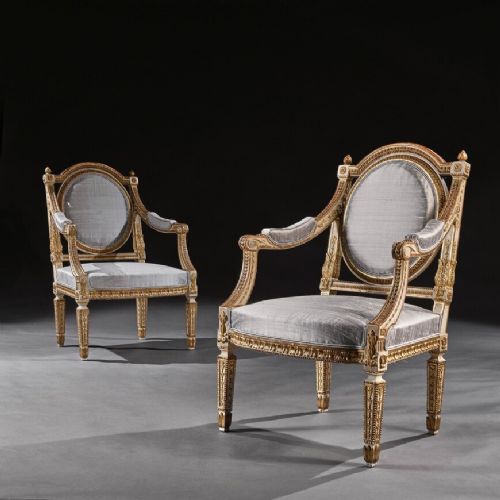
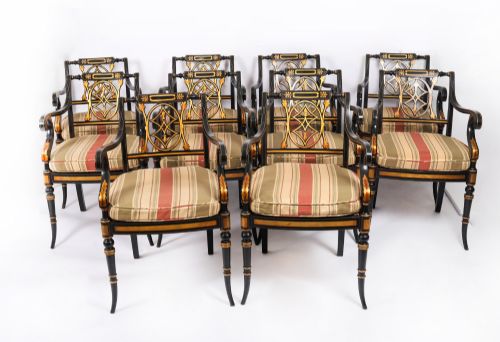
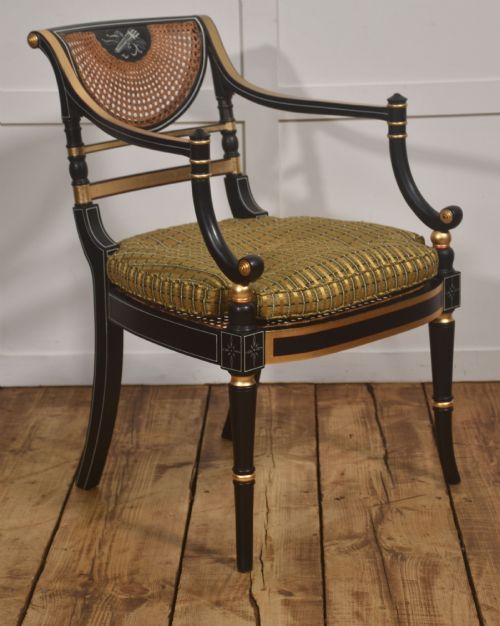
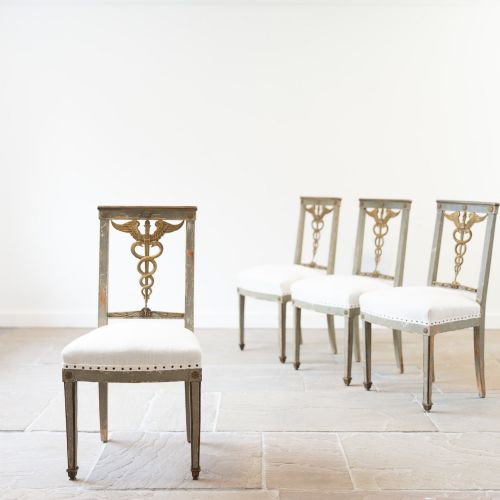
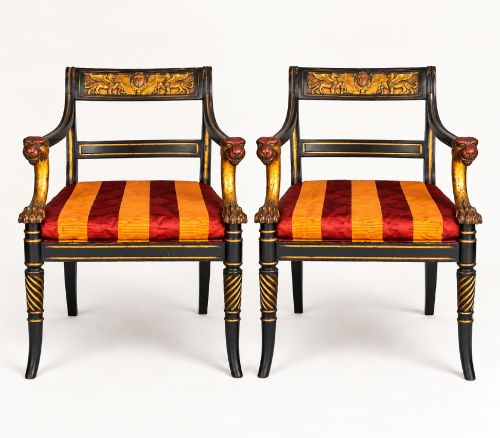
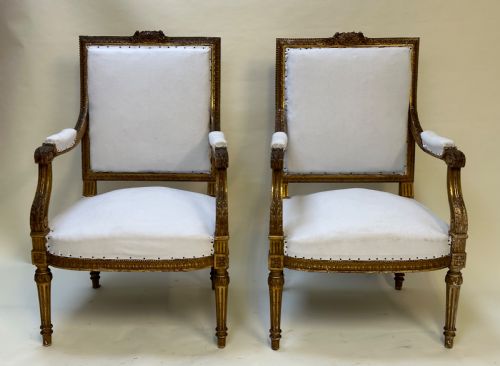
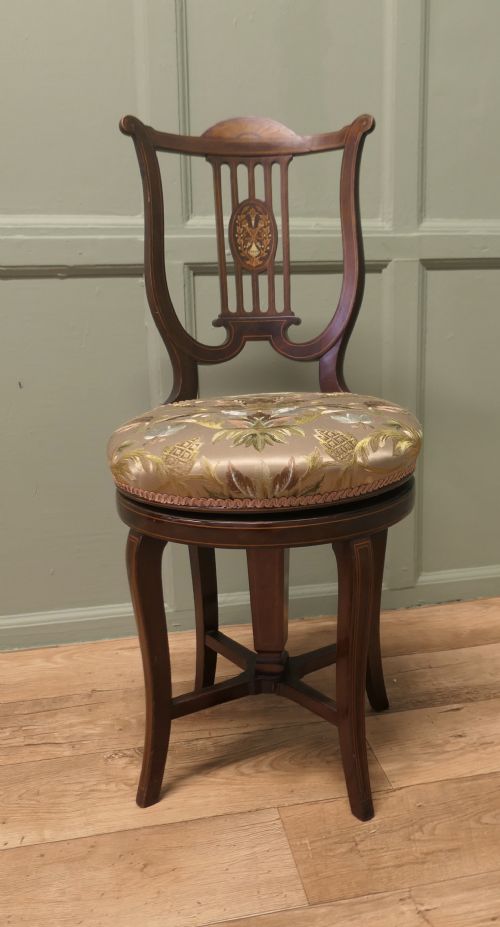
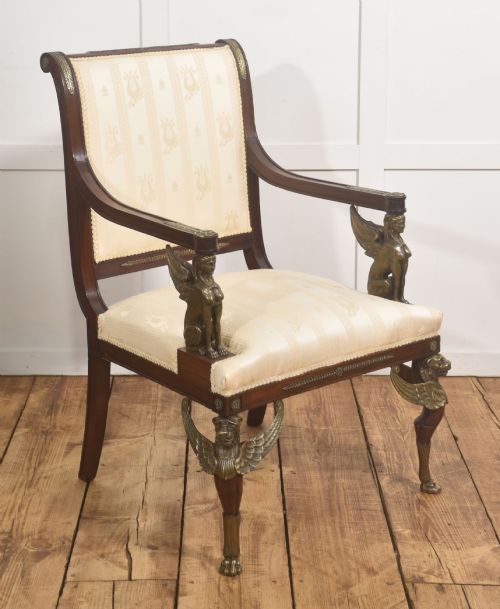
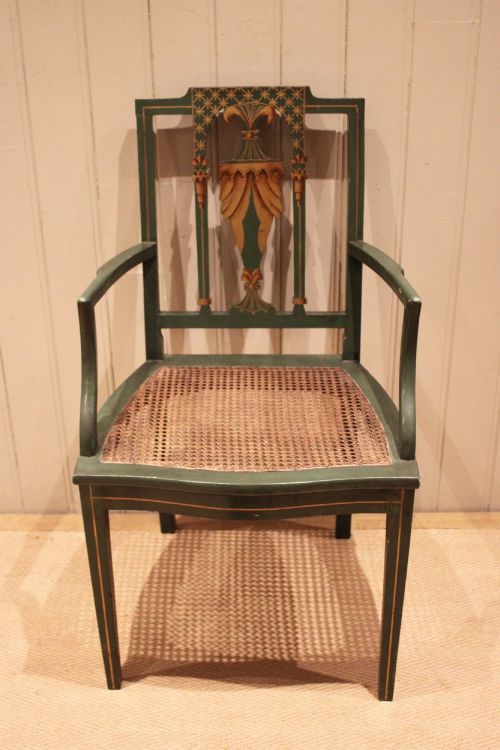
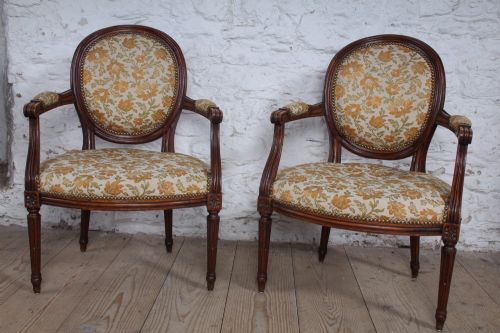
When you search for neoclassical style chairs, you encounter seating forms that draw upon the architectural vocabulary of antiquity, including straight tapering legs, urn motifs and oval medallions. The selection spans dining chairs, armchairs, salon chairs and specialised desk or music seats originating from English, French, Swedish and Italian workshops.
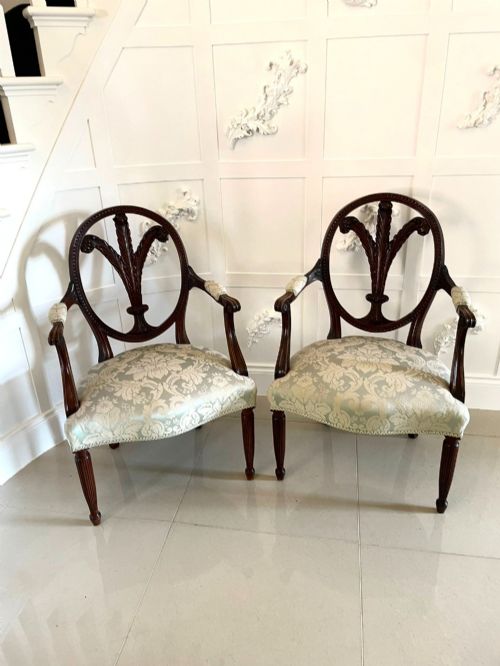
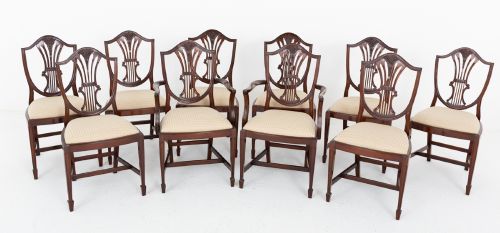
You are most likely to meet mahogany and painted wood frames produced during the nineteenth and early twentieth centuries, echoing eighteenth-century George III, Hepplewhite and Louis XVI designs. These pieces range from single side chairs to large matching dining suites intended for formal reception rooms.
The aesthetic prioritizes symmetry and geometric clarity over exuberant curves, reflecting a broader cultural turn towards Greek and Roman archetypes. Makers adapted these classical rules into practical seating for libraries, drawing rooms and dining spaces across Europe.
Materials and Technique
The physical construction relies heavily on solid mahogany, elm, birch and walnut, alongside frames shaped from painted wood and gilded gesso. Woodworkers utilised traditional joinery to support slender framing, often incorporating carved details such as fluting, paterae and reeding directly into the solid timber.
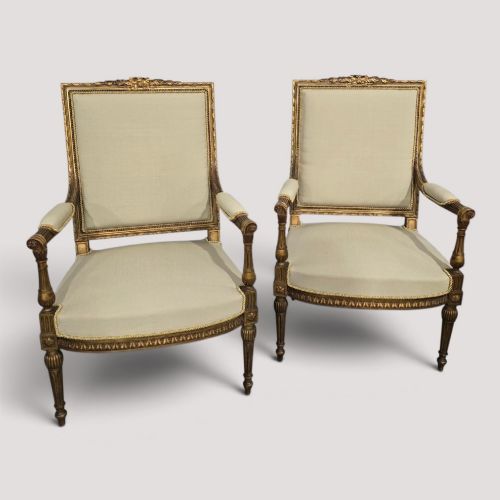
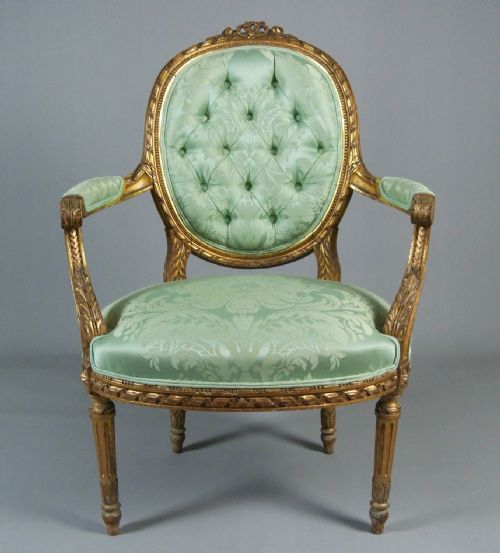
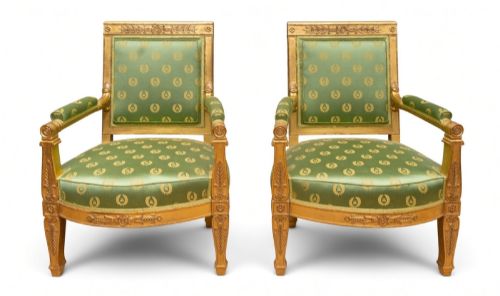
Upholstery and surface decoration define much of the visible work, using silk damask, velvet, leather and woven cane set into shield-backs, medallion frames and open armchairs. Giltwood and parcel-gilt finishes require meticulous application of gold leaf over prepared grounds, while painted variants employ layered pigments to achieve subtle patination.
Neoclassical Style Chairs Retail Price Guide 2026
Typical asking prices for neoclassical style chairs among the pieces listed under this phrase on Sellingantiques today, from the lower quarter to the upper quarter. They describe what is for sale here now, not the wider market.
Some music chairs revolve entirely, letting eighteenth-century harpists spin without missing a single classical beat.
Distinctions in Execution
The standard of carving and the crispness of classical detailing separate everyday production from exceptional examples, as seen in the depth of acanthus leaves and the precision of fluted legs. Superior pieces maintain harmonious proportions where structural joints remain tight and concealed beneath refined surface treatments.
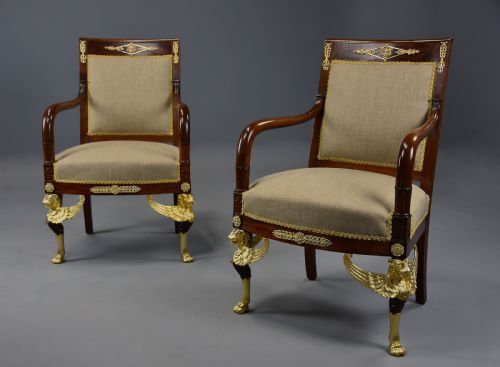
Material selection dictates longevity and visual weight, with dense figured mahogany and substantial fire-gilded ormolu mounts indicating higher workshop ambitions. Lesser examples utilise softer secondary timbers or simpler surface applications that lack the depth and definition found in master cabinetmaker output.
Jacob Desmalter·Thomas Chippendale·Mercier Frères·Cowtan And Sons
The Neoclassical Style Chairs Glossary
- Fauteuil
- An open-framed upholstered armchair with wooden armrests, originating in France. These seats typically feature carved decoration along the exposed rails and back.
- Medallion Chair
- A chair featuring a rounded or oval upholstered backrest resembling a classical medallion. This form is strongly associated with Louis XVI seating designs.
- Shield-Back
- A chair back shaped in the outline of a heraldic shield, popularised by English designers such as Hepplewhite. The central splat often incorporates carved wheat ears, urns or drapery.
- Giltwood
- Timber coated with gold leaf over a prepared gesso and bole base. This finish provides a bright, reflective surface favoured in formal neoclassical reception rooms.
- Cane
- Woven rattan strips used to form light, breathable seats and back panels. It appears frequently on eighteenth and nineteenth-century dining and salon chairs.
Neoclassical Style Chairs: Frequently Asked Questions
How do I identify neoclassical style chairs?
Look for straight tapered legs, geometric shapes, and classical motifs such as urns, fluting, and laurel wreaths. The overall silhouette values symmetry and restraint over curved rococo excess.
Construction details and timber choices help confirm the period, distinguishing eighteenth-century originals from later nineteenth and twentieth-century revival pieces.
Were these chairs used at dining tables?
Dining chairs formed a major part of neoclassical production, often made in large matching sets with open backs or upholstered panels. They provided formal seating for elite dining rooms.
Sets ranged from standard four-chair configurations up to extensive suites designed for large assembly spaces.
How do I care for antique painted wood?
Keep painted and gilded chairs away from direct sunlight and steady heat sources to prevent the finish from drying and flaking. Dust gently with a dry, soft cloth.
Avoid liquid cleaners or abrasive materials, which can strip the historical pigment and expose the underlying gesso or timber.
What is the difference between French and English styles?
French designs like Louis XVI and Empire lean toward giltwood, carved medallion backs, and opulent upholstery fabrics. They served decorative functions in formal salons.
English interpretations by makers like Hepplewhite focus on mahogany, shield-back geometry, and understated elegance suited for domestic dining and library spaces.