




Neoclassical Stone Urns
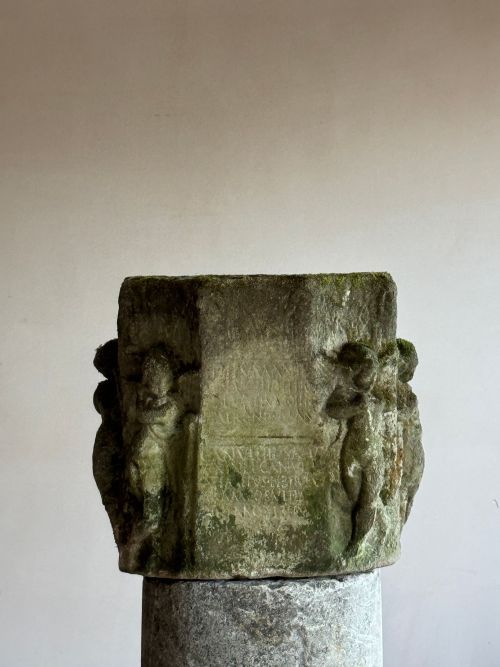
Neoclassical stone urns are monumental vessels shaped by classical antiquity, sought after for their architectural presence and sculptural dignity in formal interiors or gardens.
Neoclassical Stone Urns
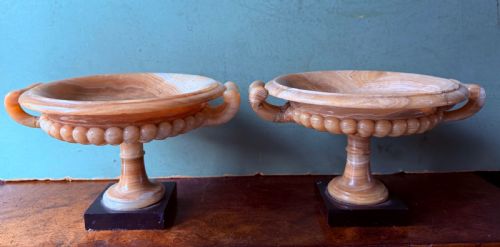
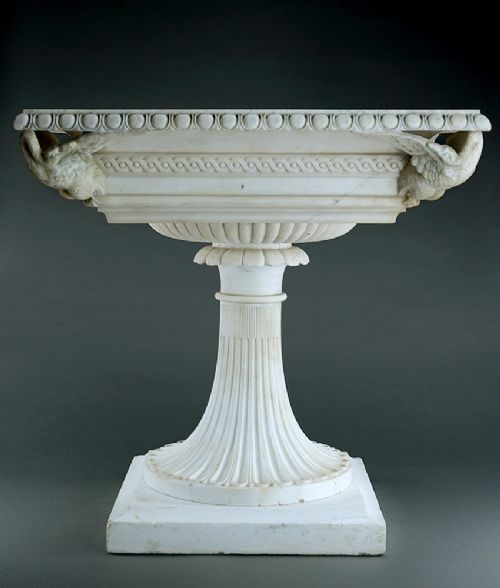
Neoclassical stone urns draw directly upon the architectural vocabulary of ancient Greece and Rome, often taking the form of campana vessels, tazza bowls, or monumental garden planters. These pieces emerge in various iterations across the nineteenth and early twentieth centuries, spanning grand architectural ornaments down to smaller decorative objects.
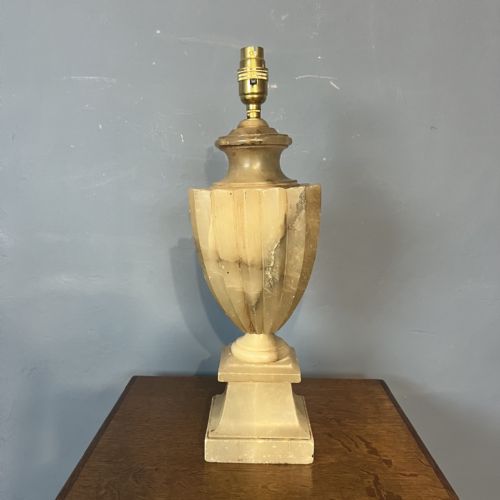
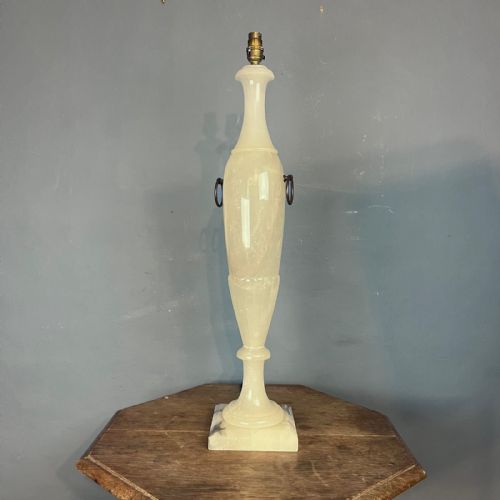
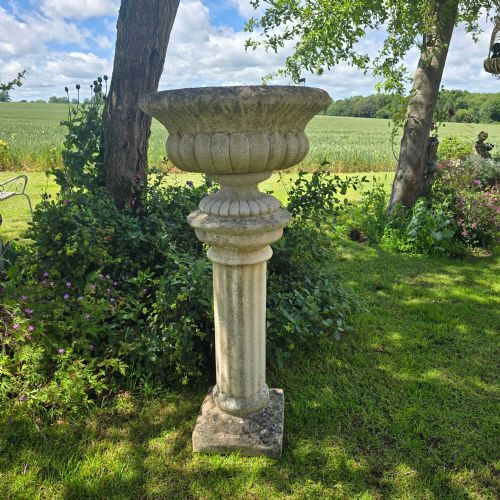
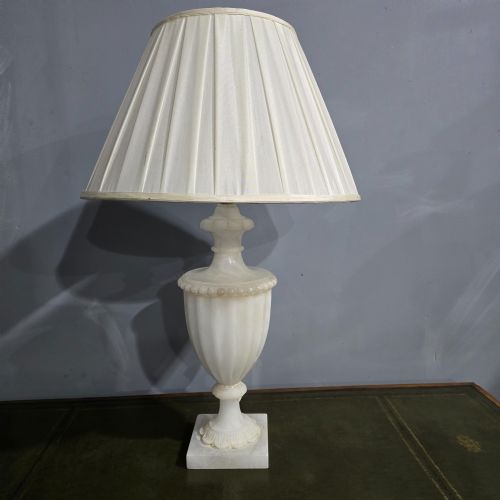
The versions most commonly met in these listings include Italian Grand Tour souvenirs carved from alabaster or marble, alongside heavier cast and reconstituted stone garden urns from the Victorian and Edwardian eras. Collectors encounter everything from tabletop alabaster lamps to large garden pedestals, each reflecting the enduring European revival of classical forms.
Materials and construction
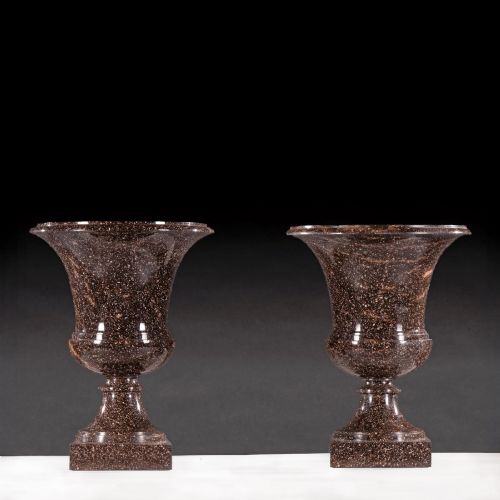
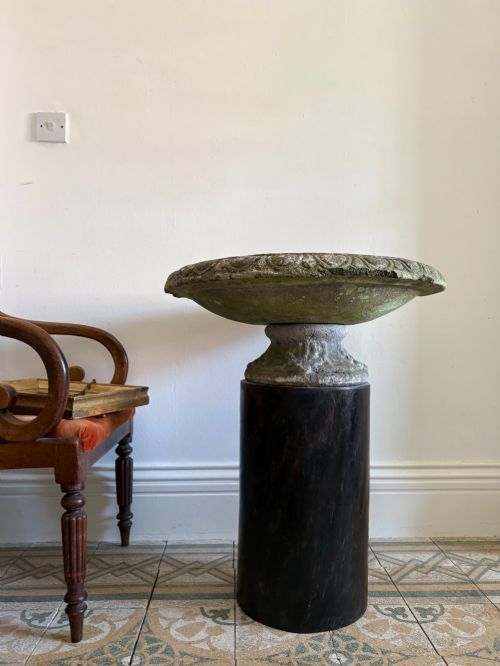
Carved pieces rely on dense mineral mediums such as alabaster, marble, serpentine, and porphyry, shaped by hand to achieve smooth contours and fine classical proportions. Stoneware, cast stone, and reconstituted stone are utilised for larger garden vessels, offering durability against the elements while capturing crisp architectural details like acanthus leaves.
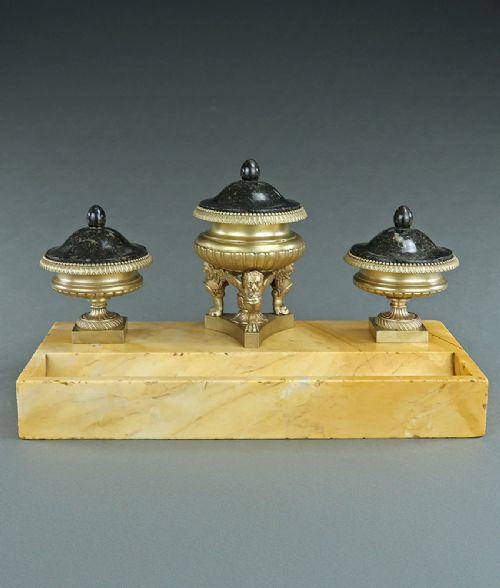
Many of the interior lamps and decorative urns incorporate secondary materials including brass, gilt metal, onyx, and fabric shades. These mixed-media pieces combine heavy carved stone bases with cast mounts, often utilising paw feet or classical pedestals for structural support.
Object forms include campana urns, tazza bowls, pedestal planters, mantel clocks, and architectural columns.
Evaluating quality and execution
Quality rests principally in the depth and precision of the carving, where sharply articulated foliage and balanced proportions distinguish masterwork pieces from simpler decorative objects. The selection of the raw mineral also dictates value, with highly figured marbles, vibrant sienna tones, and flawless alabaster commanding greater attention.
Provenance and scale further separate the range, particularly among Grand Tour souvenirs where association with documented workshops or specific Italian origins elevates the piece. Surface weathering on outdoor stone also plays a role, where natural patination enhances architectural conviction without obscuring the original form.
Selim Bright·Boschetti
The Neoclassical Stone Urns Glossary
- Campana urn
- A bell-shaped vessel with an everted rim and a flared foot, derived from ancient ceramic and stone prototypes. This silhouette forms the blueprint for many classical garden ornaments.
- Tazza
- A shallow saucer-like bowl raised on a stem and foot, frequently carved from decorative marbles as a Grand Tour souvenir. They mimic classical ceremonial vessels used for libations.
- Alabaster
- A fine-grained, translucent mineral gypsum that accepts intricate hand-carving and takes a high polish. It appears frequently in nineteenth-century lamps and vases.
- Porphyry
- An extremely hard igneous rock with prominent crystal phenocrysts, notoriously difficult to work by hand. Swedish varieties are particularly prized for their rich purple-red hue.
- Grand Tour
- A traditional cultural excursion undertaken by European nobility through France and Italy to collect classical antiquities and souvenirs. Many nineteenth-century stone urns stem from this tradition.
Neoclassical Stone Urns: Frequently Asked Questions
How were antique stone urns used?
Historically, these urns served as monumental garden ornaments, interior decorative centerpieces, or commemorative vessels. Many nineteenth-century examples were brought back from Italy as Grand Tour souvenirs to display classical taste.
Smaller alabaster versions were later adapted into table lamps, combining classical sculptural forms with functional domestic lighting.
How do I care for alabaster urns?
Alabaster is a relatively soft and porous mineral that is sensitive to moisture and acidic substances. Clean these pieces gently with a dry or barely damp microfiber cloth.
Keep interior alabaster lamps and vases away from damp environments and direct water exposure to preserve their translucent polished finish.
How do I tell different marble types apart?
Marble varieties are distinguished by their unique mineral veining, colouration, and geographic origins. Sienna marble exhibits warm yellow and brown tones, while alabaster offers a softer, translucent white or amber appearance.
Specialised stones like porphyry and breccia feature distinctive crystal inclusions and complex multi-coloured conglomerate patterns.