



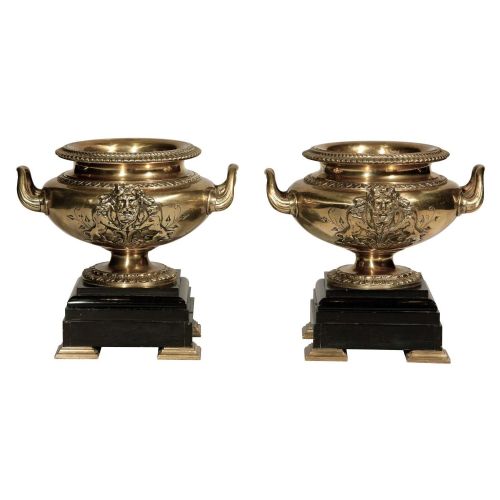


Pair Campana Vases
Pair campana vases bring classical proportion and presence to a room, offering symmetrical grace from periods spanning the nineteenth century to the twentieth.
Pair Campana Vases
Pair campana vases take their defining bell-like silhouette from ancient pottery and metal vessels, designed with an inverted bell shape on a footed pedestal. These pieces appear frequently in nineteenth-century interpretations, drawing heavily upon Regency, Victorian, and French Neoclassical traditions.
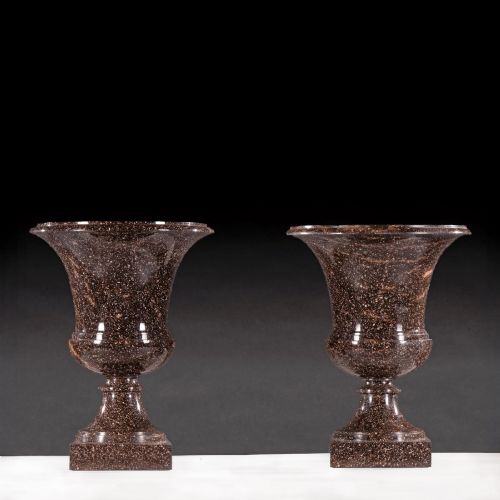
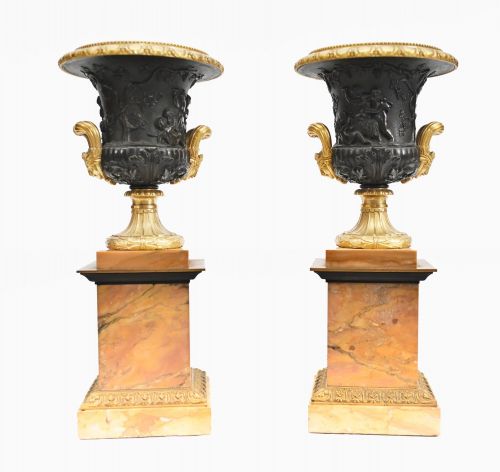
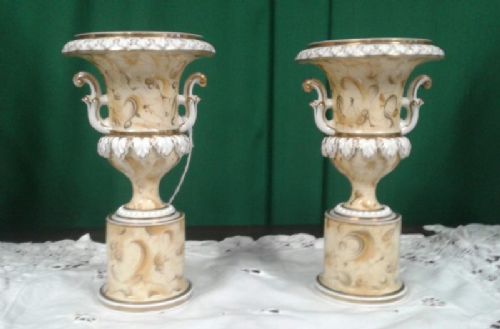
Buyers encounter examples shaped from heavy metals like bronze, cast iron, and gilt bronze, as well as carved stones including marble and porphyry. Ceramic versions in porcelain and jasperware also surface, reflecting diverse domestic and garden settings.
The selection ranges from small cabinet pieces cast in bronze to large garden urns meant for terraces and lawns. Many reflect the Grand Tour aesthetic, bringing classical antiquity directly into nineteenth-century drawing rooms.
How they were made
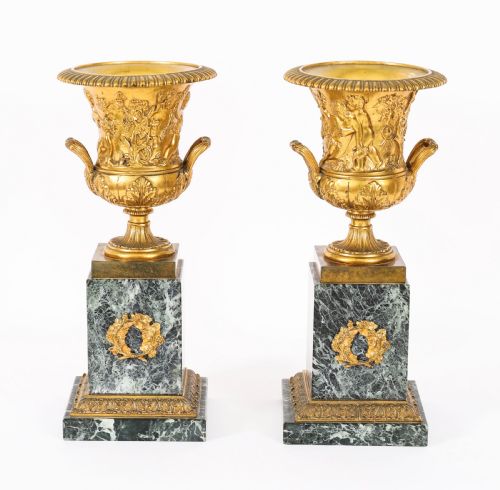
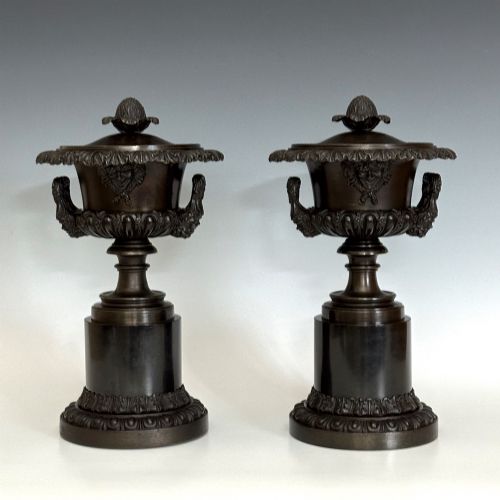
Metal versions utilise bronze, brass, cast iron, or spelter, often shaped through casting techniques that capture crisp classical details like handles, scrolls, and figural reliefs. Gilt bronze and ormolu applications add metallic contrast to patinated surfaces.
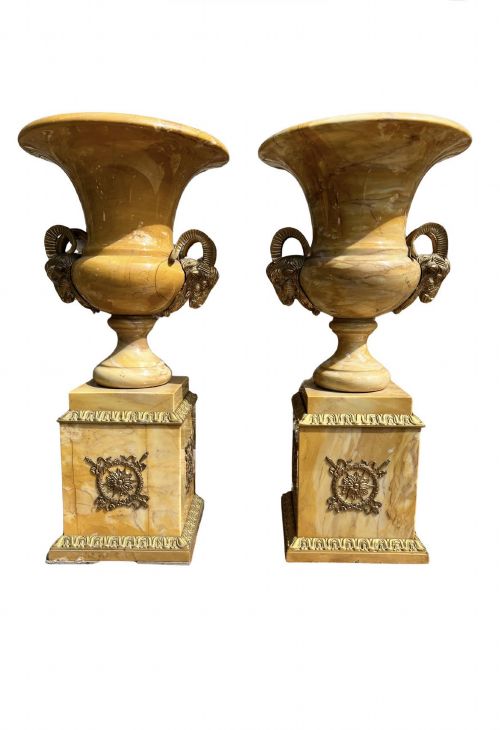
Stone and marble pieces, including siena marble and Swedish porphyry, rely on stonemasonry skills to turn and carve solid mineral blocks into smooth profiles and heavy plinth bases. Ceramic examples combine moulded clay bodies with hand-painted topographical scenes or applied white bas-reliefs.
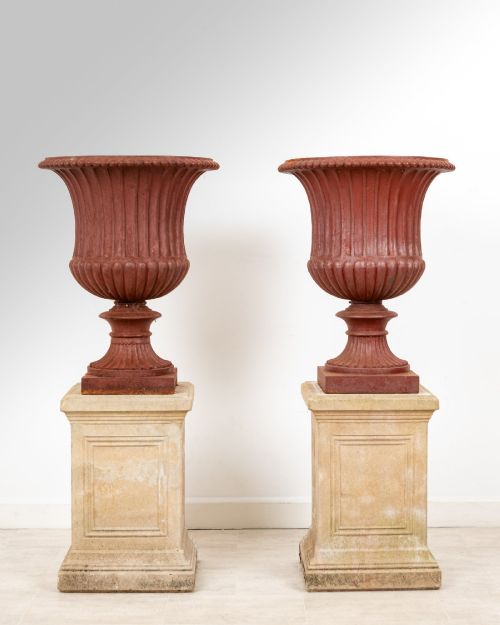
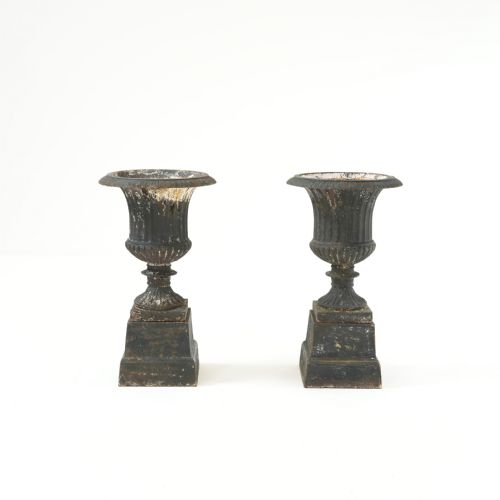
Cast iron garden urns utilise durable foundry methods suited for outdoor terraces, while porcelain pieces undergo high-temperature kiln firing with fine glaze and enamel additions.
Listings feature materials spanning bronze, gilt bronze, porcelain, cast iron, marble, porphyry, stone, and green marble across the nineteenth and early twentieth centuries.
What varies in quality
The crispness of the casting or carving dictates much of the visual success in pair campana vases, separating sharp relief work from softer, worn details. Metal surfaces show variation through the depth and warmth of the original patination or the preservation of fire gilding.
Material choice shifts the character significantly, moving from standard cast iron and composition stone up to prized Swedish porphyry or fine Worcester porcelain. The integration between the vessel body and its specific marble base or plinth also determines the overall harmony of the pair.
Flight Barr And Barr·Wedgwood
The Pair Campana Vases Glossary
- Grand Tour
- A cultural journey undertaken by wealthy Europeans during the eighteenth and nineteenth centuries. Travellers collected classical antiquities and revival bronzes to bring home.
- Ormolu
- Gilt bronze ornamentation applied to decorative arts, particularly popular in French furniture and metalwork during the eighteenth and nineteenth centuries.
- Porphyry
- An extremely hard igneous rock containing large crystals, prized since antiquity for its rich purple or reddish colour and difficult working properties.
- Jasperware
- A type of fine stoneware developed by Josiah Wedgwood, characterised by a matte coloured body and contrasting applied white classical reliefs.
Pair Campana Vases: Frequently Asked Questions
Where were pair campana vases displayed?
Indoor examples sat upon mantelpieces, console tables, and pedestals in nineteenth-century drawing rooms and libraries. Smaller porcelain and bronze versions often decorated cabinets and cabinets of curiosity.
Larger iron and stone variants were positioned outdoors on terraces, gardens, and along pathways to echo classical landscape architecture.
How do I distinguish bronze from cast iron?
Bronze objects generally exhibit a smoother, finer grain with nuanced patination and do not attract a magnet. They often show sharper relief work suited for interior display.
Cast iron pieces are heavier, frequently found in garden contexts, and may display oxidation or paint layers over a more utilitarian industrial surface.
What periods do these pieces represent?
The majority date from the nineteenth century, encompassing Regency, Victorian, and French Charles X eras. These styles revival classical antiquity through Neoclassical and Grand Tour lenses.
Later examples extend into the early twentieth century, continuing traditional forms in iron, marble, and composition stone.
Can these garden urns stay outside?
Cast iron and composition stone versions are built for terrace and garden use, enduring seasonal weather while developing a natural outdoor patina. Stone varieties like marble also withstand exterior placement depending on local frost conditions.
Bronze and porcelain pieces are strictly intended for interior environments to protect their fine finishes and delicate materials.