


Neoclassical Marble Plinths
Neoclassical marble plinths elevate classical sculptures and bronzes with architectural dignity, bringing disciplined antique proportion into a room.
Neoclassical Marble Plinths
When searching for neoclassical marble plinths, buyers encounter architectural columns, pedestals, and statue bases designed to support busts, urns, and figures. These pieces originate primarily from the nineteenth century, often reflecting the classical taste of the Grand Tour and French Empire periods.
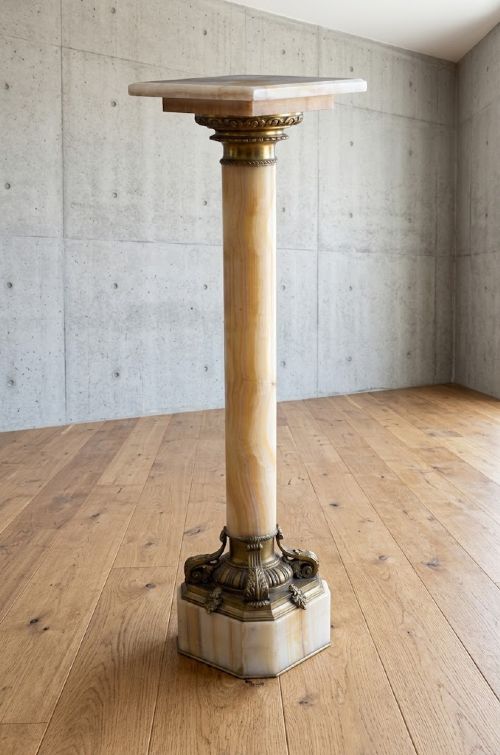
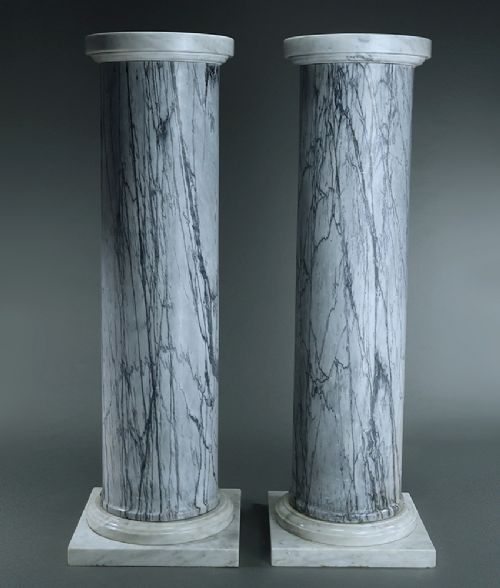
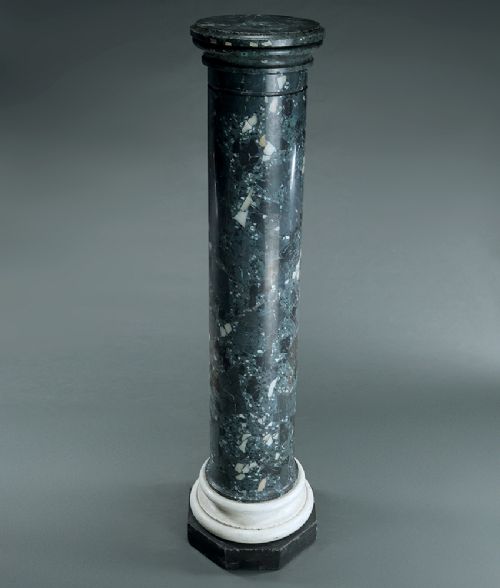
The most common formats on this page are stone columns and dedicated pedestals constructed from materials such as Carrara, Siena, and Verde Antico marble. They frequently incorporate contrasting bases or capitals to display sculptural objects at ideal viewing heights.
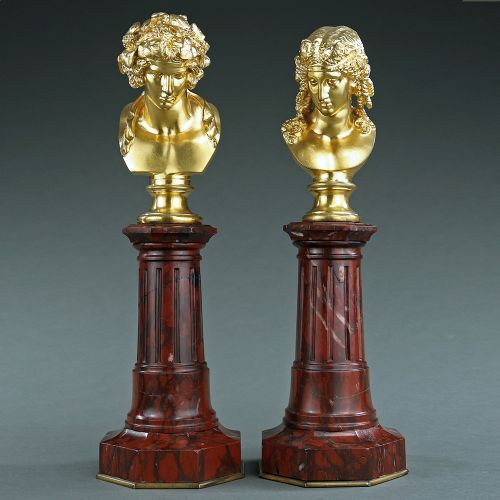
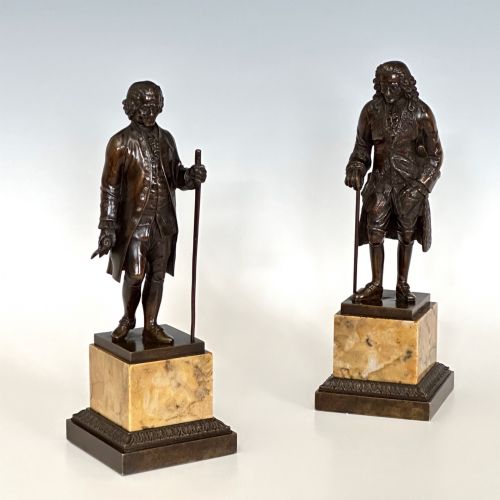
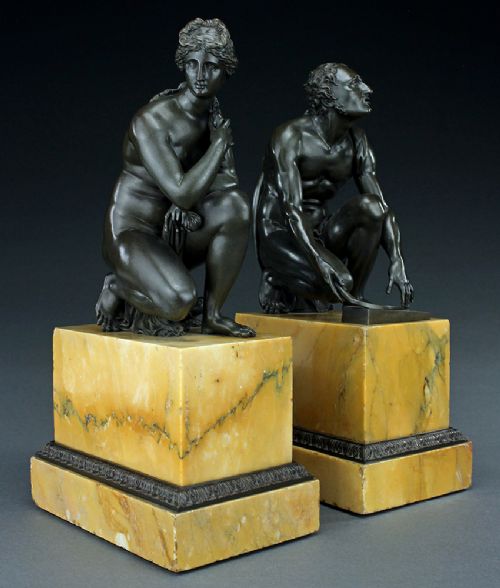
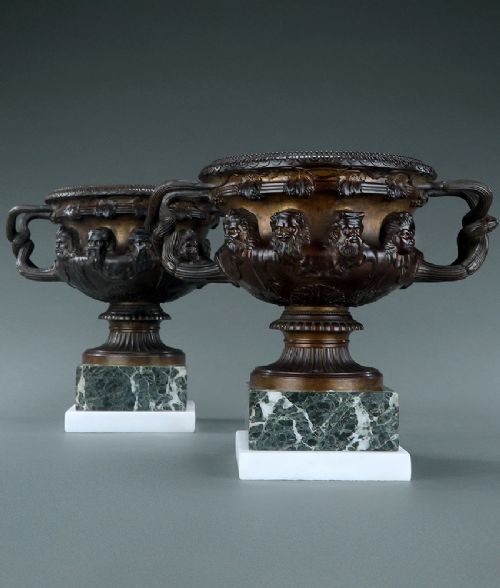
Many items combine stone with cast metal mounts, serving as structural stages for bronze reductions, marble busts, and decorative vases. Their proportions mirror ancient Greek and Roman architectural orders, translated into domestic display furniture.
Materials and Construction
Metal elements such as ormolu, gilt bronze, and standard bronze collars were cast and chased separately before being fitted to the stone pillars. These mounts reinforce stress points and frame the marble shaft with crisp neoclassical ornamentation.
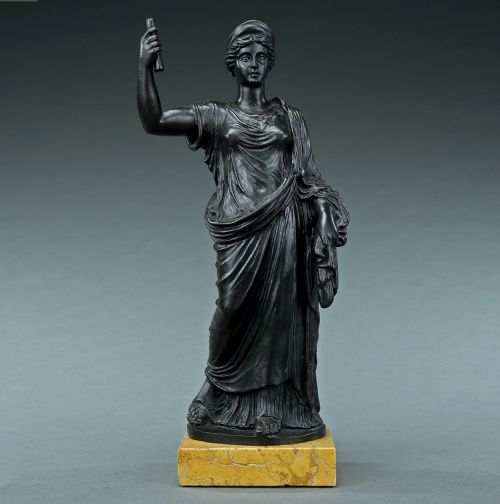
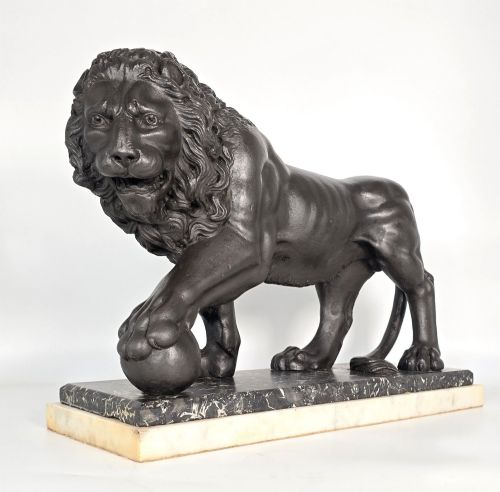
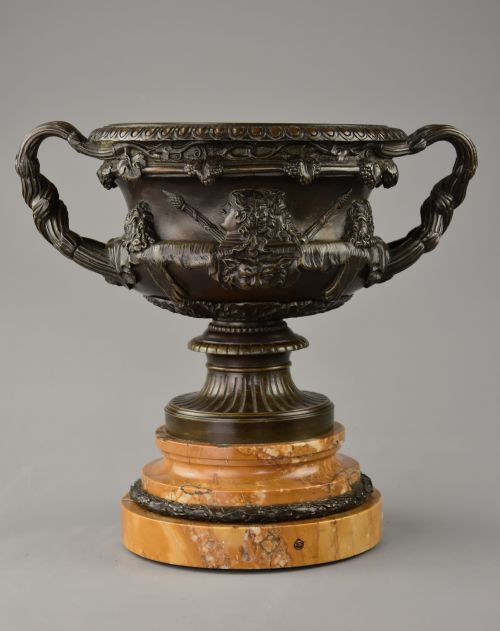
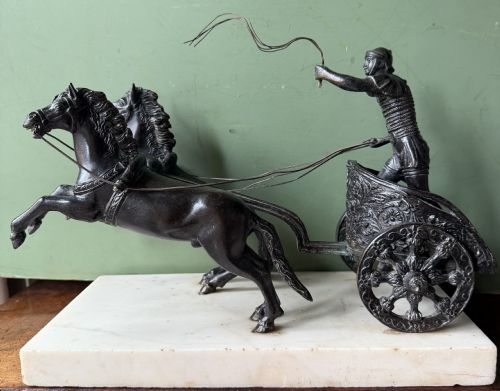
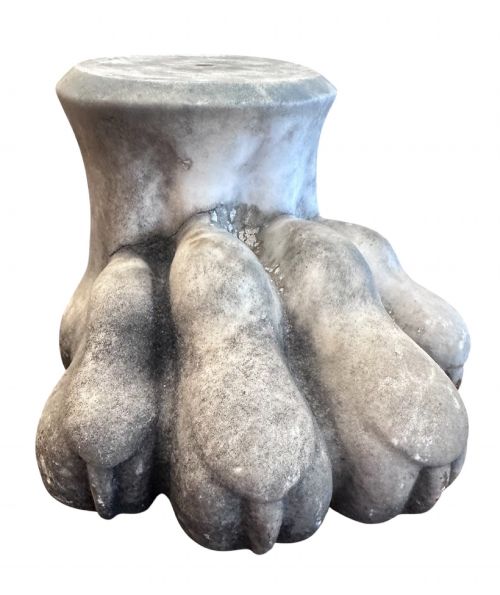
The inventory combines architectural stone supports with cast bronze vases, busts, and Grand Tour animal sculptures.
Judging Quality
Quality rests in the selection of the marble and the precision of the turning. Superior examples display striking, uninterrupted mineral figuring and dead-flat top surfaces that keep heavy bronze sculptures stable without packing.
The execution of the metal mounts distinguishes finer work. Crisp, hand-chased ormolu collars with sharp relief separate master-level production from simpler cast fittings.
The Neoclassical Marble Plinths Glossary
- Grand Tour
- A traditional trip through Europe undertaken by upper-class young men to absorb classical art. Items from this era include miniature bronzes and marble architectural fragments.
- Ormolu
- Gilt bronze mounted on furniture or sculptures. This technique involves applying a gold amalgam to bronze through heat, creating a rich golden surface.
- Scagliola
- A composite material made from pigmented plaster, glue, and marble chips. Artisans polished it to imitate expensive quarried stones like scagliola marble columns.
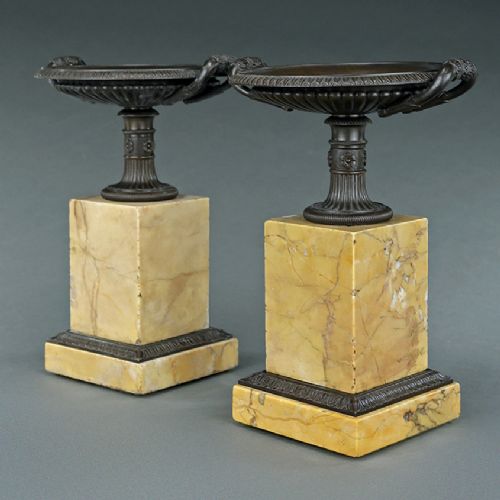
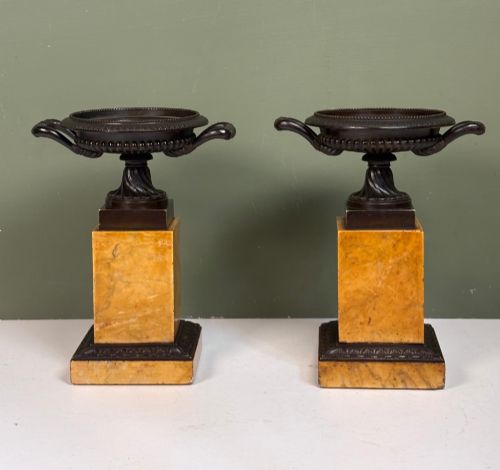
- Tazza
- A shallow cup or vase on a pedestal foot. These are frequently rendered in bronze or marble for display on classical plinths.
Neoclassical Marble Plinths: Frequently Asked Questions
What holds up a heavy marble bust?
Columns and plinths rely on a balanced centre of gravity and sturdy construction to support heavy stone or bronze sculptures. The broad base spreads the weight evenly across the floor.
Heavier pieces often include internal iron rods or secure pins linking the capital and base to prevent shifting under unbalanced loads.
Where should I place a plinth?
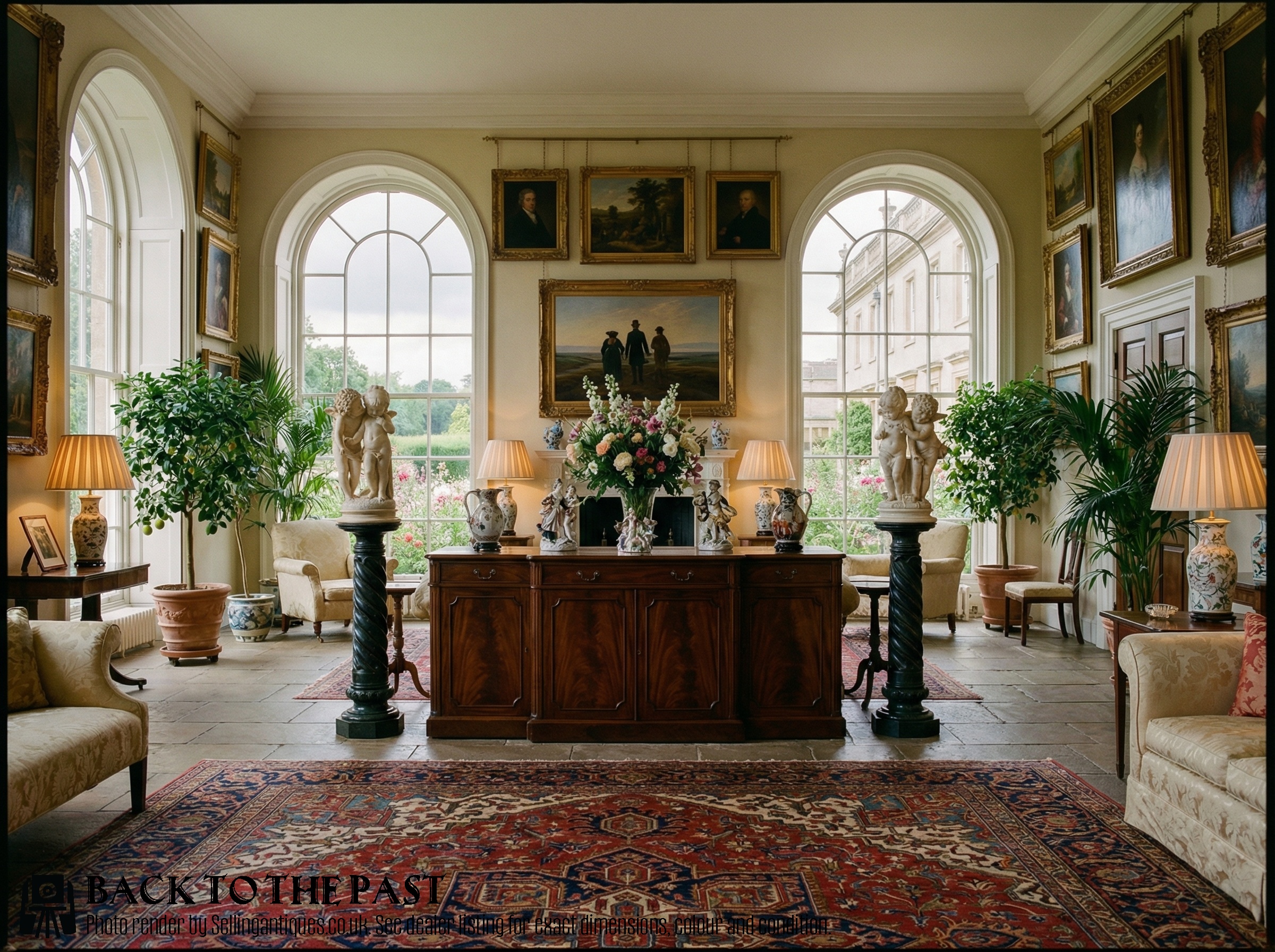
These architectural supports work best in corners, hallways, or living areas where they can stand clear of foot traffic. Placing them against plain walls highlights the natural veining of the stone.
Ensure the floor beneath is level so the vertical column remains plumb, particularly when carrying top-heavy bronze figures.
How do I clean antique marble?
Dust the surface regularly with a soft, dry cloth to prevent grit from scratching the polished mineral finish. Avoid acidic cleaners or household detergents that etch natural stone.
Use a damp cloth with mild soap only when necessary, drying the marble thoroughly afterwards to protect older patinas and scagliola surfaces.
Are these columns structurally sound?
Most antique columns and pedestals are built to bear significant weight, having originally supported heavy bronze reductions and marble statues. Their solid stone shafts provide immense vertical strength.
Buyers should verify that joints between the capital, shaft, and base remain tight and free from movement before mounting valuable sculptures.