




Neoclassical Marble Female Statue
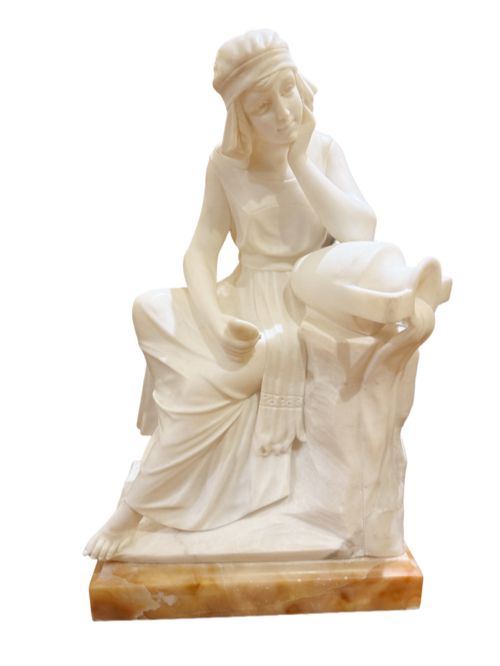
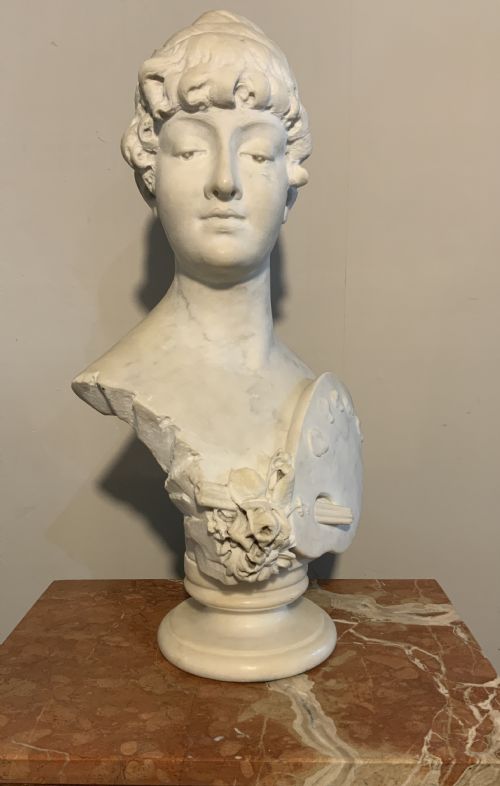
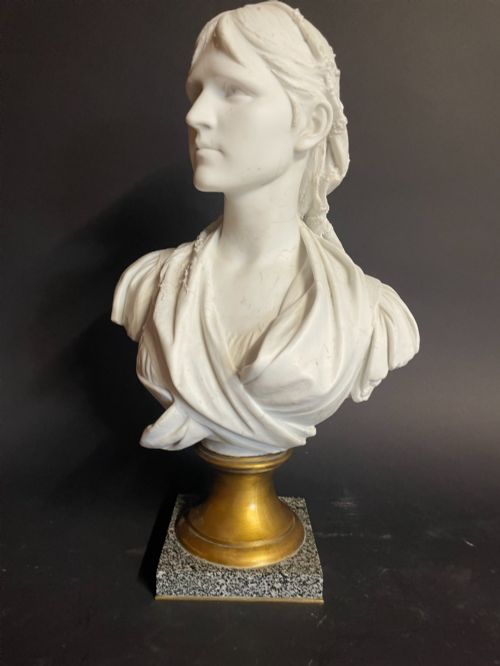
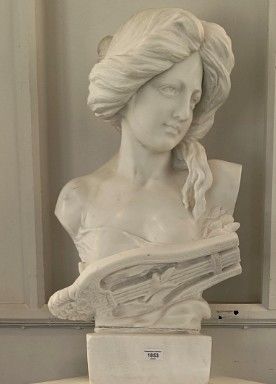
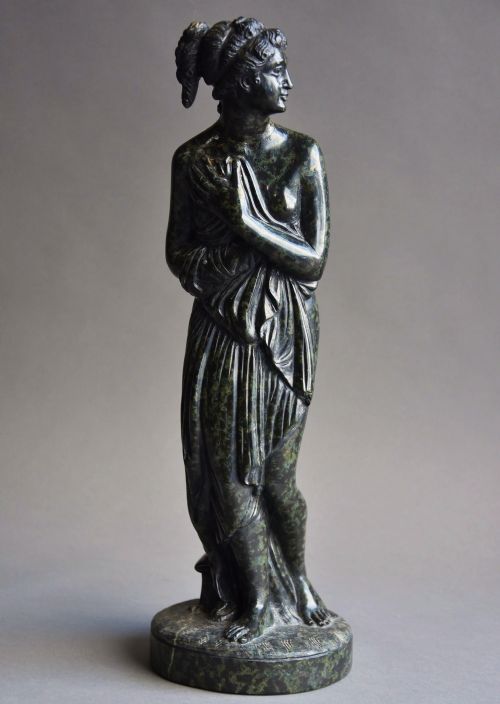
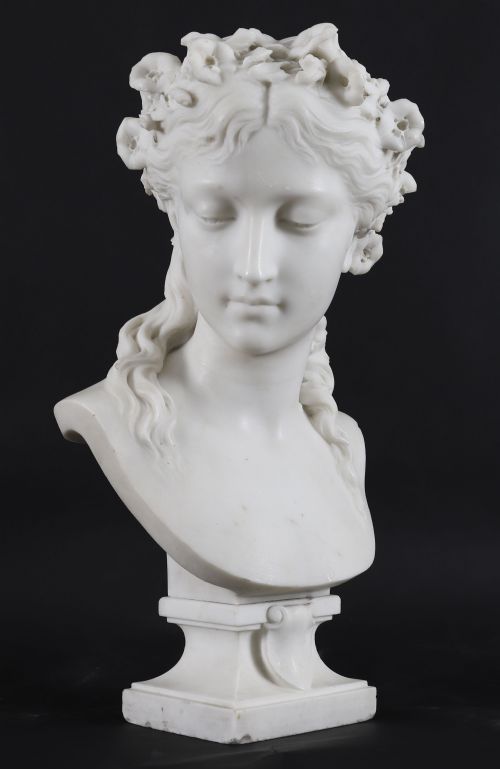
These neoclassical marble female statue pieces bring classical myth and antiquity into the home through carved stone and bronze figures.
Neoclassical Marble Female Statue
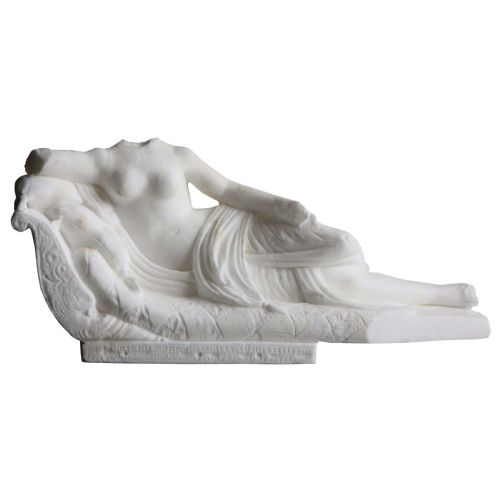
A neoclassical marble female statue draws upon classical Greek and Roman antiquity, taking the form of busts, full-length figures, and allegorical subjects such as muses and goddesses. Buyers exploring this selection encounter works predominantly originating from the nineteenth century, including Victorian interpretations and Grand Tour souvenirs.
The subjects range from portraits of classical maidens and historical figures to mythical deities like Venus, Hestia, and Erato. Sculptures frequently derive their inspiration from renowned masterworks by sculptors such as Antonio Canova.
While carved marble and Carrara marble dominate the selection, related interpretations appear in alabaster, bronze, and Parian or bisque porcelain. These pieces vary from cabinet-sized figurines to large garden statues and floor lamps.
Materials and carving techniques
Makers shaped these neoclassical marble female statue works using fine-grained white marble, Carrara marble, and softer alabaster, employing hand chisels, rasps, and drills to achieve smooth flesh tones and intricate drapery. Bronze works involved traditional lost-wax or sand-casting methods, followed by hand-finishing and patination.
Porcelain examples utilised bisque or Parian slip-casting techniques, fired in kilns to produce a matte, marble-like biscuit finish that emulated carved stone.
Some nineteenth-century sculptors doubled as lighting engineers, turning classical ladies into bronze torchere lamps to illuminate Victorian parlours.
Evaluating sculptural execution
Quality in a neoclassical marble female statue rests upon the sensitivity of the carving, particularly in the rendering of facial expression, hair texture, and the fluid fall of drapery. Superior pieces demonstrate anatomical precision and a high degree of polish that captures the translucency of natural stone.
Signed works and those associated with documented nineteenth-century sculptors or foundries carry greater distinction than unsigned or anonymous workshop productions.
Eugene Aizelin·Carrier-Belleuse·Jean Jacques Pradier·Pugi·Messina Roma
The Neoclassical Marble Female Statue Glossary
- Carrara marble
- A type of white or blue-grey marble from the city of Carrara in Tuscany, Italy, prized since classical antiquity for its fine grain and uniform appearance.
- Grand Tour
- A cultural journey undertaken by wealthy young Europeans during the eighteenth and nineteenth centuries, acquiring portable art such as small bronzes and carved figures as souvenirs.
- Parian porcelain
- A fine-grained unglazed porcelain developed in the nineteenth century that imitates the appearance of carved white marble.
- Torchere
- A tall ornamental stand or floor lamp designed to hold lights, sometimes taking the form of a classical figural standard.
- Bust
- A sculpted representation of a person's head, shoulders, and upper chest, commonly carved from marble or cast in bronze.
Neoclassical Marble Female Statue: Frequently Asked Questions
What is a neoclassical marble female statue?
It is a carved stone or bronze sculpture depicting a woman, maiden, goddess, or mythological figure in the classical revival style popular during the nineteenth century.
These works draw directly upon ancient Greek and Roman art, often channeling subjects seen in famous European collections and Grand Tour itineraries.
How do I care for marble and alabaster sculptures?
Maintenance requires gentle dusting with a soft, dry cloth to prevent the accumulation of dirt within the carved crevices and porous stone surfaces.
Water, chemical cleaners, and abrasive materials must be avoided entirely, as moisture and harsh substances can stain or etch marble and soften delicate alabaster.
What is the difference between marble and Parian porcelain?
Marble is a natural metamorphic rock carved by hand or machine, displaying distinct crystalline mineral structures and subtle veining.
Parian porcelain is a ceramic material cast in a mould and fired in a kiln, offering a smooth and uniform matte finish designed to mimic carved white stone.
Where were these nineteenth-century figures made?
Many sculptures originated in European workshops, particularly in Italy and France, where skilled artisans produced both monumental statuary and smaller cabinet pieces.
British manufacturers also contributed to the market through ceramic figures produced during the Victorian era.