
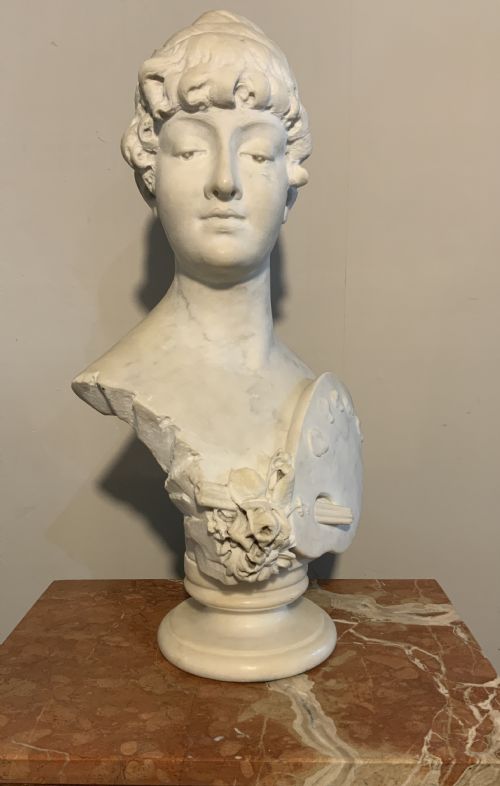
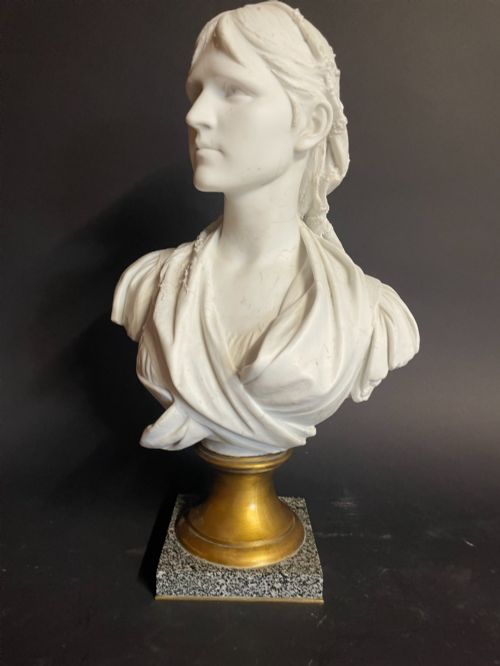
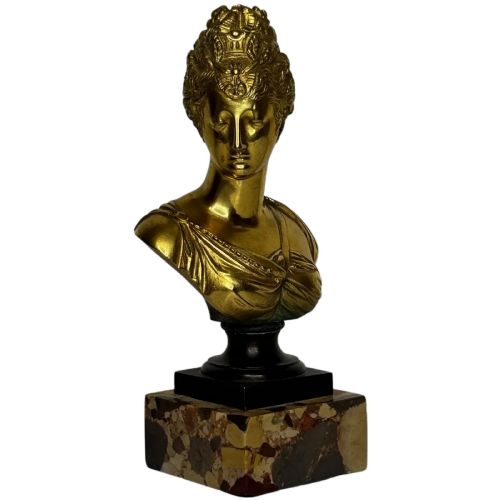
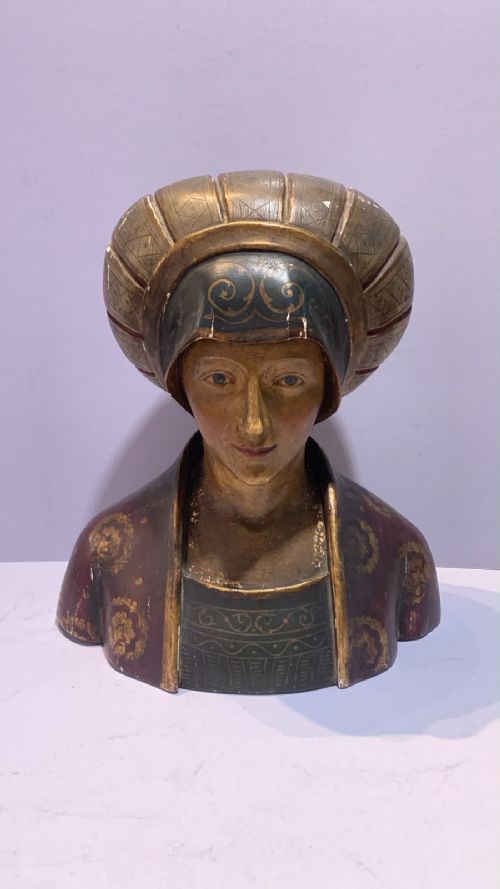
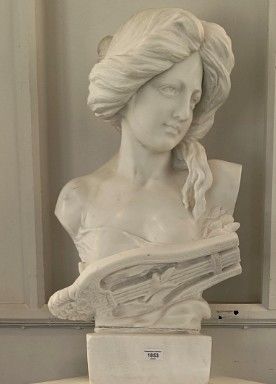
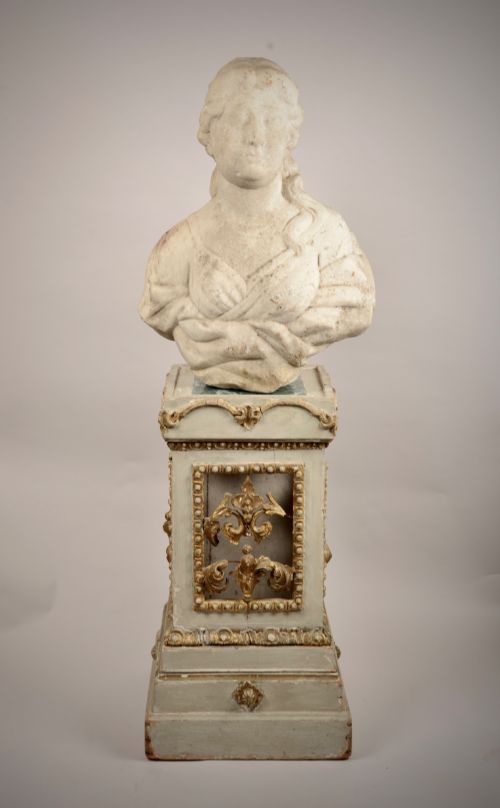


Grand Tour Female Bust
A grand tour female bust captures the classical ideals of antiquity, offering timeless sculptural presence for a mantelpiece or study.
Grand Tour Female Bust
When you search for a grand tour female bust, you encounter sculptural depictions of classical women, noblewomen, and mythological figures created across several centuries. These pieces reflect the enduring fascination with classical antiquity among travellers visiting Italy and other Mediterranean centres.
You are most likely to meet nineteenth-century interpretations on this page, often rendered in marble or terracotta after antique models. These range from cabinet-sized heads to larger cabinet busts, frequently mounted on contrasting stone or marble plinths.
Materials and construction
Many examples incorporate mixed materials, pairing bronze or patinated metal with stone bases to enhance their display presence. Artisans utilised traditional chiselling, casting, and mounting techniques passed down through generations of sculptural workshops.
Neoclassical, Baroque, and Egyptian Revival styles appear across the selection of sculptural busts.
Evaluating sculptural quality
The finesse of the carver's hand dictates the distinction between standard souvenir pieces and exceptional works of art. Subtle detailing in the hair, expressive depth in the eyes, and the clean execution of drapery separate superior examples from simpler productions.
The choice and quality of the mounting materials also influence the overall character of the sculpture. Integrated marble stands and patinated bronze elements show a higher degree of workshop ambition and material harmony.
The Grand Tour Female Bust Glossary
- Neoclassical
- A style reviving the architectural and artistic forms of ancient Greece and Rome. It dominates much of nineteenth-century European sculpture.
- Carrara marble
- A type of white or blue-grey marble quarried in the city of Carrara in Tuscany. It remains prized for its fine grain and consistent texture.
- Terracotta
- Baked clay used unglazed for sculptural works. It allows for expressive modelling and takes various surface patinations.
- Grand Tour
- A traditional trip of Europe undertaken by upper-class European young men of sufficient means. It resulted in the acquisition of art and antiquities.
- Patination
- The ageing or chemical treatment of a surface that alters its colour and sheen. It adds visual depth to metals and terracottas.
Grand Tour Female Bust: Frequently Asked Questions
What is a grand tour female bust?
These sculptures represent classical deities, historical figures, or anonymous noblewomen acquired by travellers during European cultural journeys.
They serve as decorative works that bring classical antiquity into domestic interiors.
Where were these sculptures made?
Most pieces originated in Italian workshops, particularly around Rome and Florence, catering to foreign visitors.
Local artisans reproduced antique statues or sculpted new compositions inspired by classical mythology.
How do I clean marble and terracotta?
Dust surfaces gently with a soft, dry microfibre cloth or a clean artist's brush.
Avoid using water, chemical cleaners, or abrasive materials that can damage the stone or patinated finish.
Are these pieces original antiquities?
Most date from the seventeenth to the nineteenth centuries, created as souvenirs or artistic interpretations after the antique.
They reflect the taste of their respective periods rather than originating from the classical era itself.