
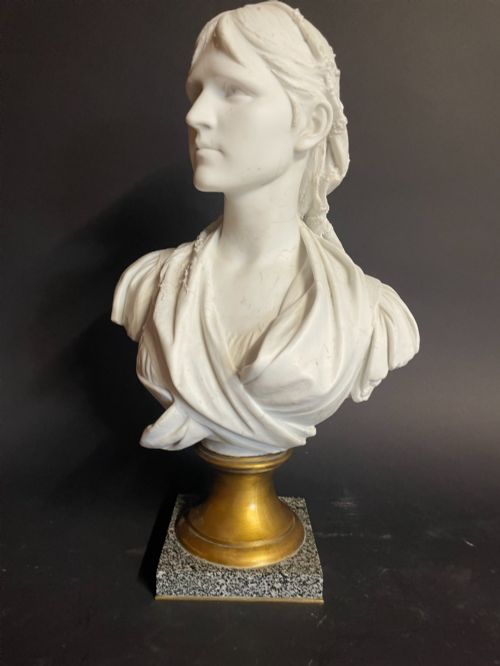
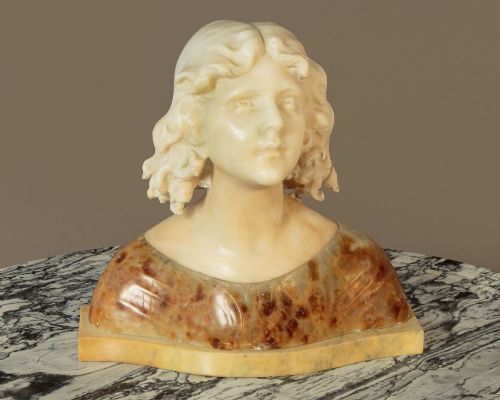


Carved Marble Woman Statue
A carved marble woman statue brings classical grace and expressive portraiture directly into a room, offering timeless sculptural presence.
Carved Marble Woman Statue
Buyers meet pieces originating from Italian and French workshops, spanning Neoclassical, Art Nouveau, and Belle Epoque styles. Portrait busts and allegorical female representations dominate the selection.
Subjects range from veiled ladies and young bathers to classical maidens holding attributes like wheatsheaves or harps. Most examples utilise white marble, Carrara marble, or translucent alabaster.
How they were made
Sculptors shaped these figures primarily from solid blocks of marble and alabaster using traditional hand-carving and chiselling techniques. Softer alabaster allowed for delicate facial detailing and translucent drapery effects.
Many works combine different mineral supports, mounting white stone busts upon contrasting bases such as Vert de Mer marble or incorporating brass elements. Surface finishes vary from high polish to matte textured drapery.
Materials documented across the selection include Carrara marble, alabaster, granite, brass, and Vert de Mer marble bases.
What varies in quality
Quality rests in the anatomical precision of the carving, particularly the lifelike rendering of hands, hair, and facial expression. Finer pieces capture subtle tension in muscles and soft folds in fabric.
The choice and purity of the stone dictate the visual depth, with clean Carrara marble and flawless alabaster commanding greater artistic ambition. Integrated multi-material construction and signed bases elevate individual pieces.
Pugi·Greuze
The Carved Marble Woman Statue Glossary
- Alabaster
- A fine-grained, translucent stone softer than marble, frequently utilised for nineteenth-century figurative sculptures. It permits delicate detailing and subtle light penetration.
- Carrara Marble
- A white or blue-grey marble quarried in Tuscany, prized since antiquity for sculptural work. Its fine crystal structure allows smooth polishing.
- Vert de Mer Marble
- A dark green ornamental marble with lighter veining, commonly used for pedestals and architectural bases. It provides strong visual contrast to white stone figures.
- Neoclassical
- An artistic revival drawing inspiration from the classical art and culture of ancient Greece and Rome. Works in this style emphasise restrained emotion, balance, and clear outlines.
- Art Nouveau
- An international style of art and architecture characterised by intricate linear designs and flowing organic motifs inspired by natural forms. It flourished around the turn of the twentieth century.
Carved Marble Woman Statue: Frequently Asked Questions
Where should I display a marble statue?
These sculptures suit sturdy console tables, pedestals, or dedicated display cabinets where adequate lighting highlights their contours. Positioning them away from direct heat sources protects the stone.
Ensure the supporting surface comfortably bears the substantial weight of solid marble or alabaster works.
How do I clean carved stone?
Dust the surface gently with a soft, dry microfibre cloth or a clean artist brush to remove particles. Avoid using water, chemical detergents, or abrasive cleaners on porous marble and alabaster.
Professional conservators should handle stubborn marks to prevent permanent damage to the delicate carved finish.
How do I distinguish alabaster from marble?
Alabaster feels noticeably softer to the touch and allows light to pass slightly beneath the surface due to its translucent quality. Marble possesses greater hardness and a denser crystalline structure.
Sculptors favoured alabaster for smaller, highly detailed nineteenth-century figures requiring delicate drapery.
What defines the Art Nouveau style in these sculptures?
Art Nouveau statues incorporate flowing hair, naturalistic poses, and organic elements such as pools or floral drapery. The aesthetic moves away from strict classical symmetry toward fluid, dynamic lines.
These pieces typically date from the turn of the twentieth century and reflect contemporary decorative arts.