


Antique Alabaster Woman Statue
An antique alabaster woman statue brings sculptural weight and fine carving into a room, capturing classical and turn-of-the-century forms.
Antique Alabaster Woman Statue
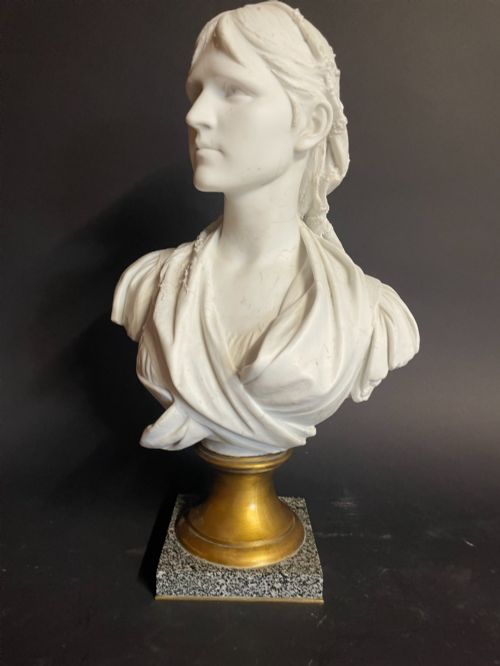
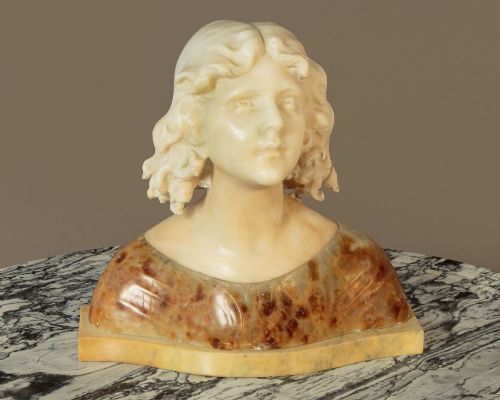
An antique alabaster woman statue represents carved female figures spanning the nineteenth century through the early twentieth century. Buyers encounter portrait busts, reclining nudes, and full-length standing figures framed by Neoclassical, Art Nouveau, and Belle Epoque styles.
The pieces on this page lean heavily toward nineteenth-century Italian and French workshops, encompassing dates from eighteen fifty to nineteen ten. Common subjects range from classical female representations to young girls with harps or wheatsheaves.
Materials and construction methods
Carvers shaped these figures primarily from alabaster and marble, sometimes combining them with brass, granite, stone, parcel-gilt, or other metals. The stone is worked by hand to achieve smooth flesh tones and detailed drapery or hair.
Makers utilised traditional chisel and abrasive techniques to bring out the translucent qualities inherent in alabaster, often mounting the finished sculptures on contrasting bases of marble or stone.
One young woman stands barefoot in a carved stone pool, perfectly composed despite the indoor splashing hazard.
Distinctions in execution
The choice of material also dictates distinction, with pure, translucent alabaster and well-figured marble commanding greater visual presence than denser, opaque stone. Surface finishing and the crispness of signature details elevate individual pieces.
Pugi·Greuze
The Antique Alabaster Woman Statue Glossary
- Alabaster
- A fine-grained, relatively soft stone prized for its translucency and suitability for detailed carving. It allows light to penetrate slightly beneath the surface.
- Art Nouveau
- A decorative style popular around nineteen hundred characterised by organic lines, flowing hair, and natural motifs. Sculptures from this period frequently depict women with soft, sinuous contours.
- Neoclassical
- A revival style drawing on classical Greek and Roman antiquity, favouring balanced proportions, dignified poses, and classical drapery. Pieces in this mode emphasise formal restraint and classical dress.
- Bust
- A sculpted representation of a person from the chest or shoulders up. This format focuses attention on the facial expression, hairstyle, and shoulder drapery.
- Parcel-gilt
- Partially gilded with gold leaf or gold paint to highlight specific details such as hair ornaments, garment borders, or accessories. This technique adds contrast against the white stone.
Antique Alabaster Woman Statue: Frequently Asked Questions
What periods do these statues date from?
The pieces span the nineteenth century and the early twentieth century, with dates clustering around eighteen seventy to nineteen hundred.
Most examples reflect Victorian, Belle Epoque, or Art Nouveau sensibilities originating from French and Italian workshops.
How do alabaster and marble differ?
Alabaster is softer and possesses a distinctive translucency that allows light to pass just beneath the surface, whereas marble is harder and more opaque.
Both stones were worked by hand, but alabaster yields a particularly warm, waxy finish when polished.
Where were these sculptures made?
The available pieces originate primarily from French and Italian studios active during the nineteenth and early twentieth centuries.
These regions produced skilled carvers working in classical, Orientalist, and modern revival styles.
How should I display a heavy stone statue?
These sculptures require a sturdy, level surface capable of supporting considerable weight without shifting or vibrating.
Placement away from direct heat sources and high-traffic edges ensures the stone and any mounted metal or parcel-gilt details remain undisturbed.
What subjects are commonly depicted?
Depictions focus heavily on female figures, including portrait busts, bathing youths, reclining nudes, and allegorical characters holding attributes like harps or wheatsheaves.
These subjects draw directly from classical mythology and turn-of-the-century artistic ideals.