




Neoclassical Marble Centre Table
A neoclassical marble centre table anchors a room with classical dignity, bringing substantial stone tops and architectural form straight into domestic spaces.
Neoclassical Marble Centre Table
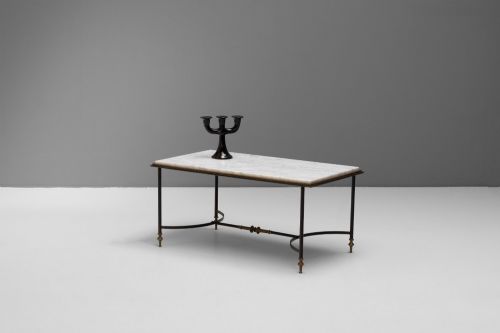
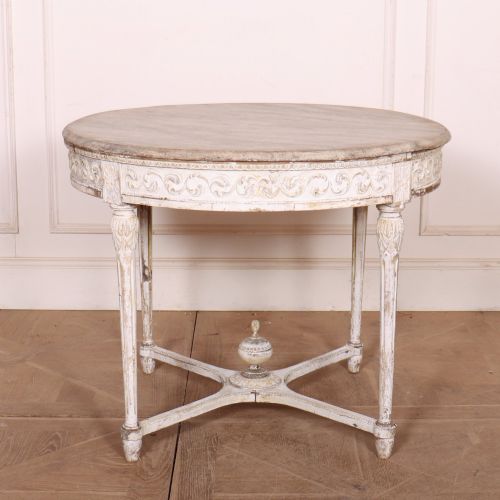
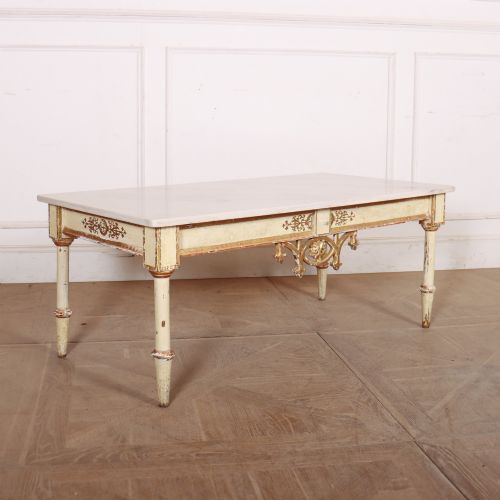
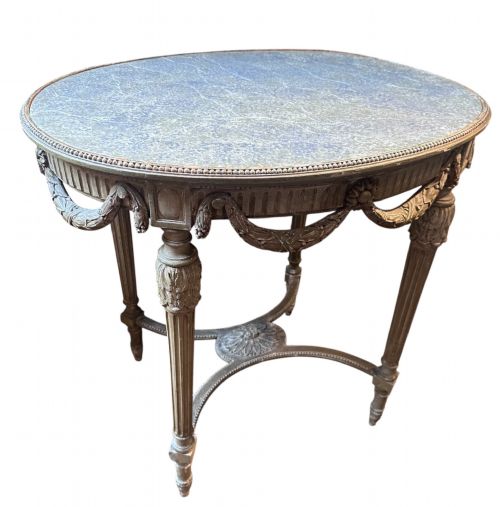
A neoclassical marble centre table combines architectural stone tops with formal timber frames, drawing heavily on French Empire, Louis XVI, and Italian neoclassical design vocabularies. These freestanding pieces function equally well as grand centre tables, coffee tables, or occasional tables depending on their scale.
The selections span the nineteenth century through to the mid-twentieth century, including revival pieces from the 1920s, 1930s, and 1940s. French Empire models alongside Italian and Swedish interpretations dominate the available forms.
How they were made
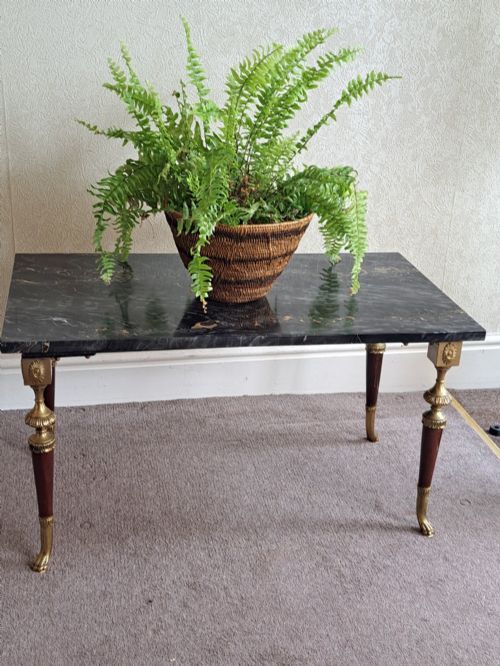
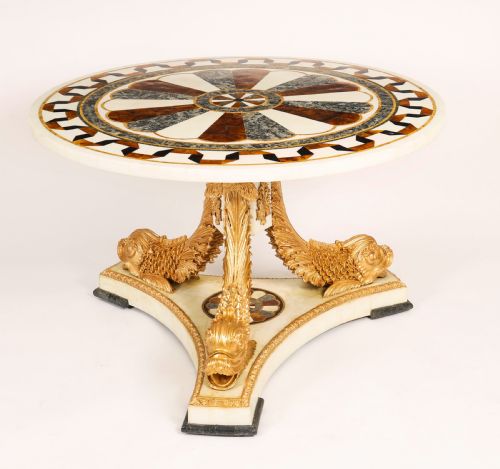
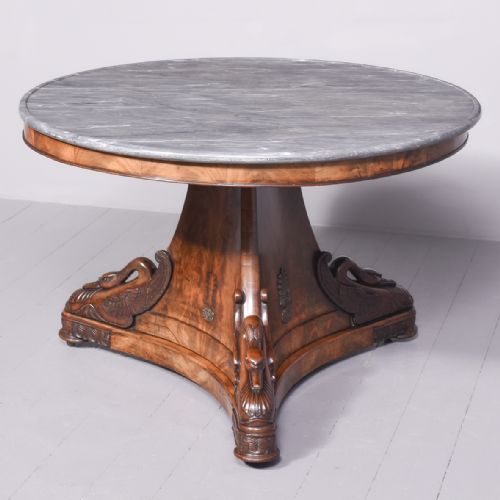
Cabinetmakers utilised dense timbers such as mahogany, walnut, and painted wood for the structural frames, often applying elaborate brass, ormolu, or bronze mounts, swan details, and ram heads. Giltwood also appears among the decorative treatments.
Heavy stone tops in white, black, purple, and porphyry marble, alongside specialised pietra dura specimen work, were meticulously fitted to the timber bases to create stable, freestanding tables.
Several tables feature carved swans and ram heads keeping permanent watch over the living room.
What varies in quality
The distinction between tiers rests upon the precision of the carving, the weight and choice of the marble slab, and the crispness of the ormolu or bronze ornaments. Hand-carved wooden details and heavy cast metal mounts demonstrate superior workshop standards compared to simpler turned timbers.
Materials dictate the visual impact, with specialised stones like porphyry and intricate pietra dura bird specimens marking out the most ambitious iterations from standard mahogany or painted wood variants.
The Neoclassical Marble Centre Table Glossary
- Guéridon
- A small circular table on a central pillar, frequently utilised in French Empire interiors for display or as a centre piece.
- Ormolu
- Gilded bronze applied as decorative mounts to furniture frames, adding metallic contrast to dark mahogany and marble.
- Pietra dura
- An artistic technique using cut and fitted polished coloured stones to create pictorial inlay designs on tabletops.
- Porphyry
- An extremely hard igneous rock with crystal inclusions, prized for its deep purple or red colour in neoclassical tabletops.
Neoclassical Marble Centre Table: Frequently Asked Questions
Where should I place a centre table?
These pieces suit the middle of a principal room or act as a substantial coffee table before a large sofa. Because they are finished on all sides for freestanding use, they look correct viewed from any angle in an open space.
Ensure there is sufficient clearance around the perimeter to walk comfortably and appreciate the stone top and base details without crowding.
How do I care for marble tops?
Clean the stone surface regularly with a soft, damp cloth and dry it immediately to prevent water spots. Avoid acidic cleaners or abrasive agents that etch or dull the polished finish.
Use coasters and protective mats under glasses and objects to safeguard the antique marble against scratches and stains.
How can I tell the period?
Dating relies on timber selection, construction methods, and stylistic revival markers spanning the nineteenth and twentieth centuries. Original nineteenth-century pieces display heavier construction and period-specific mount casting.
Later revival iterations from the 1920s and 1930s adapt classical vocabulary with slightly lighter proportions while maintaining stone tops.