





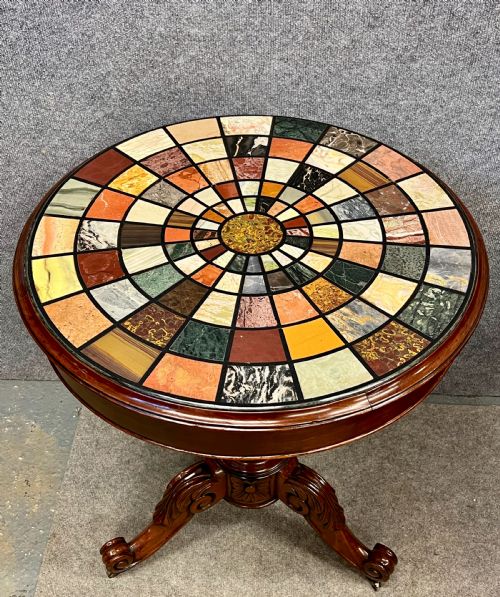

Circular Specimen Marble Table
A circular specimen marble table brings remarkable geological variety and classical polish into a room, drawing the eye instantly.
Circular Specimen Marble Table
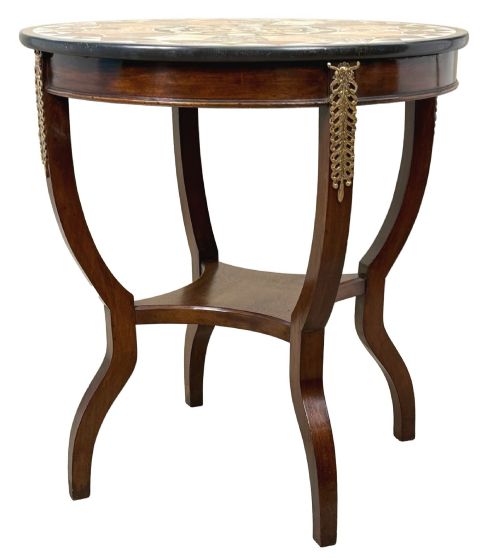
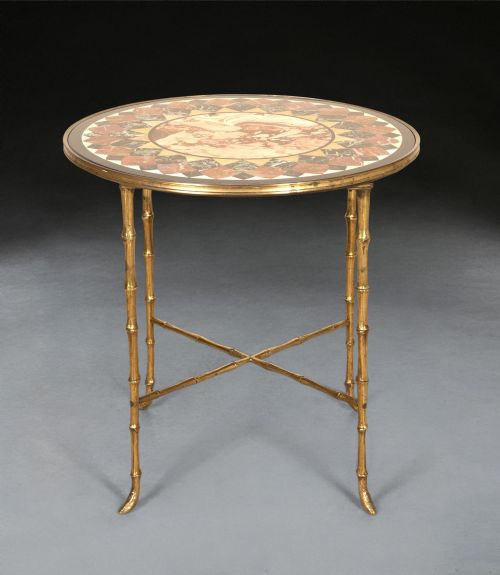
A circular specimen marble table is a decorative surface set with numerous distinct mineral fragments, creating a complex geometric or pictorial mosaic. You will most frequently meet Victorian and nineteenth-century examples functioning as centre tables, lamp tables, or occasional tables within this selection.
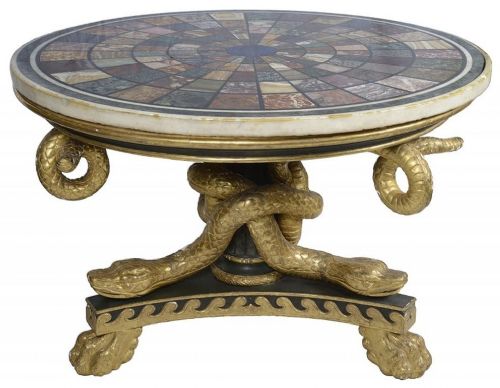
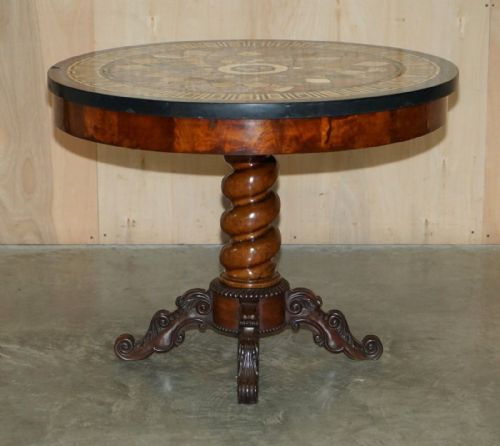
The form spans the Regency, William IV, and Victorian periods, often influenced by the Grand Tour taste for Italian craftsmanship and antique motifs. These pieces typically combine a multi-coloured stone top with a substantial timber base, such as mahogany, satin birch, or giltwood.
How they were made
Maker workshops constructed the tops by meticulously cutting and fitting hardstone, slate, and various marbles into precise patterns or pietra dura pictorial arrangements. These polished stone segments were then mounted onto solid timber carcases.
Support structures frequently incorporate carved wooden elements, brass details, and classical pedestals or swan supports to bear the considerable weight of the stone top.
Current listings feature materials including mahogany, satin birch, brass, giltwood, slate, and pietra dura across nineteenth-century styles.
What varies in quality
Quality rests primarily in the precision of the stone cutting, the rarity and variety of the specimen marbles used, and the artistic ambition of the top's design. Finer examples display seamless joints between tiny mineral fragments and sophisticated pietra dura work depicting birds or classical scenes.
The integrity and craftsmanship of the base timber, whether mahogany or satin birch, alongside sophisticated carved supports like brass accents or swan motifs, elevate the overall stature of the piece.
James Shoolbred
The Circular Specimen Marble Table Glossary
- Specimen Marble
- A tabletop composed of many different types and colours of polished marble and mineral fragments arranged in geometric or decorative patterns. This technique showcases a collection of geological samples.
- Pietra Dura
- An artistic technique using cut and fitted, highly-polished coloured stones to create images such as birds or flowers. It produces a permanent painting in stone.
- Centre Table
- A freestanding table designed to be viewed from all sides, placed in the middle of a room rather than against a wall. These often feature elaborate pedestal bases.
- Hardstone
- A collective term for decorative semi-precious stones such as jasper, agate, and chalcedony used in mosaic tabletops. These materials take a high, lasting polish.
Circular Specimen Marble Table: Frequently Asked Questions
What is a circular specimen marble table?
A circular specimen marble table is a nineteenth-century decorative surface featuring a tabletop composed of various polished mineral fragments, hardstones, or pietra dura mosaics.
These tables were typically used as centre pieces or occasional tables in grand reception rooms, combining geological variety with fine cabinetmaking.
How do I date a specimen marble table?
Dating relies on examining the timber base, construction methods, and stylistic cues from periods like Regency, William IV, and Victorian.
Cabinetmaking details, such as the use of mahogany or satin birch alongside the complexity of the stone top, help establish the era of manufacture.
Where were these tables made?
Many of these tables were produced in Italy during the nineteenth century for travellers undertaking the Grand Tour, who brought them back to Britain.
British firms and cabinetmakers also imported these prized stone tops or constructed the complete tables locally using imported marble specimens.
How do I care for a marble table?
Caring for a specimen marble table involves dusting the stone gently and avoiding harsh acidic cleaners that can etch the polished surface.
The wooden base requires standard maintenance with appropriate furniture wax, keeping the piece away from direct heat sources.