




Italian Pietra Dura Top
An italian pietra dura top brings the meticulous lapidary art of stone inlay straight into a room through tables and paperweights.
Italian Pietra Dura Top
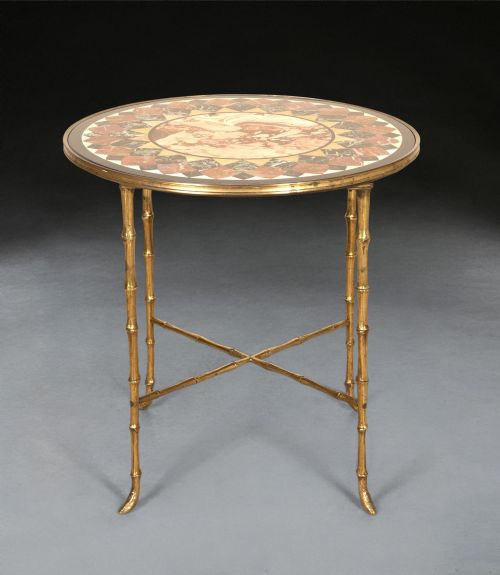
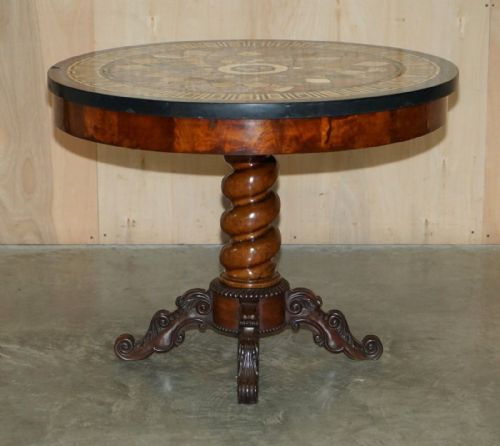
When you search for an italian pietra dura top, you are looking at surfaces composed of precise stone inlays arranged into geometric patterns, floral motifs, or bird imagery. These pieces primarily appear as centre tables, occasional tables, coffee tables, and smaller paperweights.
The versions most commonly met on this page date from the nineteenth century, including Victorian, William IV, and Grand Tour iterations. They demonstrate the enduring appeal of Florentine Renaissance Revival aesthetics applied to functional furniture and desktop objects.
Makers utilised a range of supports from the period, creating distinct forms like octagonal occasional tables and larger side or coffee tables. Each piece showcases the meticulous assembly of hardstones into a cohesive, decorative surface.
Materials and Construction
Craftsmen built these pieces using solid timbers such as mahogany and walnut to support heavy stone surfaces. The primary decorative medium relies on hardstone and specimen marble, cut thin and fitted together with extraordinary precision.
The underlying stone foundations often consist of black marble or standard white marble, providing a stable bed for the intricate pietra dura and scagliola inlays. Artisans shaped each component by hand before polishing the entire top to a smooth, reflective finish.
Some nineteenth-century travellers carried home tiny stone paperweights just to prove they survived the bumpy carriage ride across the Alps.
Judging Quality and Execution
The standard of an italian pietra dura top depends entirely on the tightness of the stone joints and the complexity of the pictorial or geometric design. Superior examples feature microscopic gaps between individual hardstone tesserae and highly detailed imagery such as birds or elaborate Florentine motifs.
The Italian Pietra Dura Top Glossary
- Pietra dura
- An Italian term for hardstone inlay, where finely cut and fitted coloured stones create pictorial or geometric designs. This technique forms the primary decorative surface on nineteenth-century tables and paperweights.
- Specimen marble
- A collection of various decorative marbles gathered from different quarries and assembled into a single polished top. These selections display a wide spectrum of natural colours and geological patterns.
- Scagliola
- A composite material made from selenite, glue, and pigments, painted and plastered to imitate true marble and stone inlay. It offers a smooth surface alternative often found on nineteenth-century Italian tables.
- Grand Tour
- A cultural journey undertaken by nineteenth-century travellers across Europe, particularly Italy, acquiring local crafts like specimen marble and pietra dura items as souvenirs. These pieces often entered British collections during the Victorian era.
- Hardstone
- A collective term for semi-precious stones harder than ordinary marble, such as jasper, chalcedony, and lapis lazuli, utilised in detailed inlay work.
Italian Pietra Dura Top: Frequently Asked Questions
What is an italian pietra dura top?
An italian pietra dura top is a decorative surface made from finely cut hardstones and specimen marbles assembled into intricate patterns or pictorial designs. These tops are typically mounted onto nineteenth-century mahogany, walnut, or marble bases to form tables.
They represent a high point of lapidary skill, particularly associated with Florentine workshops and nineteenth-century Grand Tour travel. The technique involves embedding thin stone slices into a marble or slate foundation.
How were these tables used historically?
These tables served primarily as centre pieces in formal nineteenth-century drawing rooms and reception spaces, designed to display the owner's cultural refinement and travel history. Smaller items like paperweights functioned on desks.
The elaborate specimen marble and pietra dura surfaces were meant to be admired closely by guests during social gatherings. They combined decorative art with functional furniture design.
How do I live with a marble top table?
Living with a stone-topped table involves protecting the polished marble and inlay from acidic spills and heavy impacts. Using coasters and gentle cleaning methods preserves the historic surface.
Positioning the table away from direct heat sources helps protect the nineteenth-century timber frames and the adhesives beneath the stone inlay. Regular dusting keeps the hardstone colours vibrant.
How can I tell nineteenth century pieces apart?
Nineteenth-century pieces often reveal their age through the specific timber species used in the base, such as William IV mahogany or Victorian walnut, alongside the geological variety of the specimen marbles. Stylistic cues like Florentine Renaissance Revival motifs also point to this era.
The precision of the stone cutting and the backing materials provide further clues to the period of manufacture. Earlier examples frequently display denser stone assemblages and hand-carved wooden supports.