




Circular Specimen Marble Top
A circular specimen marble top brings an intricate mosaic of polished stones into a room, offering both a functional surface and a classical display.
Circular Specimen Marble Top
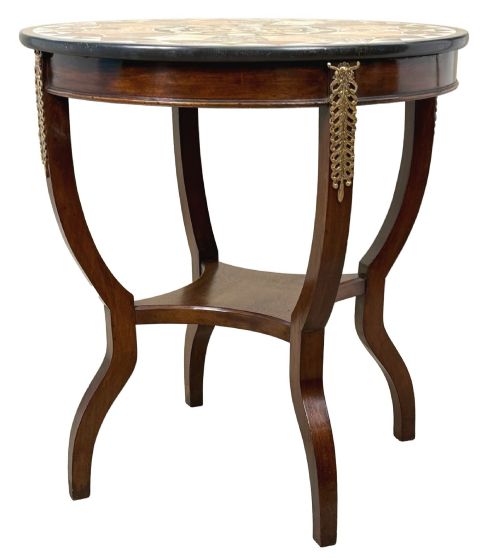
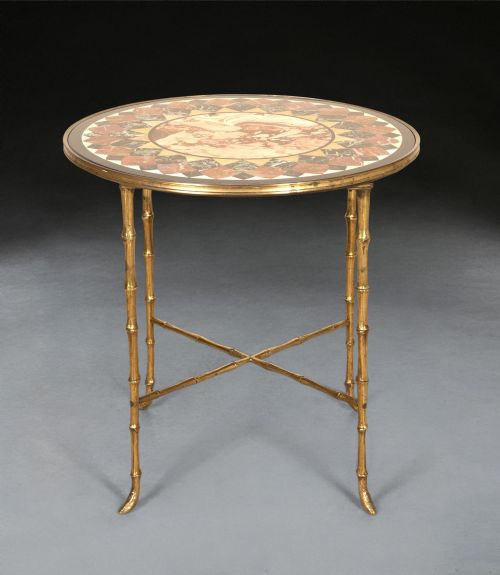
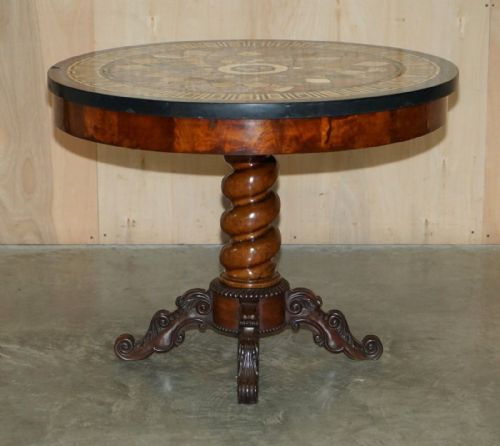
When you search for a circular specimen marble top, you are looking at tables defined by inlaid geometric or pictorial stone panels. The evidence shows these pieces appearing primarily as centre tables, occasional tables, and side tables.
You are most likely to meet Victorian examples on this page, alongside pieces from the 19th century, 1850, 1830, and 1860. Styles span Victorian, Regency, William IV, Grand Tour, Victorian Empire Revival, and Grand Tour Neoclassical.
The underlying timber frames and supports vary in form, utilising mahogany, satin birch, and giltwood. Some examples feature specific structural flourishes such as swan supports.
How they were made
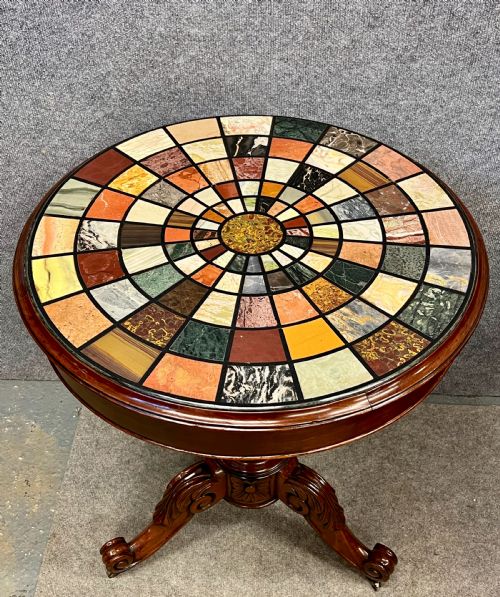
The upper surfaces rely on meticulous lapidary work, assembling various types of specimen marble, hardstone, and pietra dura into cohesive designs. Artisans cut and fitted hard stones with extreme precision to form geometric patterns or pictorial motifs such as birds.
Carpenters constructed the supporting bases and pedestals using traditional cabinet timbers like mahogany and satin birch. Additional decorative elements incorporated slate, brass, and giltwood to enhance the architectural presence of the table.
Swans occasionally lend their carved necks to support the heavy stone above.
What varies in quality
Quality rests principally on the complexity and tightness of the stone inlay within the top. Tables featuring pictorial pietre dure work, such as detailed birds, sit at a different level of craftsmanship compared to simpler geometric arrangements of specimen marble.
The refinement of the supporting timber base dictates the overall caliber of the piece. Masterful joinery, sophisticated turnings, and substantive materials like figured mahogany or sculptural swan supports elevate an occasional table into a significant centrepiece.
James Shoolbred
The Circular Specimen Marble Top Glossary
- Specimen Marble
- A tabletop composed of numerous small pieces of different coloured and textured marbles assembled together. This technique showcases a geological variety within a single surface.
- Pietra Dura
- An artistic technique using cut and fitted, highly polished coloured stones to create images. It is often seen on Grand Tour pieces depicting birds or architectural motifs.
- Grand Tour
- A cultural phenomenon of leisurely travel undertaken by upper-class Europeans to continental sites. Tables associated with this movement typically brought back Italian stonecraft to British homes.
- Centre Table
- A freestanding table designed to be viewed from all sides rather than pushed against a wall. These forms anchor large reception rooms and libraries.
Circular Specimen Marble Top: Frequently Asked Questions
What is a circular specimen marble top?
It is a decorative tabletop formed from multiple pieces of polished marble or hardstone laid into intricate patterns. These surfaces are typically mounted onto 19th-century timber bases to function as centre or occasional tables.
Such pieces often reflect the influence of continental travels, bringing classical stonework into British interiors. They combine the rigidity of stone with the warmth of traditional cabinet woods like mahogany.
How were these tables used originally?
They served as prominent centre tables in principal rooms, designed to display decorative objects or simply to be admired for their inlaid surfaces. Their freestanding nature allowed them to occupy the middle of a parlour or library.
Smaller iterations functioned as occasional or lamp tables, providing a stable, decorative surface for reading rooms and drawing rooms. Their robust construction accommodated both ornamental displays and daily domestic use.
What woods support these marble tops?
Mahogany is the primary timber found supporting these stone surfaces, valued for its strength and rich grain. Satin birch also appears, offering a lighter contrast to the dark stone and colourful inlay.
Base structures occasionally incorporate giltwood accents, brass fittings, or slate cores. The combination of dense stone tops requires sturdy pedestals and frames to ensure lasting stability.
How do I date a specimen marble table?
Dating relies on examining the characteristics of the timber frame, the turning of the pedestal, and the stylistic cues of the period. Evidence on this site spans the Victorian era, William IV, and Regency periods.
Construction methods in the mahogany framework, alongside the specific style of the marble inlay, help narrow the timeframe. Mid-nineteenth-century examples frequently combine classical revival motifs with expert lapidary assembly.