


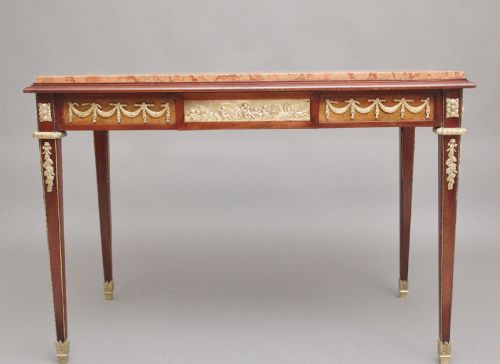
Neoclassical Foyer Table
These neoclassical foyer table pieces bring architectural symmetry and classicism to an entrance, anchored by marble tops and refined timber frames.
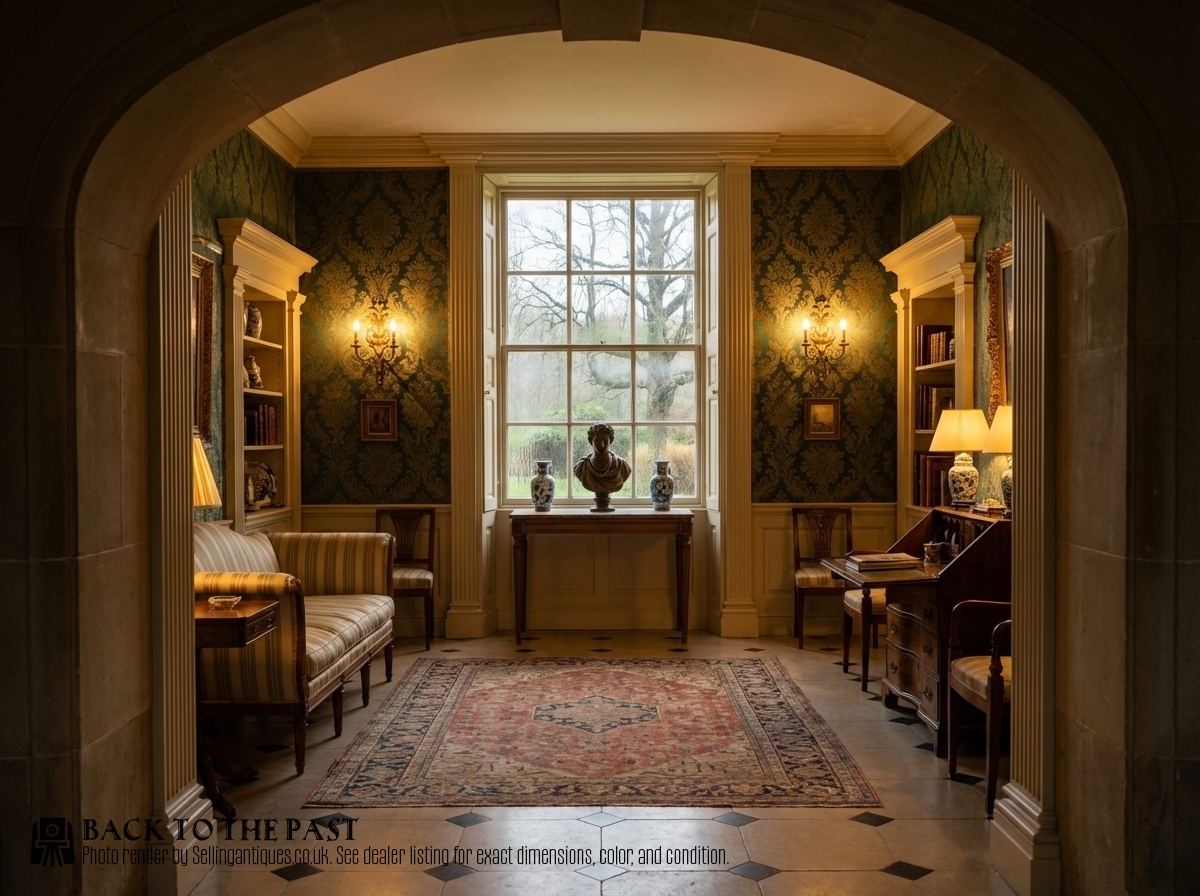
Neoclassical Foyer Table
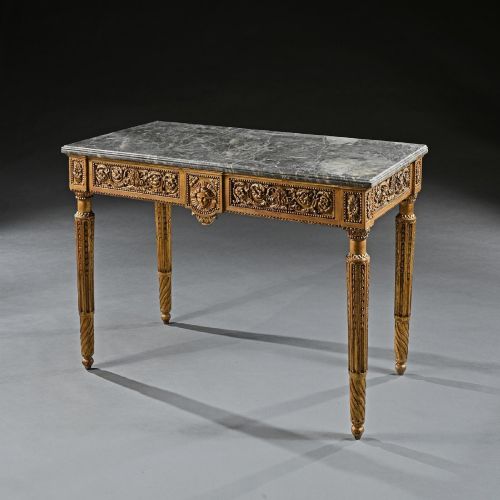
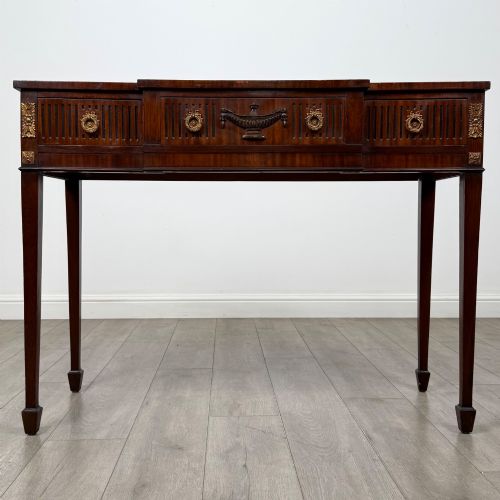
A neoclassical foyer table combines architectural balance with classical ornamentation, serving as an impressive focal point for an entrance hall. These forms span diverse configurations including console tables, centre tables, and demi-lune side pieces.
The selections encountered here range from late eighteenth-century Italian giltwood examples to twentieth-century revivals in mahogany and walnut. French Empire and Adam styles dominate the selection, bringing distinctive regional interpretations to the neoclassical aesthetic.
Buyers frequently encounter console tables designed to sit against a wall, alongside freestanding centre tables intended for the middle of a room. Marble tops and inlaid wood surfaces appear regularly across these domestic and formal hall tables.
What varies in quality
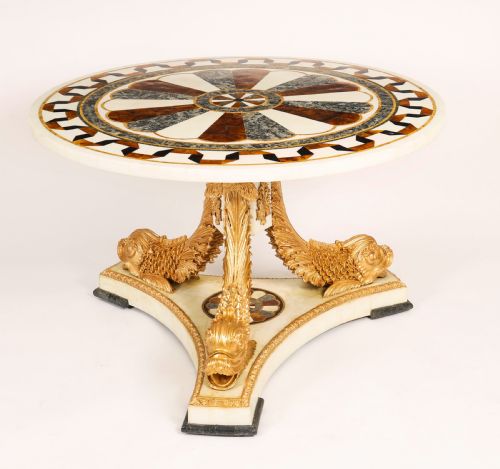
The refinement of the carving distinguishes standard production from superior examples, particularly evident in the execution of classical motifs like acanthus leaves, figures, and giltwood enrichment. Crisply chiselled ormolu and bronze mounts also elevate the status of a piece above simpler cast alternatives.
The choice and thickness of the stone top indicate the grade of the original commission, with solid marble or porphyry representing higher-tier execution. Timber selection, such as figured mahogany or complex specimen wood marquetry, further separates workshop tiers.
Materials recorded across current inventory include mahogany, walnut, giltwood, marble, brass, ormolu, and porphyry.
The Neoclassical Foyer Table Glossary
- Console table
- A table designed to be fixed against a wall, frequently supported by two front legs with the rear secured to the masonry. These pieces anchor entrance halls and display decorative objects.
- Centre table
- A freestanding table intended to stand in the middle of a room rather than against a wall. They often feature finished detailing on all sides.
- Demi-lune
- A half-moon shape characteristic of certain console and side tables. This profile allows the furniture to sit flush against a wall while projecting into the space.
- Ormolu
- Gilded bronze used for decorative mounts and ornaments on furniture. The technique involves applying a mercury and gold amalgam to bronze before firing.
- Porphyry
- An igneous rock with large crystals, highly prized for its purple or red colour and hard texture. It appears frequently as a polished slab on top of neoclassical tables.
Neoclassical Foyer Table: Frequently Asked Questions
Where should I place a console table?
Console tables function best against a wall in an entrance hall or living space where floor depth is restricted. Their flat backs allow them to anchor a wall space beneath a mirror or artwork.
Freestanding centre tables occupy the middle of a room, functioning as display surfaces or focal points away from the perimeter walls.
How do I identify French Empire style?
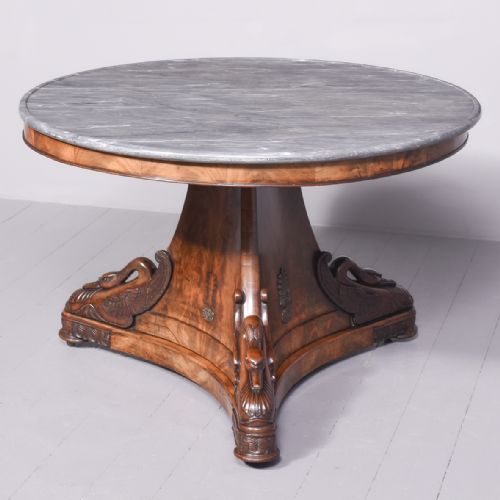
French Empire pieces display heavy classical influences inspired by antiquity, frequently utilising dark mahogany timbers contrasted with bright ormolu mounts. Motifs like swans, rams heads, and military trophies are characteristic.
These tables often feature robust circular or pedestal bases supporting heavy marble tops.
What is a gueridon table?
A gueridon is a small freestanding French table supported by a central pillar or figures. They originated in the seventeenth century and evolved into popular centre table forms during the neoclassical period.
Examples often feature round marble tops supported by carved wooden columns or pedestals.