
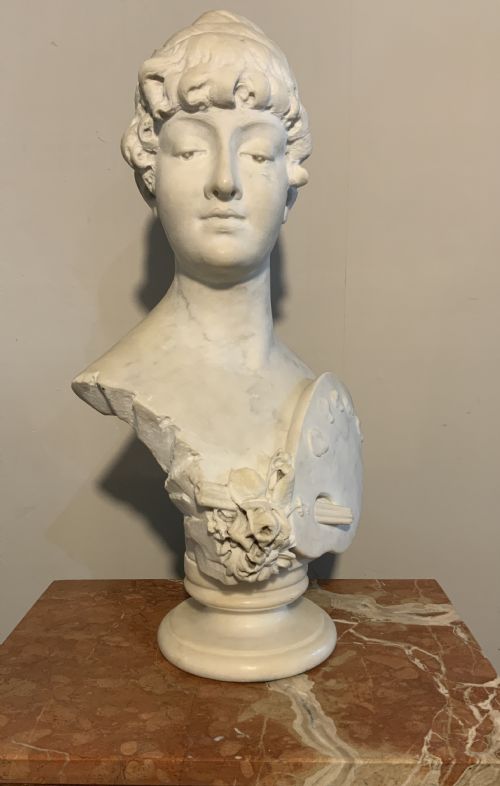
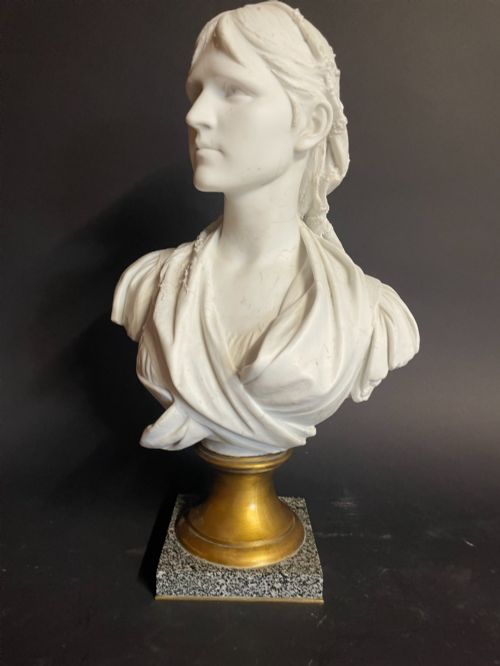


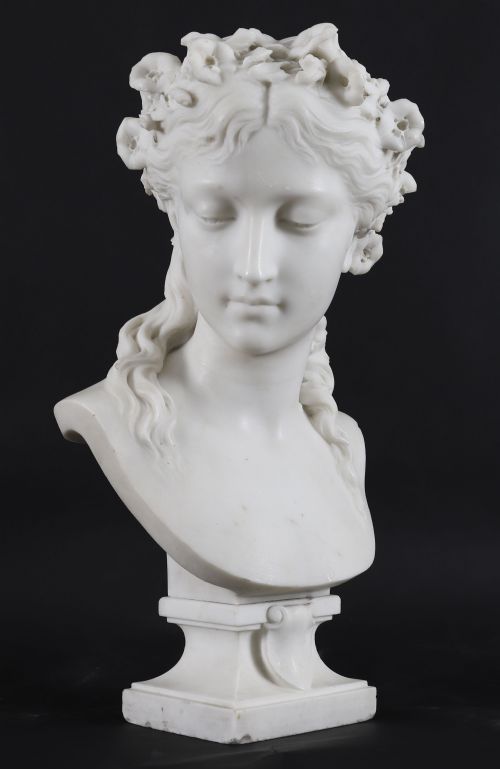


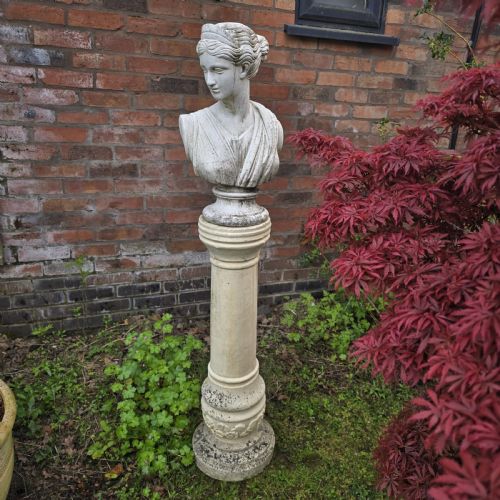


Neoclassical Female Bust
A neoclassical female bust brings classical restraint and sculpted grace into a room, drawing the eye with carved stone and historic form.
Neoclassical Female Bust
A neoclassical female bust captures the likeness of classical heroines, muses, and noble women in carved stone or terracotta. These works draw directly from antique sculpture, presenting subjects such as Diana, Athena, and mythological figures with measured poise.
Most examples originate in the nineteenth century, spanning Georgian, Victorian, and French neoclassical revivals. Pieces range from life-sized carved marble portraits to smaller terracotta studies and portrait miniatures in pressed glass paste.
The selection includes figures mounted on plinths, garden statuary, and detailed representations modelled after classical antiquities. Each piece reflects the enduring nineteenth-century fascination with ancient Greek and Roman ideals.
Materials and technique
Carvers shaped white marble, Carrara marble, and alabaster using traditional chisel and drill techniques. These stones allowed sculptors to achieve smooth transitions in skin tones and detailed rendering of drapery and hair.
Modelters utilised terracotta and bisque porcelain, often casting or pressing the clay before firing. Bronzed finishes, brass accents, and gold leaf were applied to highlight specific details on metal and ceramic surfaces.
Neoclassical Female Bust Retail Price Guide 2026
Typical asking prices for neoclassical female bust among the pieces listed under this phrase on Sellingantiques today, from the lower quarter to the upper quarter. They describe what is for sale here now, not the wider market.
At least one nineteenth-century noblewoman immortalised here shares shelf space with a stern iron lady cast in a foundry.
Execution and detail
The precision of the carving defines the upper tier of marble and alabaster pieces. Master carvers captured delicate folds in fabric, strands of hair, and subtle facial expressions with notable depth.
Surface finish and material purity distinguish finer works from simpler casts. High-grade Carrara marble and finely fired terracotta display greater translucency and tactile presence.
Eugene Aizelin·Achille Mollica·James Tassie
The Neoclassical Female Bust Glossary
- Neoclassical
- A style originating in the eighteenth century that revives the aesthetic of classical Greece and Rome. It prioritises symmetry, restraint, and classical subject matter.
- Carrara marble
- A type of white or blue-grey marble quarried in the city of Carrara in northern Italy. Sculptors prized it for its fine grain and uniform texture.
- Terracotta
- Baked red clay used for sculptural models and finished works. It allows for expressive modelling before the firing process hardens the material.
- Alabaster
- A soft mineral stone that is easily carved and polished. It possesses a characteristic translucency when cut thin.
- Herm
- A sculpted bust or head atop a square pillar or tapering shaft. This form originates from ancient boundary markers in Greece.
Neoclassical Female Bust: Frequently Asked Questions
Where were these busts displayed?
Nineteenth-century interiors incorporated these sculptures into libraries, halls, and drawing rooms on mantelpieces or dedicated pedestals.
Larger stone examples also found placement in conservatories and garden settings as architectural ornaments.
How do I identify marble types?
Carrara marble presents a bright white or subtle grey tone with faint veining and a fine crystalline structure.
Mixed marbles and alabaster offer distinct weight differences and warmer, more translucent surface qualities.
What subjects are most common?
Portraits frequently depict mythological figures such as Athena and Diana, alongside literary heroines and historical figures like Marie Antoinette.
Anonymous classical maidens and allegorical representations of art and muses also appear regularly.
How should I clean marble?
Dusting with a dry, soft cloth prevents the accumulation of grime on porous stone and terracotta surfaces.
Harsh chemical cleaners and excessive water cause permanent damage to polished marble and unglazed ceramic bodies.