


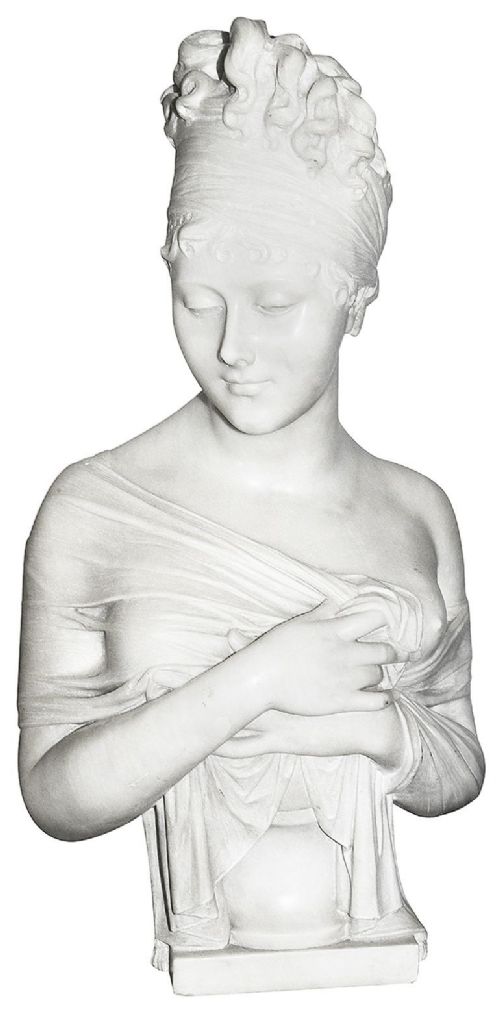


Neoclassical Female Bust Portrait
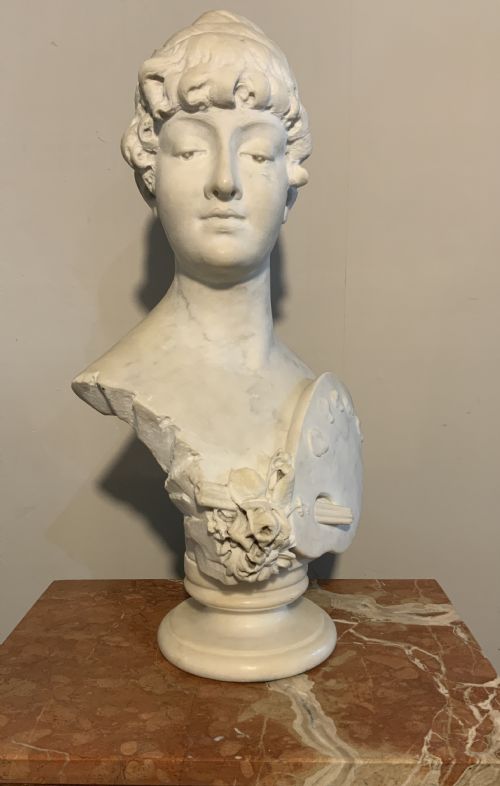
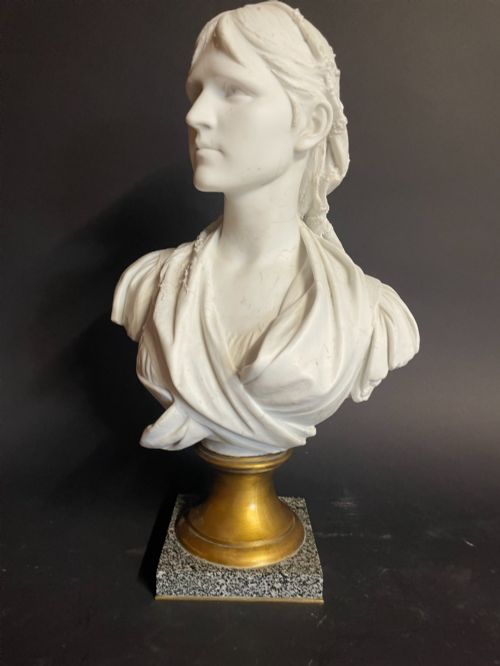
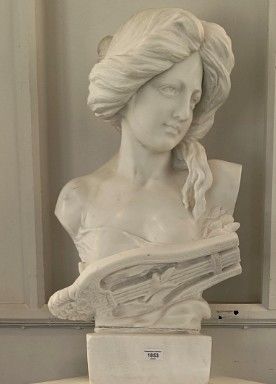
These neoclassical female bust portrait pieces bring classical grace into a room, carved or modelled to echo ancient sculpture with dignified poise.
Neoclassical Female Bust Portrait
The selection ranges from life-size carved stone likenesses to small portrait miniatures and framed cameos. Subjects include historical figures like Marie Antoinette and Madame Récamier, alongside classical deities such as Diana and the muse Erato.
Most examples draw heavily on Italian workshops and French artistic traditions, often reproducing famous ancient prototypes like the Venus de Medici. Sculptures span varied scales, from substantial architectural ornaments down to delicate desk pieces.
Materials and methods
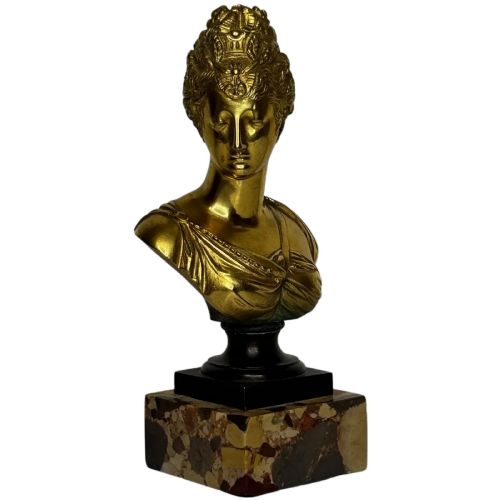
Foundries utilised cast iron and gilt bronze for durable metallic interpretations, whilst ceramicists shaped bisque porcelain for matte, statue-like finishes. Glass paste was also pressed into moulds to create detailed cameo reliefs, sometimes mounted within protective frames.
Materials span traditional Carrara marble, alabaster, terracotta, bronze, cast iron, and bisque porcelain across nineteenth-century production.
Judging quality
Superior quality rests in the sensitivity of the carving or modelling, where subtle undulations define bone structure and hair without appearing stiff. Fine marble and alabaster show translucency and careful polishing that captures light across the contours of the face.
The treatment of drapery and clothing reveals the artisan's skill, distinguishing fluid, natural folds from mechanical or shallow incisions. Base materials and mounting details, such as integrated bronze or mixed marble elements, further set finer studio pieces apart from standard workshop output.
The Neoclassical Female Bust Portrait Glossary
- Neoclassical
- A style originating in the mid-eighteenth century that drew inspiration from the art and culture of classical Greece and Rome. It emphasises symmetry, restraint, and idealised human forms.
- Bisque porcelain
- Unglazed ceramic material fired once to produce a matte, porous surface resembling white marble. It was widely utilised in the nineteenth century for delicate portrait busts.
- Terracotta
- Baked red or buff clay used for sculptural models and finished works. Artisans frequently applied patinas to imitate bronze or stone.
- Cameo
- A method of carving or moulding a relief image on a contrasting background material. Pressed white glass paste examples mimic traditional carved stone.
Neoclassical Female Bust Portrait: Frequently Asked Questions
Where should I display a marble bust?
These sculptures suit prominent positions on heavy sideboards, dedicated pedestals, or sturdy mantelpieces where adequate lighting highlights their carved contours. Their neutral stone tones blend naturally into both traditional and contemporary interiors.
Ensure the supporting surface is stable and capable of bearing substantial weight, particularly for larger marble and cast iron pieces. Keeping them away from direct heat sources protects vulnerable stones and patinated surfaces from thermal shock.
How do I clean an alabaster sculpture?
Dust alabaster and marble gently with a soft, dry microfibre cloth or a clean, dry artist's paintbrush. Avoid using water, household detergents, or chemical solvents, as moisture damages porous stone and soft alabaster.
Professional restoration is recommended for stubborn grime or historic stains to prevent permanent abrasion of the polished surface. Regular gentle dusting prevents particle buildup in recessed carved details.
Are nineteenth-century terracotta busts fragile?
Fired clay requires careful handling due to its inherent rigidity and susceptibility to impact damage along thin edges or protruding hair strands. They are best placed where they will not be brushed against or knocked by passing foot traffic.
When moving a terracotta piece, support it securely from beneath the base rather than lifting it by projecting sculptural elements. Stable indoor environments with consistent humidity levels keep the ceramic material secure over time.
What does after the antique mean?
This designation indicates that a nineteenth-century sculptor consciously recreated a famous classical sculpture from antiquity, such as a recovered Roman or Greek statue. These works demonstrate the enduring academic appeal of classical proportions and subjects during the Victorian era.
Such pieces reflect the Grand Tour tradition, where artists and collectors sought to capture the essence of ancient Mediterranean masterpieces. They represent skilled interpretations rather than direct contemporary portraits from life.