
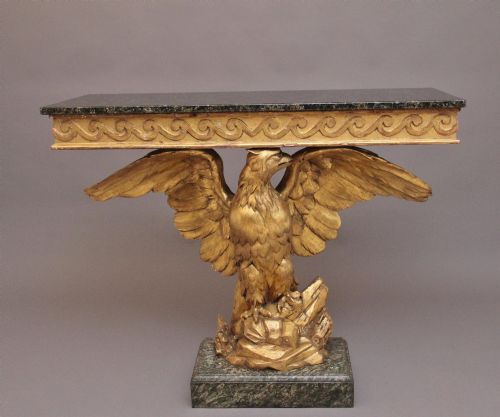
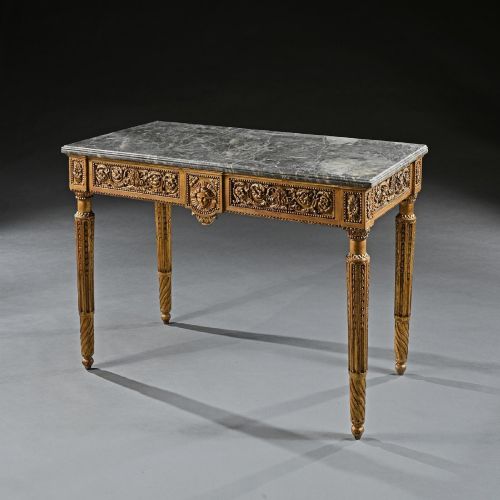
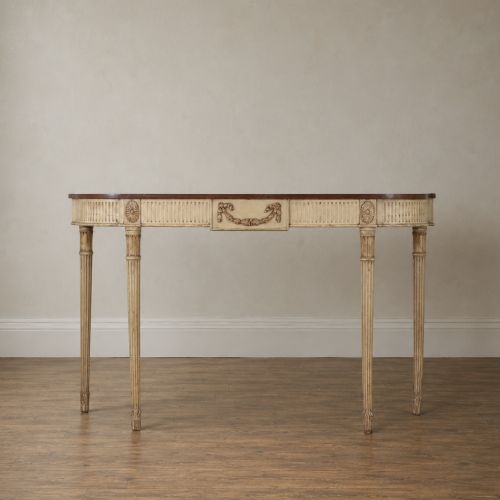
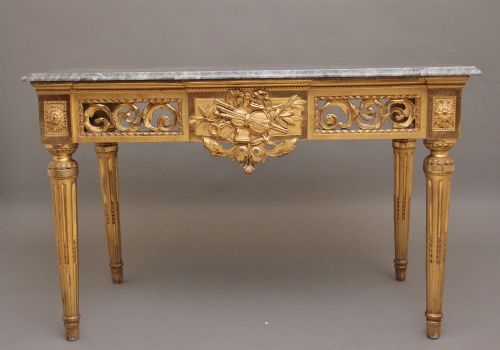


Neoclassical Entry Table
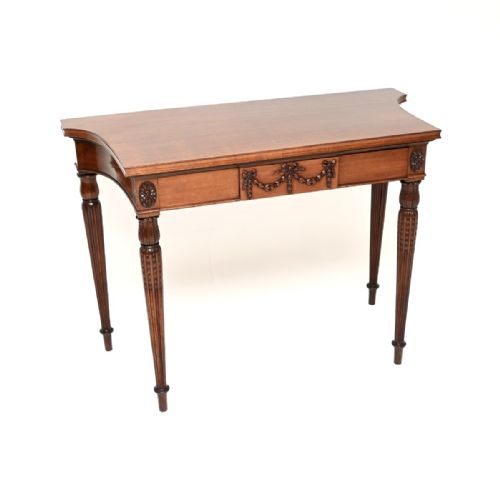
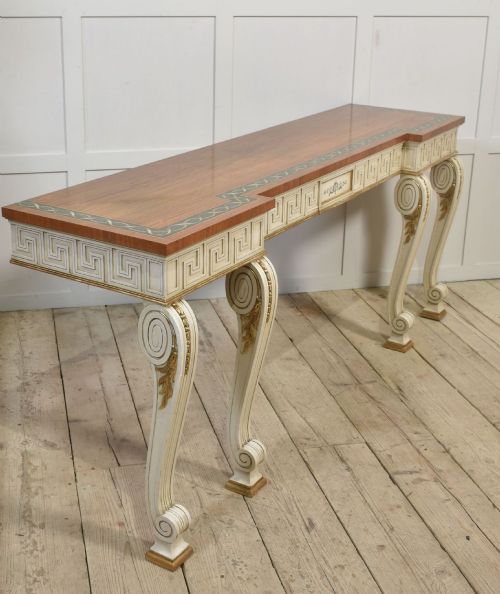
A neoclassical entry table brings proportion and classical detail to a hallway, drawing the eye with marble tops and carved giltwood.
Neoclassical Entry Table
A neoclassical entry table is typically encountered as a console table designed to stand against a wall, or occasionally as a centre table or demi-lune cabinet. The pieces available span from the 18th century through the Victorian era and into the early 20th century, encompassing revivals like the Georgian and Edwardian periods.
Italian and French examples dominate the selection, alongside English pieces from the 18th and 19th centuries. Makers and craftsmen of these periods drew directly on classical architecture, resulting in rectilinear or curved demi-lune shapes intended for grand halls and reception rooms.
Materials and construction
Construction relies heavily on timbers such as mahogany, walnut, satinwood, and oak, often shaped into painted or giltwood frames. Surfaces receive decorative treatments including hand-painted panels, gesso, and faux porphyry finishes.
Several tables arrive with architectural centaur designs, proving that mythological beasts make surprisingly dependable hallway companions.
Distinctions in quality
Quality rests upon the crispness of the carving in the wood and gesso, the depth of the gilding, and the choice of timbers such as figured mahogany or satinwood. Superior execution appears in the balance of proportions and the integration of the marble top within the wooden frieze.
Later revivals range from robust cabinetwork to simpler commercial productions, whereas 18th-century pieces often display finer hand-carved details and more substantial structural integrity.
The Neoclassical Entry Table Glossary
- Console table
- A table designed to be fixed against a wall, traditionally supported by two or four legs or scroll brackets. They frequently feature marble tops and decorative friezes.
- Demi-lune
- A half-moon shape characteristic of many entry and console tables from the 18th and 19th centuries. This profile allows the furniture to sit flush against a hallway wall.
- Giltwood
- Timber that has been coated with gold leaf or a gold-coloured metallic finish. It reflects light in dim hallways and highlights carved architectural details.
- Faux porphyry
- A decorative paint finish imitating the deep purple-red igneous rock prized in antiquity. Craftsmen used this technique to achieve a luxurious stone effect on wooden furniture.
- Pier table
- A table designed to stand against the wall between two windows, usually placed beneath a mirror. It shares many characteristics with the modern notion of a console table.
Neoclassical Entry Table: Frequently Asked Questions
Where should I place a console table?
These tables suit narrow hallways, entryways, and reception rooms where floor space is limited. Their shallow depth allows them to sit against walls without obstructing pathways.
They often sit beneath a mirror or painting, providing a surface for small decorative objects or correspondence.
How do I identify an 18th century piece?
Eighteenth-century examples typically display hand-carved details in giltwood or painted timber, showing natural wear consistent with age. Construction methods include traditional joinery visible beneath the frame.
Later revivals from the Victorian and Edwardian eras often replicate these classical motifs with machine assistance or different secondary woods.
Are marble tops original?
Many tables retain their original marble or stone tops, which were selected for durability and formal appearance. The thickness and type of marble, such as purple or white varieties, often correspond to the period of the frame.
Replacements do occur over centuries, so the fit and edge profile help determine if the top belongs to the base.
What is the difference between a console and a centre table?
A console table is flat-backed and intended to stand directly against a wall, frequently anchored for stability. A centre table is freestanding and finished on all sides for placement in the middle of a room.
Both forms utilise neoclassical design elements like carved legs and marble surfaces, but their intended placement dictates their construction.