


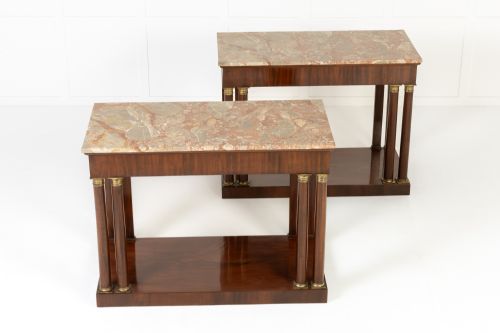


Empire Style Hall Table
An empire style hall table brings architectural grandeur to an entrance, offering a striking focal point with classical proportions and rich materials.
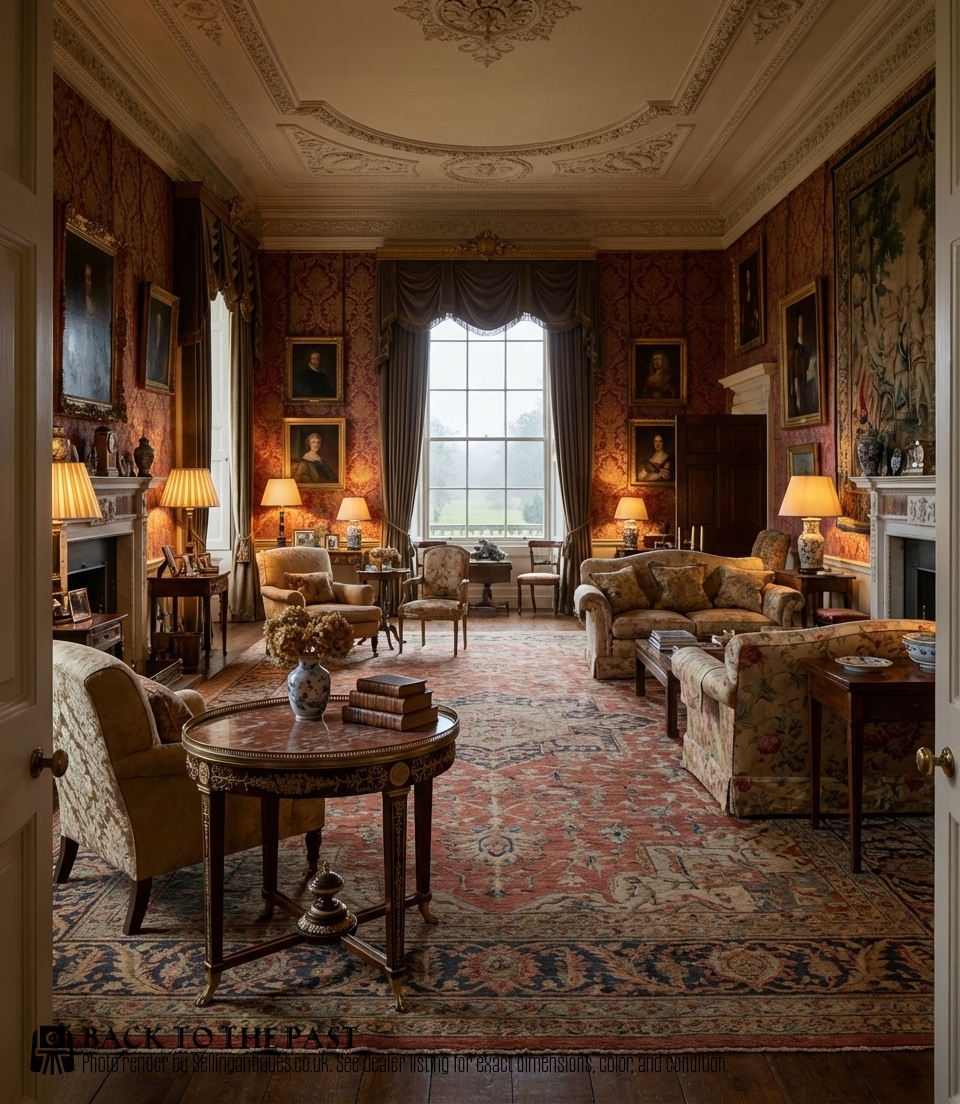
Empire Style Hall Table
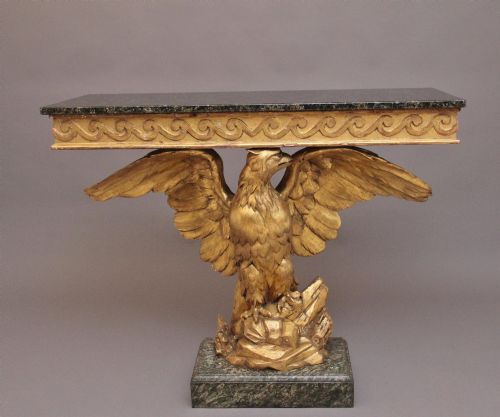
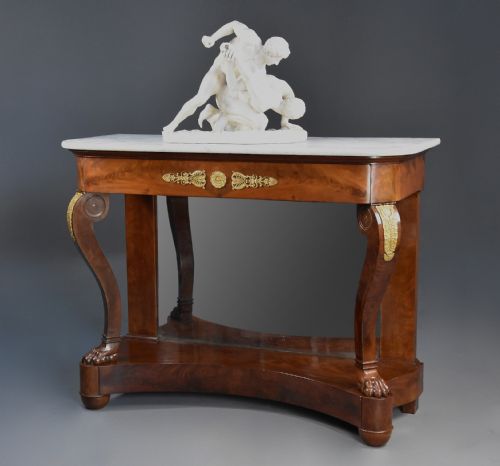
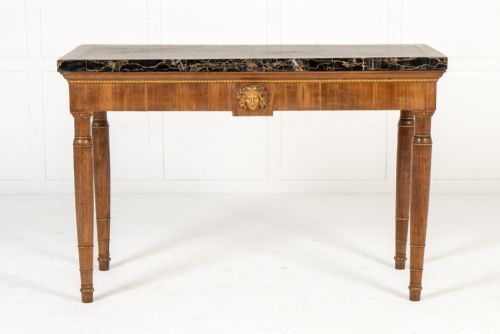
When you search for an empire style hall table, you encounter substantial console tables and free-standing centre tables designed to anchor large hallways and reception rooms. These pieces originate primarily from the nineteenth century alongside later revival periods, bringing classical symmetry into domestic interiors.
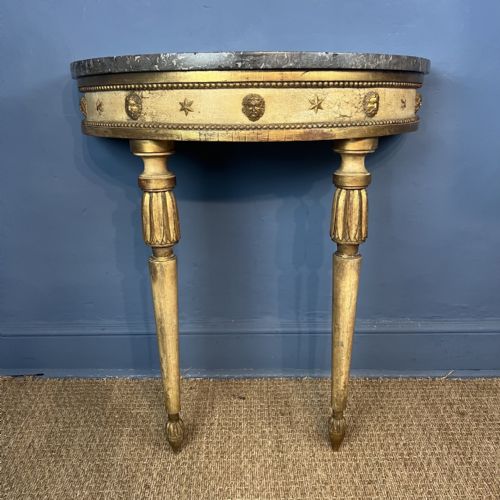
Console tables dominate the selection, built with flat backs to sit flush against hallway walls beneath mirrors or paintings. Centre tables and gueridons also appear frequently, offering circular or oval surfaces supported by central pillars or classical columns.
Origins span across France, Italy, Sweden and England, showcasing regional interpretations of neoclassical design. French and Italian examples often feature rich mahogany, walnut or painted surfaces paired with marble tops, while Swedish pieces lean towards lighter finishes.
Materials and construction
Cabinet makers utilised dense hardwoods such as mahogany and walnut, frequently selecting figured veneers and burr birch to create striking grain patterns across flat surfaces. Painted wood finishes in cream or other tones also appear, often accented with parcel gilt or parcel silvered details.
Heavy marble tops form a defining feature of these tables, resting directly upon wooden frames or pedestals. Ormolu and brass mounts provide classical decorative highlights, framing friezes and accentuating structural supports.
Several tables come with unusually large proportions, ensuring your hallway post stays thoroughly lost.
Distinctions in quality
The sophistication of the timber selection and the precision of the veneer work separate standard examples from finer pieces. Tables featuring continuous grain patterns and richly figured mahogany demonstrate superior cabinet making.
The weight and origin of the marble top significantly influence the character of the table, with thick slabs of porphyry or high-grade white marble indicating high status. Furthermore, the crispness of giltwood carving and the detail cast into brass or ormolu mounts dictate the overall refinement of the piece.
The Empire Style Hall Table Glossary
- Console table
- A table designed to stand against a wall, traditionally fixed with brackets or supported by front legs. These pieces suit narrow hallways and corridors.
- Gueridon
- A small French table, typically round and supported by a central pillar or tripod base. They serve as centre tables in larger entrance halls.
- Ormolu
- Gilt bronze mounted onto furniture as decorative enrichment. This technique involves applying a gold amalgam to bronze.
- Parcel gilt
- Wood or plaster partially covered with thin gold leaf to highlight specific carved details. This method adds subtle contrast to painted surfaces.
- Porphyry
- An igneous rock with large crystals, highly prized for tabletops due to its deep purple or red colour.
Empire Style Hall Table: Frequently Asked Questions
Where should I place an empire style hall table?
These console tables fit naturally against a main hallway wall, creating a welcoming surface for keys, correspondence or decorative bowls. Pairing the table with a matching wall mirror completes a traditional entrance arrangement.
Centre tables and gueridons require a more open floor plan to allow movement around the perimeter. Placing a round centre table in the middle of a spacious vestibule establishes a formal focal point.
What distinguishes an original period table from a revival piece?
Nineteenth-century originals display traditional construction methods, such as hand-cut dovetails, secondary timbers appropriate to the region, and natural wear consistent with age. Mahogany surfaces develop a deep, mellow patina over decades of polishing.
Revival pieces, dating from later decades, often utilise machine-sawn elements and uniform finishes. Examining the underside and joinery reveals the age and manufacturing techniques employed.
How do French and Swedish empire tables differ?
French examples lean towards dramatic proportions, rich dark mahogany, and elaborate ormolu mounts. They often project a sense of imperial power and formal symmetry.
Swedish tables tend to feature lighter wood tones, cream painted finishes, and restrained neoclassical decoration. This Scandinavian interpretation brings an airy elegance to classical furniture forms.