
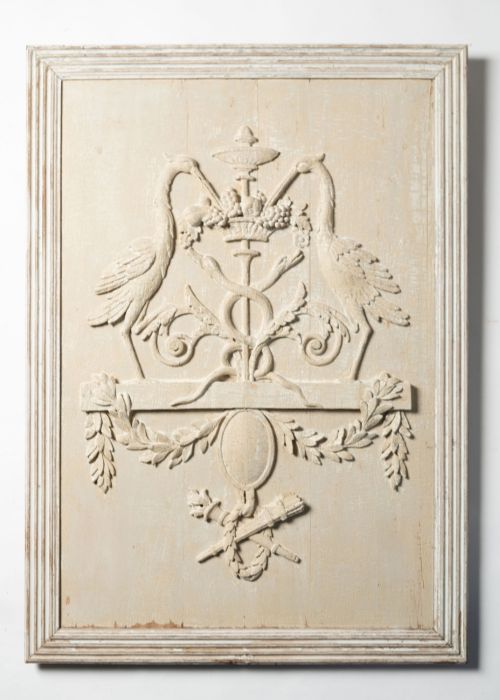
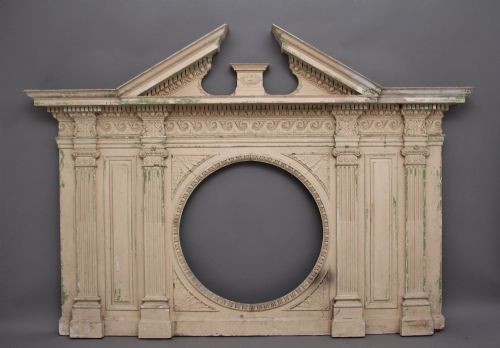


Neoclassical Carved Panel
A neoclassical carved panel brings classical symmetry, crisp relief ornament and architectural restraint to any room.
Neoclassical Carved Panel
A neoclassical carved panel takes the form of architectural overmantels, trumeau mirrors, wall plaques and over-door decorations. These pieces draw on classical motifs such as scrolling foliage, urns and classical scenes.
The selections span the eighteenth and nineteenth centuries, with notable Victorian and Edwardian examples alongside French Louis XVI style and Regency pieces. Painted wood, giltwood and terracotta demonstrate the variety of forms available on this page.
How they were made
Carpenters and carvers shaped solid pine and other timbers by hand before applying gesso to prepare surfaces for ornament. Paint, gold leaf and parcel gilt finishes were then layered over the wood to accentuate the carved details.
Moulders worked in terracotta for specific friezes, capturing figures in relief through firing. Frame makers constructed trumeau mirrors and wall panels to incorporate oil paintings, needlepoint panels and glass plates.
Dancing maidens captured in terracotta friezes bring an eternal, frozen rhythm to nineteenth-century walls.
What varies in quality
Quality rests upon the crispness of the carving and the depth of the relief work, where skilled hands produce sharp lines and balanced proportions. Finer pieces display harmonious composition in their classical motifs rather than mechanical repetition.
The integrity of the original surface finish, whether polychrome paint or gold leaf, dictates the visual power of the object. Subtlety in the parcel gilding and the preservation of early paint layers elevate an item above simpler decorative work.
The Neoclassical Carved Panel Glossary
- Trumeau mirror
- A decorative wall mirror featuring a painted panel or artwork set into the upper section of the frame. These were designed to hang between windows or above mantelpieces in period interiors.
- Overmantel
- A large mirror or carved panel intended specifically for placement above a fireplace. They anchor the chimney breast and reflect light across the room.
- Giltwood
- Timber that has been coated with a thin layer of gold leaf or gold paint. This treatment catches the light and adds richness to classical mouldings.
- Gesso
- A plaster-like mixture applied to wood surfaces to create a smooth base for gilding and fine carving. It allows carvers to achieve sharp, intricate details.
- Parcel gilt
- A finish where only specific portions of an object are highlighted with gold leaf, leaving the underlying painted or natural wood exposed elsewhere.
Neoclassical Carved Panel: Frequently Asked Questions
Where should I hang a carved wall panel?
These panels suit placement above a fireplace, across a chimney breast, or mounted as a focal point on a plain wall.
Their architectural origins mean they work best at eye level where the carved details and classical motifs can be appreciated closely.
How do I clean painted and gilt wood?
Dust gently with a soft, dry brush to prevent accumulation in the carved recesses.
Avoid liquid cleaners, damp cloths, and chemical polishes, which can damage aged paint layers and delicate gold leaf.
What is a trumeau mirror?
A trumeau is a decorative wall mirror that incorporates a painted panel or classical artwork directly above the glass.
Originating in eighteenth-century French interiors, they combine art and reflection into a single vertical architectural element.
How can I tell an eighteenth century panel from a later revival piece?
Earlier panels show tool marks from hand carving and bear the natural wear of aged timber and gesso.
Revival pieces from the nineteenth century often display heavier proportions and machine-assisted preparation beneath the surface finishes.