
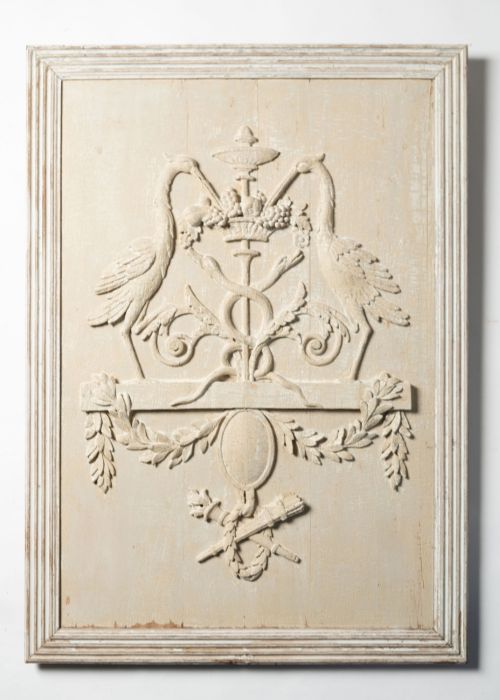

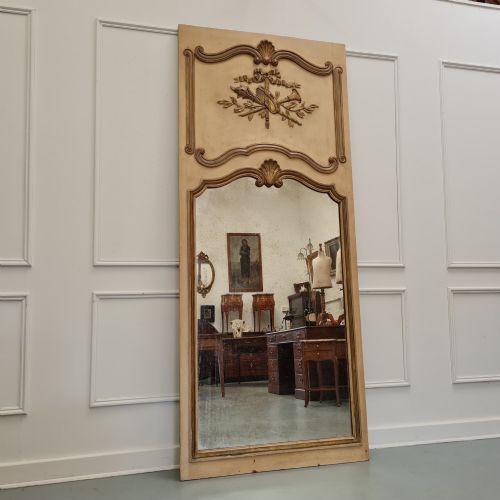


Louis XVI Carved Panel
A louis xvi carved panel brings classical French symmetry and floral grace into a modern room, offering authentic period character.
Louis XVI Carved Panel
A louis xvi carved panel encompasses architectural fragments, trumeau mirrors, decorative bed headboards, and folding screens spanning the eighteenth century to the early twentieth century. These architectural elements reflect the neoclassical taste for straight lines, symmetry, and classical motifs derived from archaeological discoveries of the period.
Pieces originating from the eighteenth century appear alongside revival items dated around eighteen eighty, nineteen hundred, and nineteen ten, demonstrating a sustained popularity for French decorative arts. Buyers encounter trumeau mirrors with painted scenes, architectural wooden panels, and upholstered chairs featuring needlepoint or Aubusson tapestry panels.
The objects serve diverse functions within an interior, operating as wall art, fitted mirror frames, folding room dividers, or integrated components of bed frames and doors. Painted wood, giltwood, and natural timber predominate across the selection, often enriched with gesso and gold leaf highlights.
Materials and Construction
Carpenters and carvers shaped these pieces primarily from timber, applying gesso and gold leaf or hand-painted polychrome finishes to achieve the characteristic neoclassical aesthetic. Craftsmen utilised hand-carving techniques to render classical ornamentation such as ribbons, floral swags, and acanthus leaves directly into the wood.
Trumeau mirrors combine carved wooden frames with inset glass plates and painted panels depicting pastoral or classical subjects. Upholstered pieces incorporate needlepoint and Aubusson tapestry panels secured within carved wooden armchairs, folding screens, and bed frames.
Listings span the eighteenth century, the eighteen seventies, eighteen eighties, eighteen nineties, nineteen hundreds, and nineteen tens, covering both original period items and later revivals.
Judging Quality and Execution
The finesse of the hand-carving determines the visual impact of a panel, distinguishing crisp, deeply undercut foliage and architectural mouldings from softer, more mechanised production. Original gilding and untouched polychrome paint surfaces hold greater desirability than later overpainting or heavy restoration.
Structural integrity relies upon the seasoning of the wood and the retention of original joinery, particularly in large trumeau mirrors and architectural doors. The sophistication of integrated artwork, such as hand-painted portrait panels or fine petit-point tapestry work, elevates the standing of an individual piece.
The Louis XVI Carved Panel Glossary
- Trumeau mirror
- A decorative wall mirror featuring an integrated painted panel or artwork positioned above the glass plate. These pieces were traditionally designed to hang between windows in a formal room.
- Giltwood
- Timber that has been coated with a thin layer of gold leaf over a prepared gesso ground. This finish provides a bright reflective surface that catches interior candlelight or daylight.
- Polychrome
- Painted in several colours, frequently seen on floral panels and decorative woodwork. This technique adds pictorial depth and warmth to the carved design.
- Aubusson tapestry
- Hand-woven textile panels produced in the French town of Aubusson, utilised for upholstery on screens and chairs. They typically depict pastoral scenes or botanical motifs.
- Neoclassical
- The dominant late eighteenth-century style inspired by classical antiquity, characterised by restraint, straight lines, and symmetrical ornamentation. It forms the foundation of the louis xvi aesthetic.
Louis XVI Carved Panel: Frequently Asked Questions
What is a trumeau mirror?
A trumeau mirror combines a vertical looking glass with an upper section containing an oil painting or carved wooden relief. They were built to mount flush against the wall between tall windows in French salons.
Over time, these mirrors became central decorative focal points in drawing rooms, bringing reflected light and classical artwork into domestic spaces.
How do I date a carved panel?
Dating relies upon examining the timber species, tool marks left by the carver, and the composition of the gesso and paint layers beneath any surface dirt. Eighteenth-century originals display hand-pit sawing and organic tool signatures.
Revival pieces made around nineteen hundred often utilise machine-prepared timber and different priming methods, even when copying earlier eighteenth-century neoclassical designs closely.
Where should I hang a wall panel?
These panels suit placement above a mantelpiece, along a hallway, or as standalone architectural wall art in a high-ceilinged room. Their vertical proportions balance well against large expanses of plain plaster.
Securing them properly to wall studs is essential due to the combined weight of the timber frame, gesso, and glass where applicable.
Are painted panels original?
Many panels retain their original eighteenth-century or revival polychrome paint schemes, though some pieces underwent redecoration during subsequent interior updates. Close inspection under magnification reveals whether the paint layers possess the craquelure and wear consistent with age.
Original paint adds considerable character and historical value to a decorative wooden panel or trumeau.