


Neoclassical Cane Chair
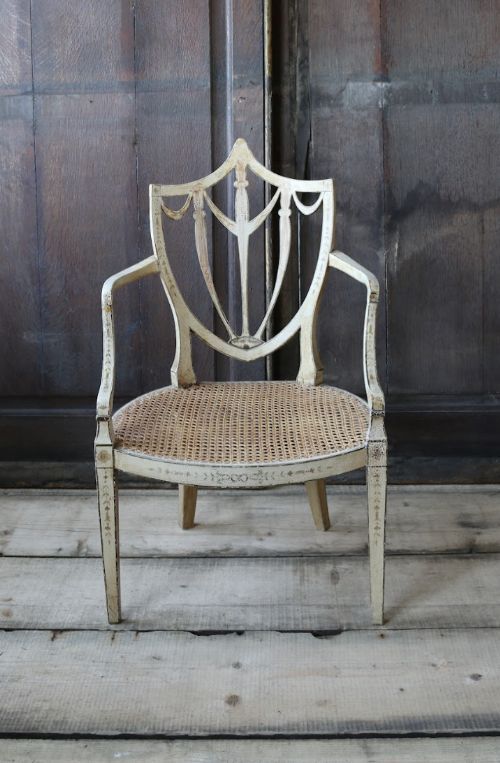
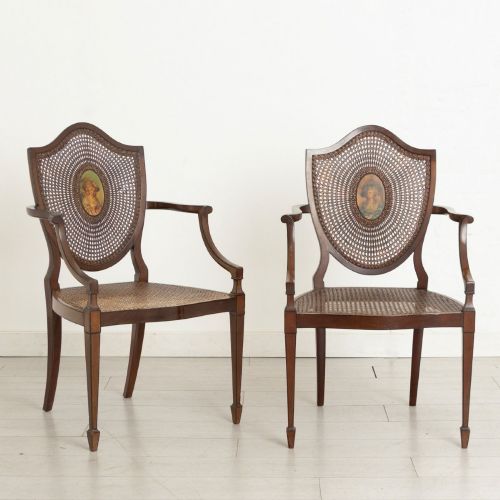
These neoclassical cane chair examples combine classical restraint with woven seating, offering a seating form that brings architectural elegance to any room.
Neoclassical Cane Chair
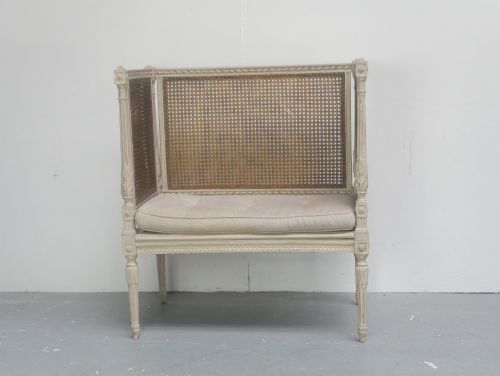
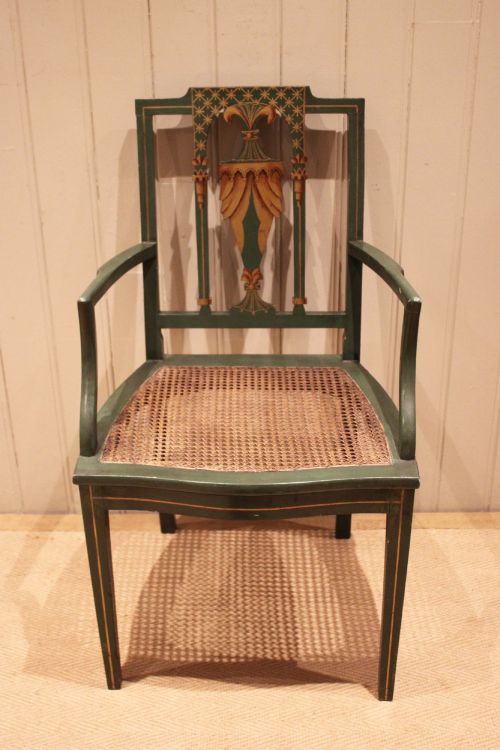
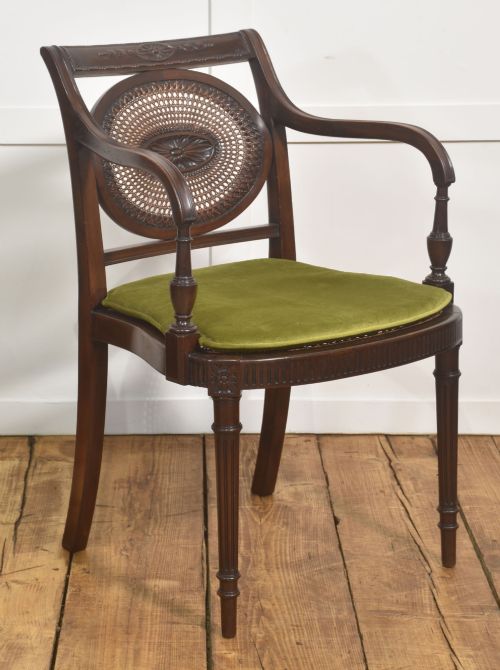
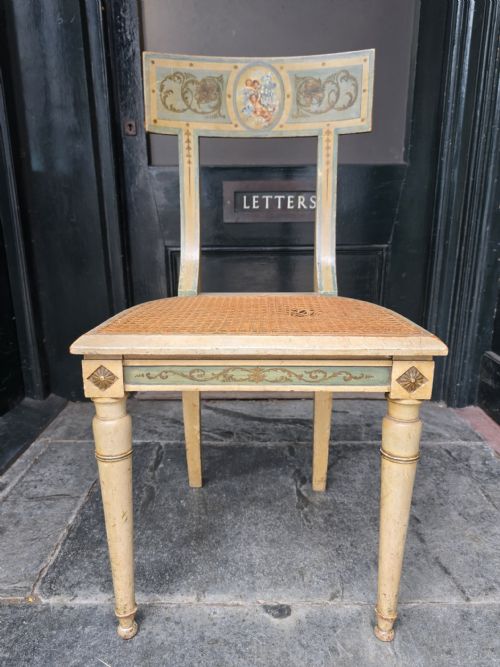
A neoclassical cane chair brings together disciplined classical forms and woven rattan seating across several periods, including the Georgian era, the nineteenth century, and twentieth-century revivals. When you search for a neoclassical cane chair, you encounter dining chairs, armchairs, library chairs, and bedroom chairs drawn from English and French traditions.
The English examples lean towards Hepplewhite shield-backs, Sheraton Revival mahogany designs, and Gillows painted work, while French variants offer Louis XVI medallion shapes and carved bergere forms. These pieces balance rigid geometric lines with the lightness of woven panels.
Most entries on this page display painted finishes, gilt highlights, or exposed mahogany and walnut timbers. They range from single library armchairs to matched dining sets, all sharing a vocabulary of classical motifs.
How they were made
Frames rely on hardwoods such as mahogany, walnut, and beech, shaped through hand carving and joinery to achieve structural rigidity. Timber components often receive painted or parcel gilt decoration to emulate ancient stonework or bronze.
Seating and back panels utilise split cane or traditional caning techniques, woven through drilled holes in the wooden framework. This provides a resilient, light surface that complements the heavier carved frame.
Several chairs feature caned seats designed to hold squab cushions, proving that eighteenth-century sitters valued bottom comfort just as much as we do.
What varies in quality
Quality rests in the crispness of the hand carving and the precision of the joinery where structural members meet. Finer pieces display deeply rendered classical details such as fluting, paterae, and acanthus leaves rather than shallow machine-cut moulding.
The integrity of the woven cane work also dictates value, with tight, uniform patterns showing superior craftsmanship. Furthermore, original painted or gilt surfaces hold greater authority than later redecorations.
Gillows
The Neoclassical Cane Chair Glossary
- Cane
- Woven rattan material utilised for flexible, breathable seat and back panels. It offers lightness to otherwise heavy timber frames.
- Bergere
- An enclosed upholstered or caned armchair featuring solid upholstered or caned sides. It developed during the French neoclassical period.
- Klismos
- An ancient Greek chair form with curved, splaying legs and a concave backrest. It reappeared in neoclassical revival furniture.
- Medallion chair
- A seating form characterised by an oval or circular upholstered or caned backrest framed in carved wood. This style derives from French Louis XVI designs.
- Shield-back
- A chair back shaped in the contour of a heraldic shield, popularized by George Hepplewhite. It frequently incorporates carved splats and caned inserts.
Neoclassical Cane Chair: Frequently Asked Questions
How do I identify a true neoclassical cane chair?
Look for strict symmetry, straight or saber legs, and classical motifs like fluting, urns, or rosettes combined with woven cane panels.
Compare the construction methods and wood types against documented examples from the Georgian and Louis XVI periods to confirm authenticity.
Are these chairs suitable for daily dining use?
Many dining chairs and sets are built sturdily enough for regular use, provided the wooden joints remain solid and secure.
Historic cane requires sensible care and should avoid excessive weight or sharp impacts to prevent snapping the rattan strands.
What is the difference between Georgian and revival pieces?
Georgian pieces date from the eighteenth and early nineteenth centuries, displaying period-accurate construction, timber ageing, and hand-carved nuances.
Revival pieces, such as those from the Sheraton or Louis XVI revivals around nineteen-ten or nineteen-twenty, emulate these earlier styles using the tools and tastes of their own era.
How should I care for historic caning?
Keep the woven cane hydrated by occasionally wiping it with a damp sponge, which prevents the natural rattan from becoming brittle and cracking.
Avoid placing these chairs near direct heat sources or in overly dry rooms, as extreme temperature shifts damage natural plant fibres.