
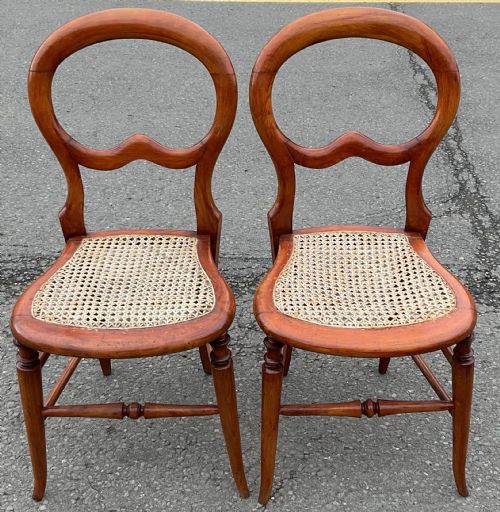


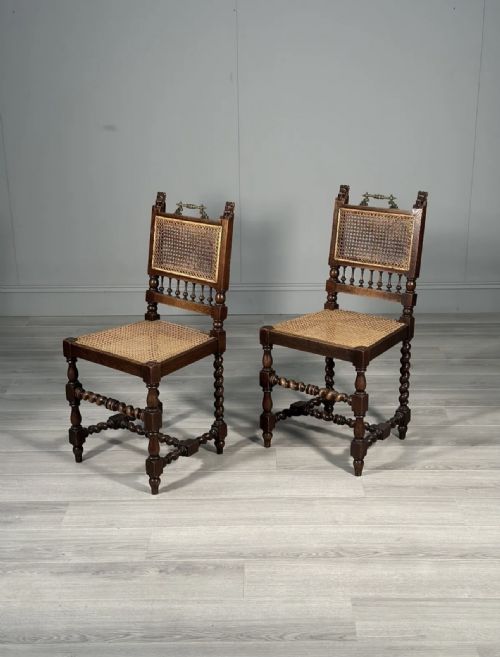


Cane Back Bedroom Chair
These cane back bedroom chair examples bring rattan seating and carved timber into private rooms, offering compact elegance for daily sitting.
Cane Back Bedroom Chair
A cane back bedroom chair provides light seating designed for private quarters, drawing on periods from the Regency era through to the Edwardian period and the 1920s. These pieces appear as armchairs, side chairs, and occasional chairs.
The most frequent versions encountered on this page date from the Victorian era and the Edwardian period, often constructed in mahogany, oak, or painted wood. They bridge decorative appeal and practical utility in a domestic setting.
How they were made
Construction relies primarily on timbers such as mahogany, oak, and satinwood, frequently paired with woven cane or rattan for the back panels and seats. Makers shaped these materials into forms incorporating painted finishes, giltwood, and barley twist legs.
Joinery methods and hand carving define the structural integrity of the frames, while split cane is woven directly through apertures in the wooden framework. This combination of timber framing and permeable mesh creates a resilient yet lightweight structure.
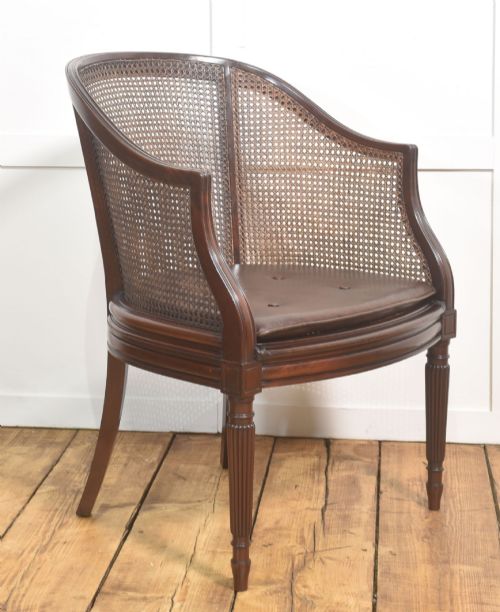
The selection includes armchairs, side chairs, and bergere forms incorporating woven cane and rattan panels.
What varies in quality
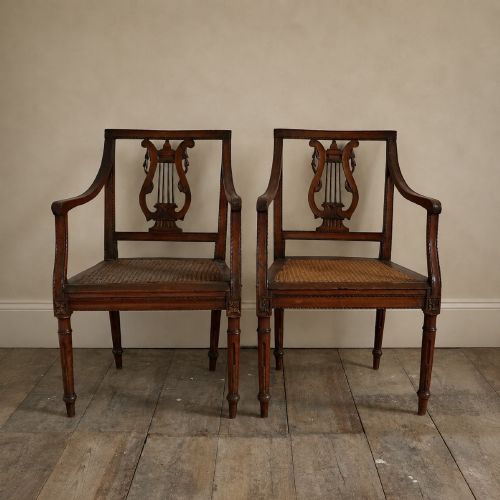
The standard of execution in the carving and the tightness of the cane weaving separate simpler pieces from finer examples. Superior specimens display crisp detail in wooden elements, such as lyre backs or hand-carved motifs.
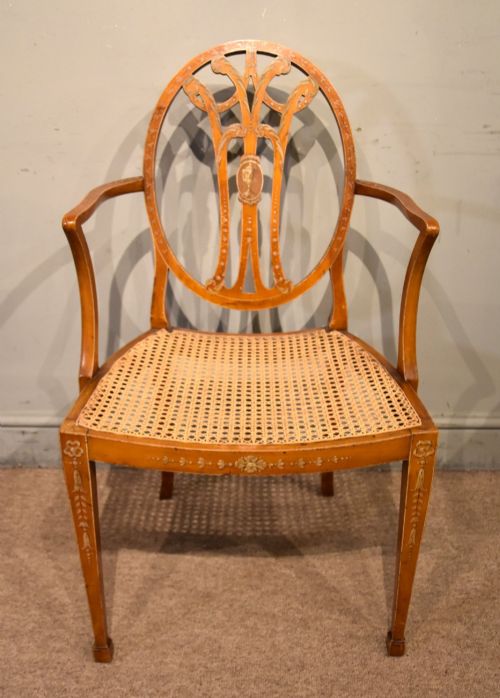
The choice of primary timber and surface treatment, including painted decoration or giltwood finishes, dictates the refinement of the piece. Consistency in the symmetry of the frame and the uniformity of the woven panels indicate greater skill in manufacture.
The Cane Back Bedroom Chair Glossary
- Cane
- A material derived from the peeled inner portion of rattan palms, woven to create flexible panels for chair backs and seats. It provides a lightweight alternative to solid wood or upholstered padding.
- Bergere
- An enclosed upholstered armchair of French origin, typically featuring solid wooden sides and a cane back. These seats often include loose squab cushions for comfort.
- Lyre Back
- A chair back design shaped in the form of an ancient Greek lyre, frequently found in Regency pieces. This classical motif centres the upper rail.
- Barley Twist
- A type of turning resembling a twisted rope, carved into chair legs and stretchers. This decorative feature appears frequently in Jacobean Revival and later oak furniture.
- Giltwood
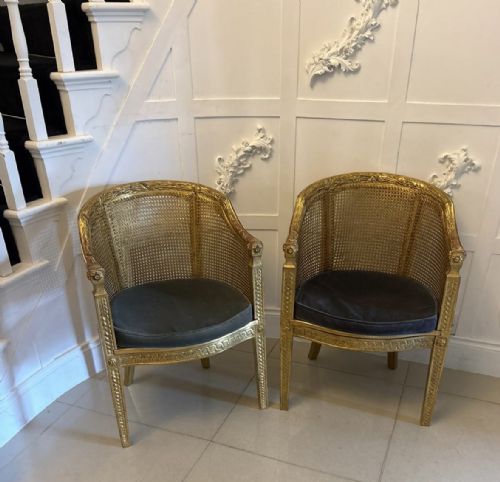
- Timber that has been coated with a thin layer of gold leaf or gilt paint. This treatment adds a reflective, decorative surface to the carved frame.
Cane Back Bedroom Chair: Frequently Asked Questions
Where were these chairs placed?
These chairs served in private bedchambers and dressing rooms for resting or dressing. Their compact proportions suited smaller spaces better than heavy parlour seating.
They also functioned as occasional seating in reception rooms when extra places were required. Their lightweight construction allowed easy movement around the house.
How do I clean cane?
Cane requires dusting with a soft brush and occasional cleaning with a damp cloth to maintain its flexibility. Keeping the material slightly humid prevents it from becoming brittle over time.
Harsh chemical cleaners and excessive water damage the natural fibres. Allowing the cane to dry naturally after gentle cleaning preserves its strength.
Are these chairs comfortable?
The woven cane panels offer a yielding surface that contours slightly to the body. Many designs include fitted seat cushions for added padding.
Their open structure provides breathable seating during warmer months. Adding small squab cushions enhances the support for extended sitting.
How do I date a chair?
Dating relies on stylistic clues such as the silhouette, wood choice, and turning details. Regency pieces often show classical motifs, while Edwardian examples favour lighter painted finishes.
Examining the construction methods and the gauge of the cane provides further evidence of the period of manufacture. Comparing these elements with documented examples helps establish an approximate decade.