



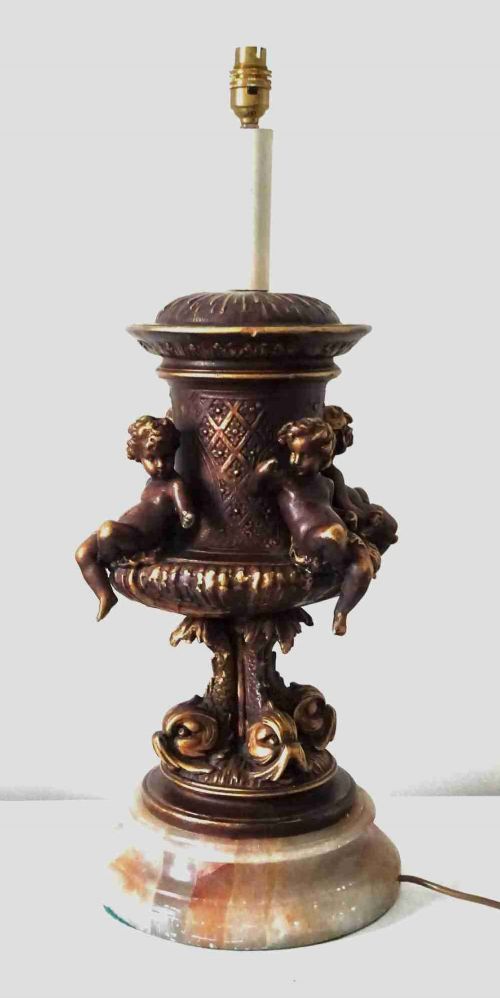


Neoclassical Bronze Putto
These neoclassical bronze putto sculptures bring classical mythology into domestic interiors through figures cast in bronze and mounted on marble bases.
Neoclassical Bronze Putto
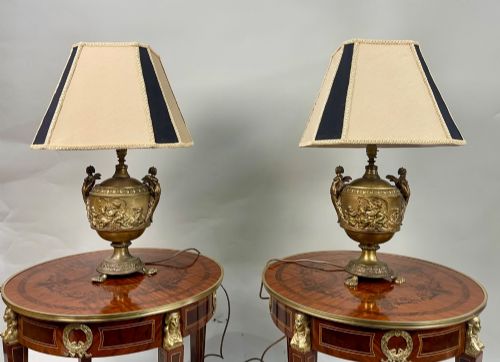
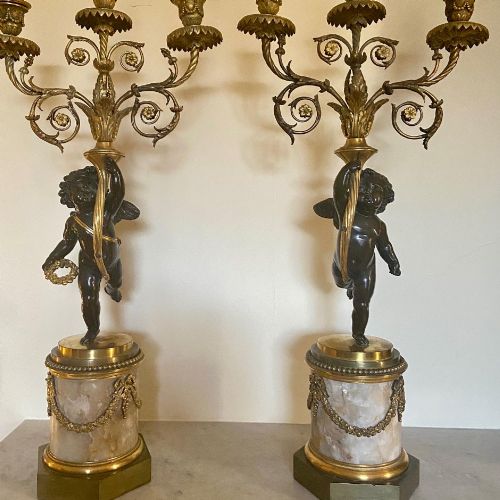
When a collector searches for a neoclassical bronze putto, they encounter sculptural figures depicting cherubs, cupids, and winged infants derived from classical antiquity. These pieces manifest across the nineteenth century in various forms, including freestanding figures, lamp bases, and candelabra.
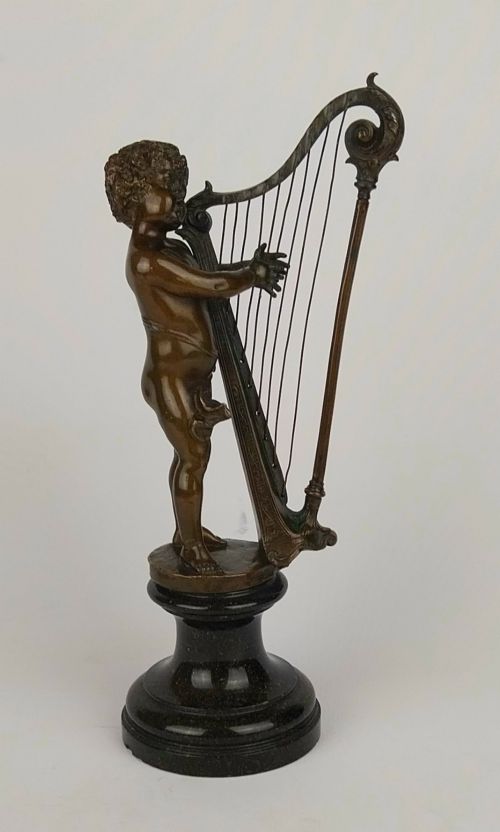
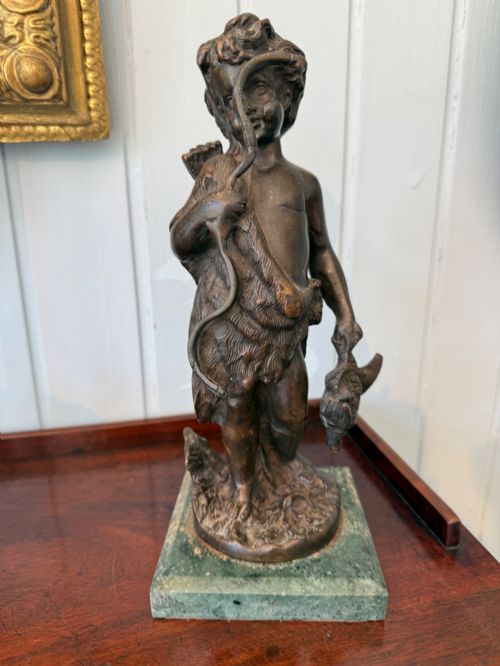
The selections on this page span the eighteenth, nineteenth, and early twentieth centuries, drawing heavily from French Louis XVI and Italian Grand Tour traditions. Figures appear seated on rocks, playing instruments, or holding attributes such as harps, bows, and wheat sheaves.
Domestic deployment of these objects ranges from mantel clocks and urn garnitures to decorative plaques and comports. Buyers meet both single figures and balanced pairs designed for architectural symmetry on mantelpieces and side tables.
Materials and Construction
Casting methods of the period utilise bronze, patinated bronze, gilt bronze, and ormolu to render the contours of the infant figures. Metal components frequently combine with white marble bases, specimen marble, and fluorspar to provide structural stability and visual contrast.
Surface treatments vary between dark patination and brilliant mercury gilding, highlighting the sculptural musculature and drapery. Secondary materials such as enamel, mother-of-pearl, and fabric integrate into candelabra and comports alongside the primary metalwork.
Neoclassical Bronze Putto Retail Price Guide 2026
Typical asking prices for neoclassical bronze putto among the pieces listed under this phrase on Sellingantiques today, from the lower quarter to the upper quarter. They describe what is for sale here now, not the wider market.
The object forms recorded on this page range from freestanding sculptures and mantel clocks to candelabra, comports, and urn lamps.
Evaluating Quality
The refinement of the chasing and the crispness of the casting separate superior figures from standard production pieces. Master casters achieved subtle transitions in anatomical detail and facial expression that lesser workshops left soft or obscured.
Integration between the bronze figure and its marble or ormolu mount indicates the original ambition of the piece. High-grade examples demonstrate harmonious proportion across complex assemblies like clock garnitures and multi-light candelabra.
Francois Redmond·Claude Clodion·Le Roy Paris
The Neoclassical Bronze Putto Glossary
- Putto
- A plump, naked male infant, frequently winged, derived from classical art and Renaissance revivals. These figures represent mythological cupids or attendants.
- Ormolu
- Finely ground high-carat gold applied to a bronze base using a mercury amalgamation technique. This process yields a durable, warm metallic finish common in French decorative arts.
- Grand Tour
- A cultural journey undertaken by European elites through France and Italy during the eighteenth and nineteenth centuries. Souvenirs collected included bronze reductions of classical sculptures.
- Candelabra
- Branched lighting fixtures designed to hold multiple candles. In neoclassical design, these objects frequently incorporate putti supporting candle arms.
- Garniture
- A set of three or more decorative objects, typically a mantel clock flanked by matching vases or candelabra. These sets created visual symmetry on nineteenth-century fireplaces.
Neoclassical Bronze Putto: Frequently Asked Questions
What is a putto in bronze sculpture?
A putto is a representation of a winged infant or cherub, modelled after classical sculpture and revived during the neoclassical period. These figures appear frequently in nineteenth-century decorative metalwork.
Artists utilised these motifs to introduce narrative and classical allusion into domestic objects like clocks, lamps, and candelabra.
How do I date a nineteenth-century bronze?
Dating relies on examining the casting technique, the quality of the patination or gilding, and the nature of the accompanying materials like marble or ormolu. Nineteenth-century pieces often reflect revival styles such as Louis XVI or the aesthetic of the Grand Tour.
Physical indicators on the underside, including threaded screws and patination wear, assist in establishing the age of the metalwork.
Where were these pieces displayed historically?
These decorative objects were placed on mantelpieces, side tables, and chests of drawers within elite nineteenth-century drawing rooms and libraries. Pairs of candelabra and clock sets provided architectural symmetry for interior mantels.
Smaller figures and plaques served as cabinet pieces or functional lighting supported by classical motifs.