

Needlepoint Tapestry Chair
A needlepoint tapestry chair brings texture and historical depth into a room through hand-worked wool textiles paired with sturdy timber frames.
Needlepoint Tapestry Chair
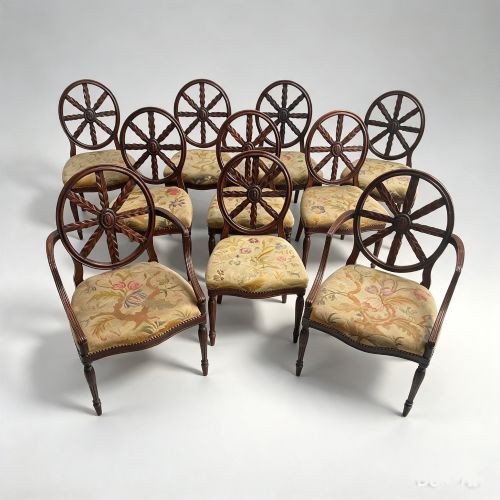
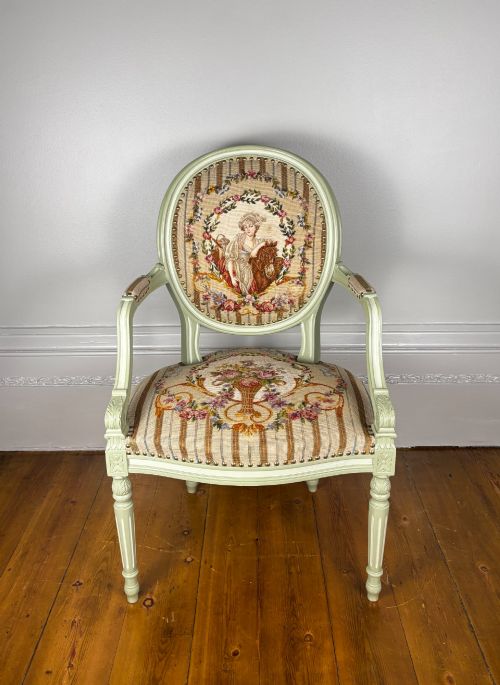
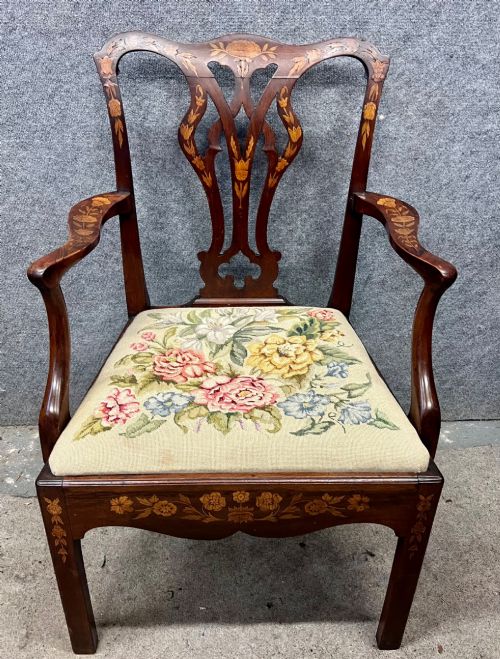
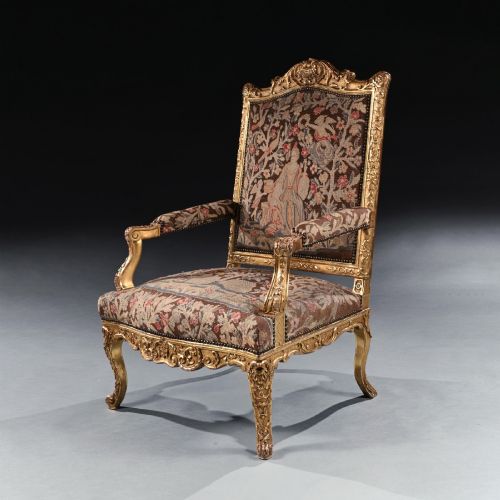
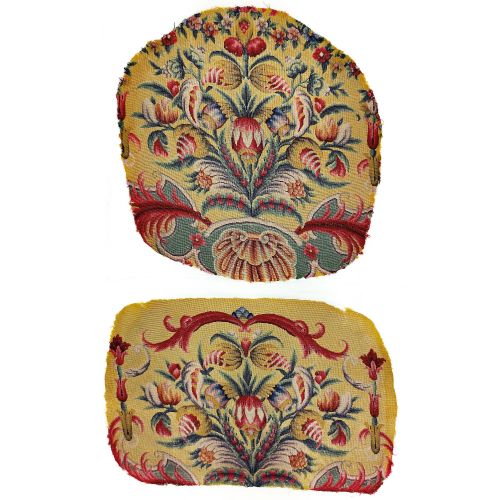
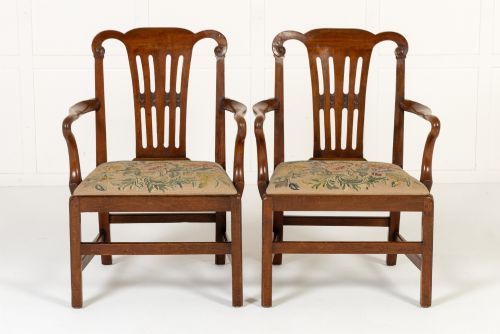
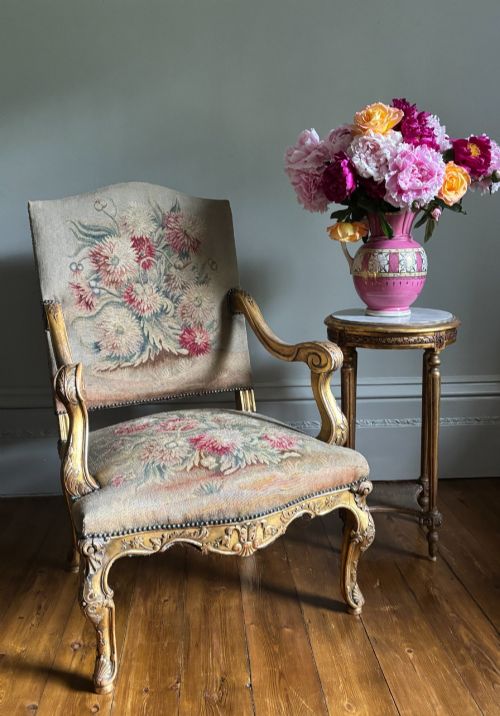
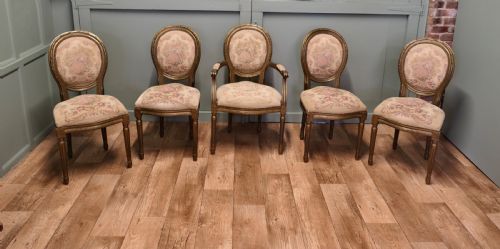
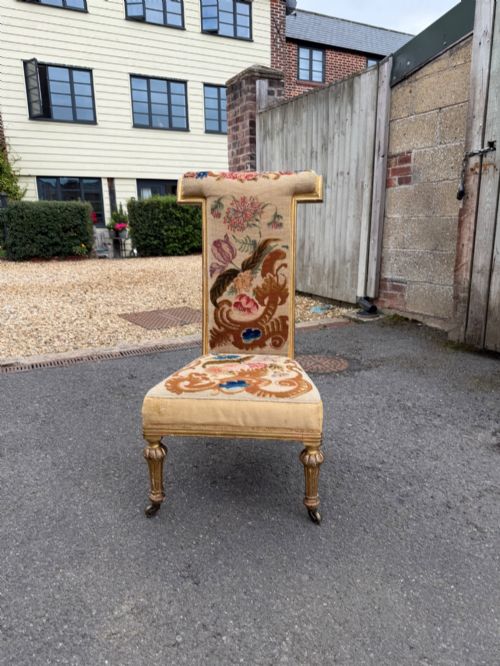
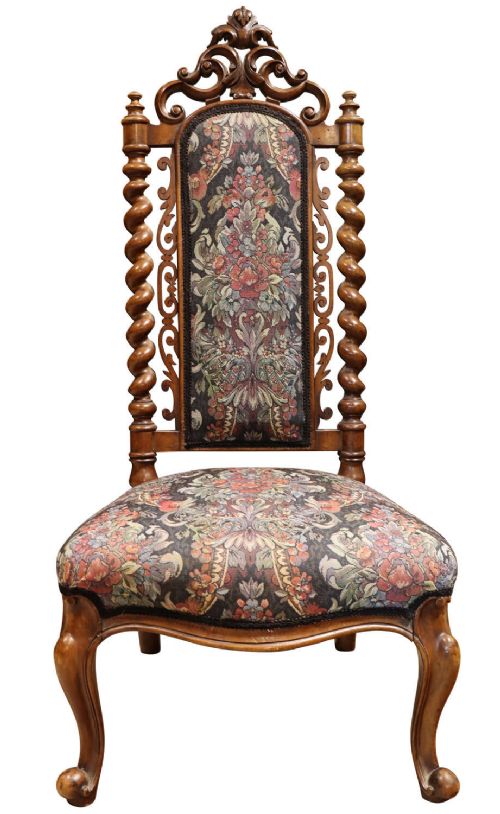
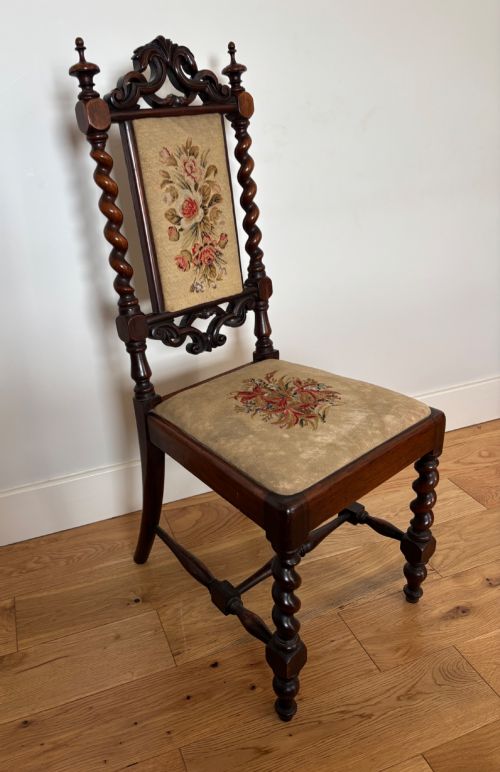
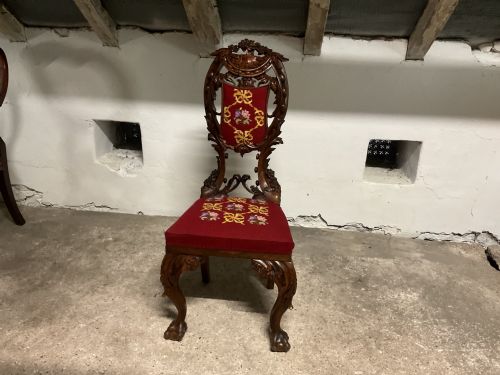
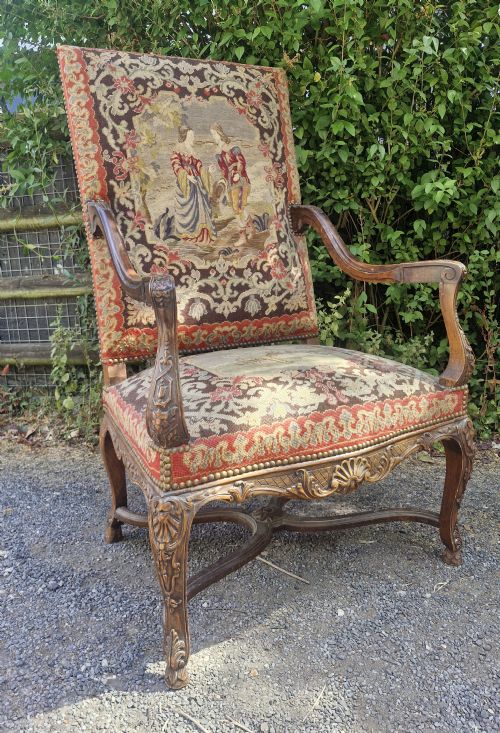
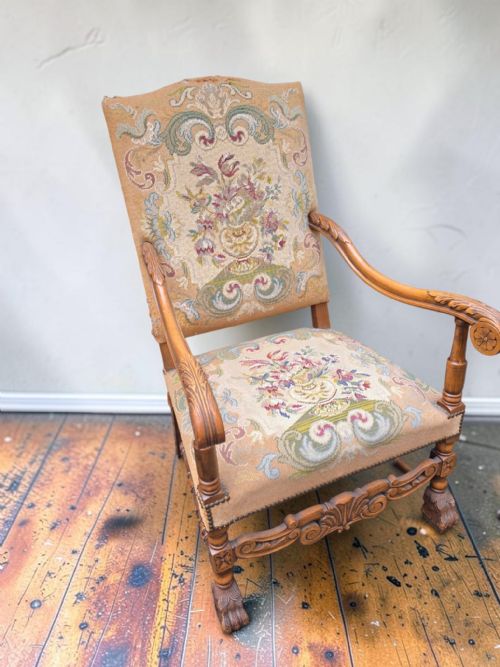
The most common examples on this page date from the 19th century and the Victorian era, utilising walnut, mahogany, and rosewood frames. Buyers also encounter 18th-century French and English pieces, including open armchairs and side chairs adorned with period needlework panels.
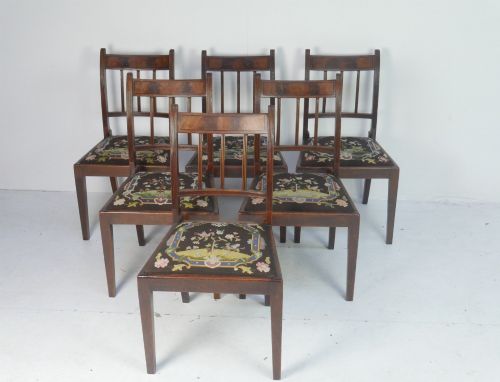
Forms vary widely from dining chairs and carver chairs to piano stools, dressing table stools, and children's chairs. Whether selected as a single accent chair or a set of dining seats, each piece relies on the survival of its textile cover for its character.
Assessing quality in the material
Quality rests primarily on the integrity and fineness of the needlepoint panels, where tightly worked petit point stitches indicate superior execution compared to coarser wool work. The density of the stitching dictates how well the pictorial or floral design holds its definition over decades of use.
The supporting timber frame contributes equally to the standard of the piece, with crisp hand-carved mahogany or walnut details showing superior craftsmanship over plain or mechanically shaped alternatives. Original union between the textile panel and the period frame elevates the historical integrity of the chair.
Needlepoint Tapestry Chair Retail Price Guide 2026
Typical asking prices for needlepoint tapestry chair among the pieces listed under this phrase on Sellingantiques today, from the lower quarter to the upper quarter. They describe what is for sale here now, not the wider market.
Listings span multiple eras from the 18th century through the Victorian period to the early 20th century, utilising mahogany, walnut, rosewood, and giltwood frames.
Liberty and Co
The Needlepoint Tapestry Chair Glossary
- Needlepoint tapestry
- A type of embroidery stitched onto a stiff open-weave canvas foundation, usually executed in wool. This technique forms the patterned seats and back panels seen on these chairs.
- Petit point
- A fine needlepoint stitch worked over a single thread of canvas, allowing for intricate detail and shading in pictorial motifs. It frequently appears on high-grade 18th-century and 19th-century French armchairs.
- Giltwood
- Timber treated with a thin layer of gold leaf over a prepared gesso surface. It defines formal decorative frames from the 18th century onwards.
- Carver chair
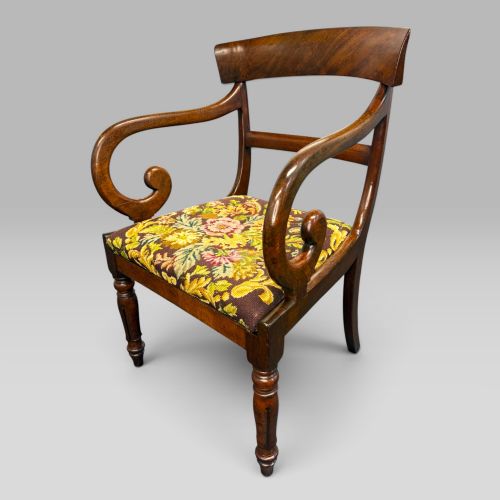
- A traditional term for an armchair, often larger than standard dining seats and placed at the head of a table. These pieces display prominent armrests and substantial wooden framing.
- Prie Dieu
- A devotional chair designed for kneeling, featuring an elevated upper rail or desk-like top for prayer books. Examples from the 19th century often incorporate needlework upholstery.
Needlepoint Tapestry Chair: Frequently Asked Questions
How do I clean needlepoint tapestry upholstery?
Maintenance requires gentle surface dusting with a soft brush to remove trapped particles without pulling the wool fibres. Professional textile conservation cleaning is recommended for deeper restoration.
Water and standard chemical solvents should be avoided to prevent shrinkage or dye transfer in antique wool threads.
Are these chairs suitable for daily seating?
Many examples remain structurally sound for everyday use, particularly robust Victorian mahogany and walnut frames. Weight limits and comfort depend on the internal webbing and padding condition.
Delicate 18th-century giltwood frames or fragile needlework panels are better suited for decorative placement and lighter use.
How can I date an antique tapestry chair?
Dating relies on a combination of timber selection, frame style, and joinery techniques visible beneath the upholstery. For instance, Georgian pieces show different turning and carving methods compared to Victorian revivals.
The style of the needlepoint work and the textile dyes also provide chronological clues.
Can I use these chairs in a modern interior?
The rich textures of wool needlepoint provide a strong visual contrast against minimalist contemporary furniture and neutral walls. Mixing historical seating with modern architecture adds individual character to a room.
Accent chairs and dressing table stools work particularly well as standalone statement pieces.