


Eighteenth Century Armchair
An eighteenth century armchair brings substantial timber frame construction and period seating design directly into a traditional interior.
Eighteenth Century Armchair
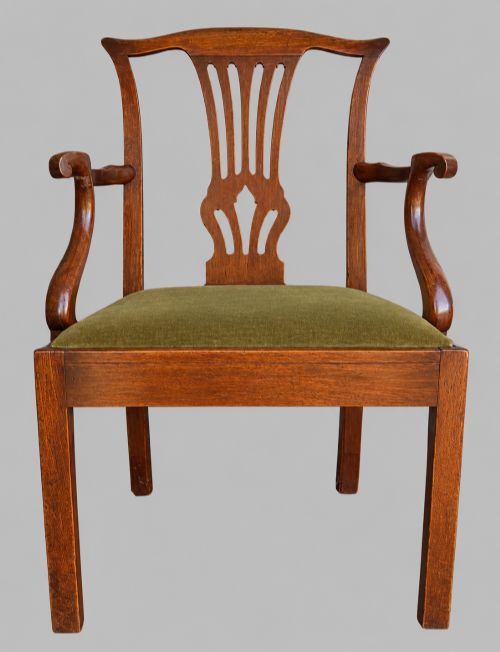
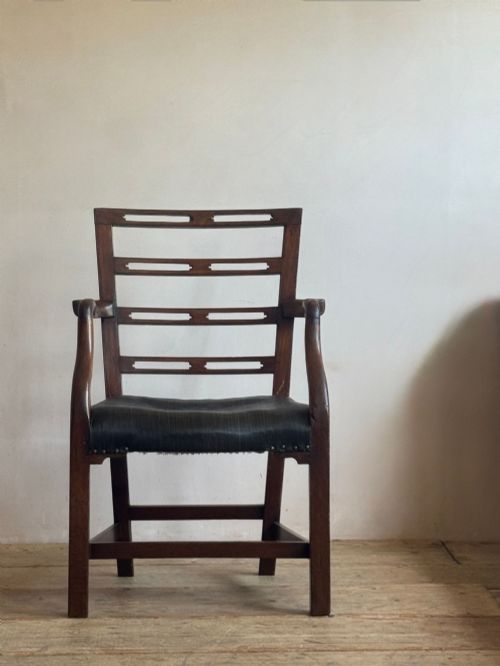
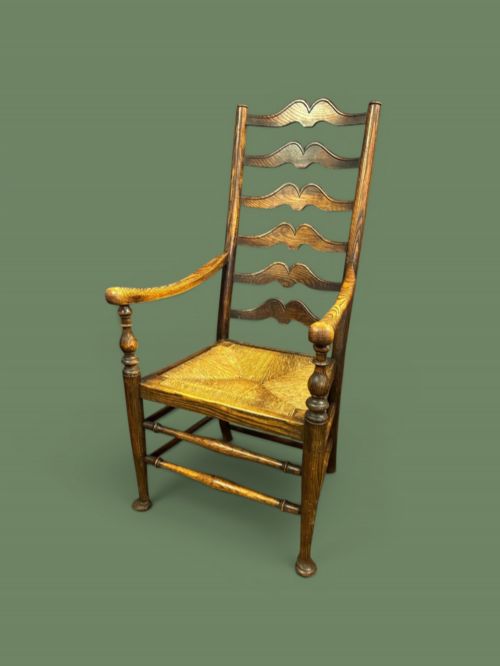
An eighteenth century armchair encompasses heavy timber seating forms originating primarily from Georgian England and continental workshops. Buyers searching this phrase encounter substantial library chairs, carved mahogany open armchairs, and rustic country ladder-back models.
The most common examples on this page belong to the broader Georgian tradition, rendered in solid mahogany or fruitwood with upholstered seats. Alongside formal library and salon seating, vernacular regional pieces such as elm country armchairs and rush-seated Windsor chairs appear frequently.
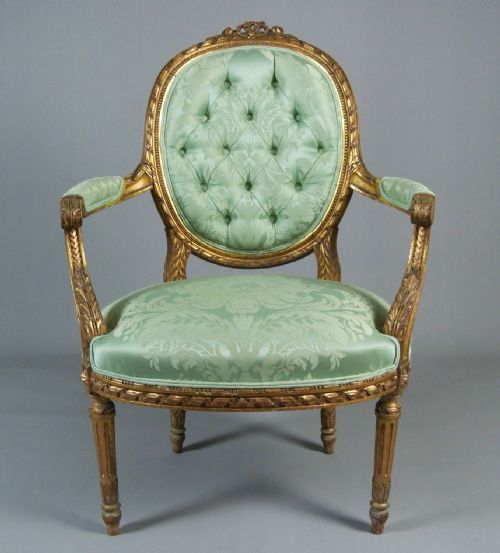
Makers and workshops of the period produced both elaborate giltwood seating for formal drawing rooms and sturdy vernacular seating in elm, beech, and yew wood. Surviving pieces span formal George II and George III neoclassical aesthetics as well as later nineteenth-century revival interpretations.
Materials and construction methods
Cabinetmakers constructed these frames using dense hardwoods like mahogany, fruitwood, elm, and beech, frequently utilising mortise and tenon joinery. Carved details on mahogany and giltwood frames required skilled hand chisel work across stiles, arm supports, and cabriole legs.
Country and vernacular workshops employed local timber such as yew and ash for Windsor chairs, bending wooden bows with steam and shaping seats from solid elm planks. Upholstered variants relied on webbing and stuffing secured to a wooden frame beneath velvet, fabric, or leather coverings.
A rush-seated country armchair smells faintly of old hay and floor wax, carrying the quiet scent of a centuries-old cottage straight into the room.
Distinctions in construction and finish
The standard of carving on mahogany and giltwood frames separates standard workshop production from exceptional cabinet work. Crisp undercut foliage, fluted legs, and well-proportioned arm terminals indicate superior execution by skilled hands.
Surface patination and the integrity of original timber joints determine the preservation quality of an antique armchair. Retained colour in fruitwood and mahogany, alongside minimal replacement to structural framing, elevates the standing of a piece.
Thomas Chippendale
The Eighteenth Century Armchair Glossary
- Cabriole leg
- A furniture leg that curves outward at the knee and tapers inward toward the foot, often ending in a pad or claw and ball.
- Giltwood
- Timber coated with a thin layer of gold leaf, frequently utilised on formal eighteenth-century salon and drawing room chairs.
- Ladder-back
- A chair back featuring horizontal arched slats between the vertical rear uprights, common in country vernacular seating.
- Windsor chair
- A wooden chair constructed with a solid sculpted seat into which the legs and spindle back are directly inserted.
- Patination
- The natural surface sheen and colour acquired by wood and finish over long periods of handling and exposure.
Eighteenth Century Armchair: Frequently Asked Questions
How do I spot a reproduction?
Examine the timber joints, hand tool marks, and overall wear patterns across the frame. Authentic period chairs display hand-cut joinery and natural patination consistent with centuries of use.
Inspect the undersides of the seat rails and the interior blockwork. Modern replacements often use machine-cut screws and standardised timber dimensions absent in historical workshop production.
Are these chairs comfortable for daily use?
Many formal eighteenth-century library and salon armchairs offer deep, supportive seating due to their generous proportions and upholstered padding. Country ladder-back and Windsor chairs provide firmer upright seating.
Consider the seat height and arm clearance relative to modern tables and living spaces. Some delicate giltwood or carved mahogany models suit lighter daily sitting than robust library armchairs.
How do I care for antique wood?
Keep wooden frames away from direct heat sources and rapid humidity fluctuations to prevent timber splitting. Dust regularly with a dry cloth and avoid harsh chemical polishes.
Apply traditional beeswax sparingly to nourish unpolished hardwood surfaces. Professional conservation prevents damage to delicate carved details and historic giltwood layers.