


Needlepoint Piano Seat
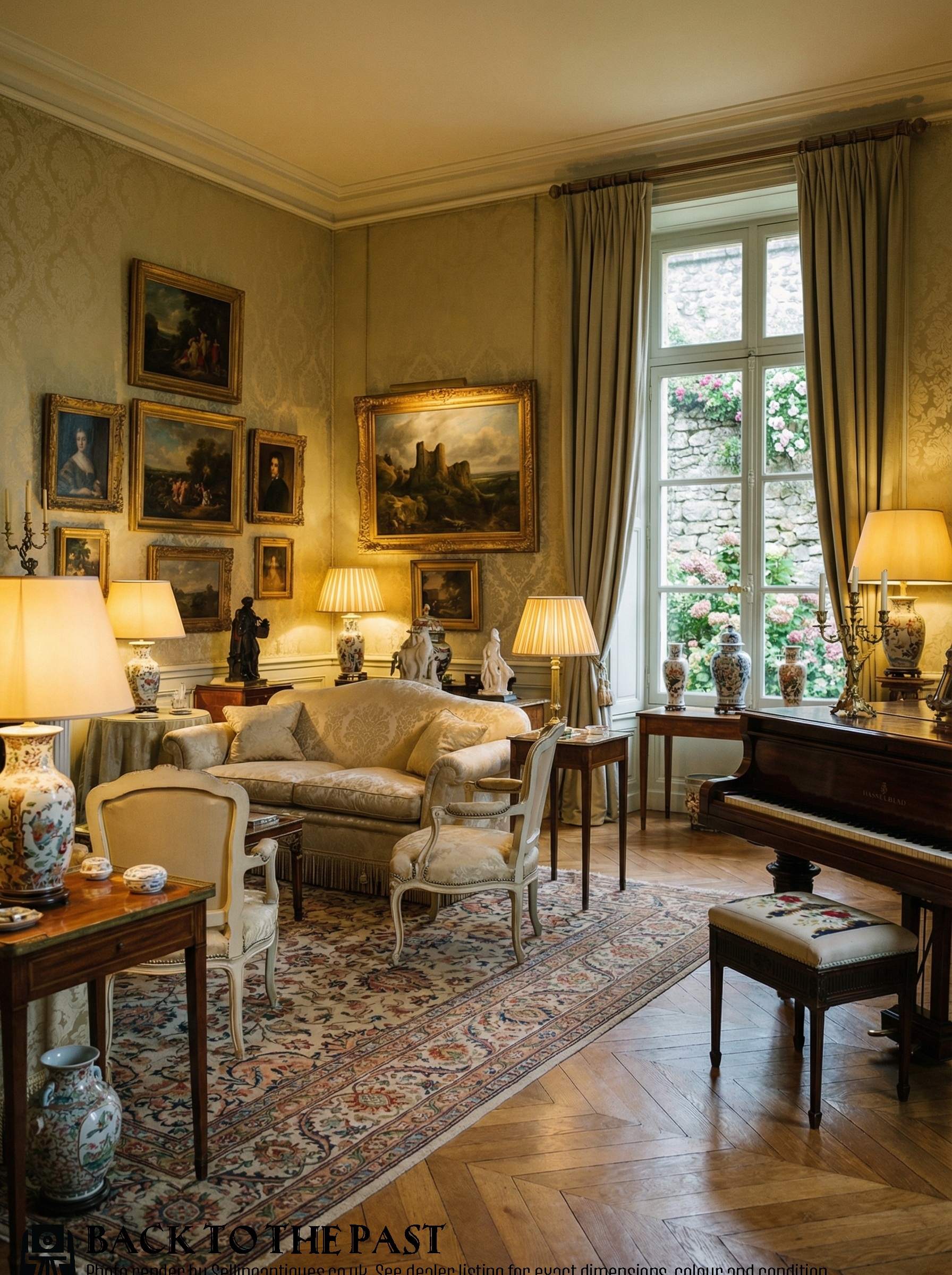
These antique needlepoint piano seat designs offer practical seating alongside hand-worked wool tapestry, grounding a room with period character.
Needlepoint Piano Seat
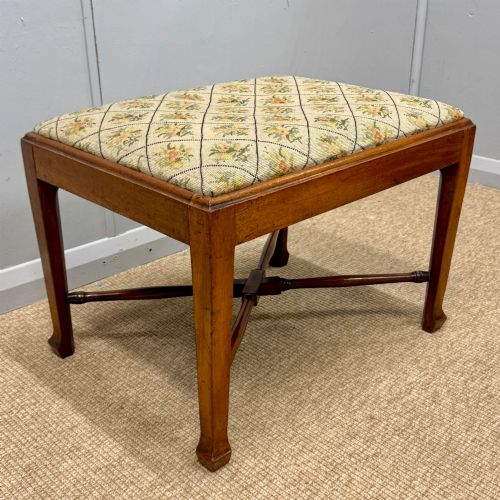
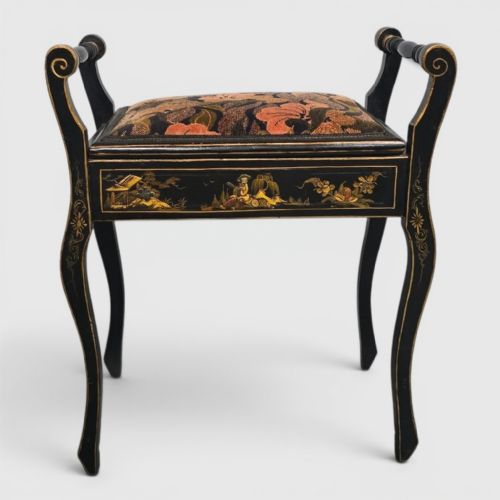
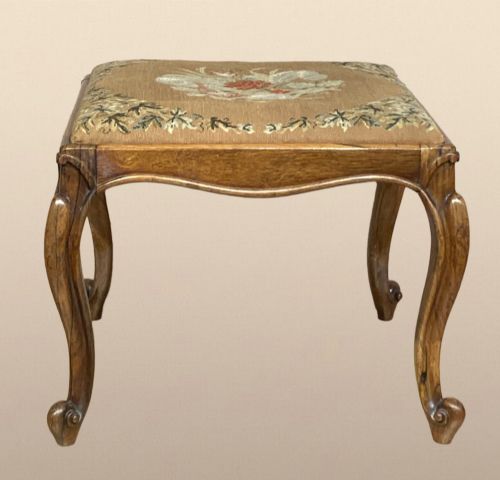
A needlepoint piano seat brings together functional music room seating and decorative textile work, appearing across Victorian, Regency, and Edwardian periods. These pieces frequently take the form of piano stools, revolving stools, and window seats, often supported by mahogany, rosewood, or walnut frames.
Buyers encounter forms ranging from simple 19th-century mahogany stools with original fabric seats to elaborately carved Victorian walnut revolving models and Chinoiserie examples. The most common versions on this page are Victorian and Edwardian stools featuring upholstered tapestry tops and robust timber bases.
How they were made
Craftsmen built the structural frames of these seats using dense timbers like mahogany, rosewood, and walnut, often employing carved cabriole legs, cross stretchers, or tripod bases. Turning and carving techniques created the adjustable and revolving mechanisms found on many music and dressing stools.
The characteristic seats themselves were worked by hand in wool tapestry and needlepoint textile, then secured over traditional stuffing onto wooden frames. Artisans combined fine woodworking with durable textile craft to withstand the frequent height adjustments and movement required at the piano.
Listings feature timbers including mahogany, rosewood, and walnut alongside textiles like tapestry, wool, and velvet across the Victorian, Edwardian, and Regency periods.
What varies in quality
The standard of a needlepoint piano seat is dictated by the depth of timber carving and the complexity of its mechanical functions, such as smooth revolving or adjustable height screws. Heavier rosewood and walnut frames with sophisticated details like cross stretchers or tripod bases sit at the higher end of the range.
The condition and execution of the wool tapestry top heavily influence the piece, with tightly worked original needlepoint retaining more distinction than later replacement fabric. Proportion and timber selection also separate standard utilitarian seating from finer Victorian and William IV examples.
Jas Shoolbred
The Needlepoint Piano Seat Glossary
- Needlepoint
- A type of counted thread embroidery stitched onto an open weave canvas. It forms the durable pictorial and geometric tops seen on these piano seats.
- Cabriole leg
- A furniture leg that curves out and then narrows inward resembling animal legs. This shape appears frequently on Victorian walnut and rosewood stools.
- Cross stretcher
- Horizontal wooden bracing connecting the legs of a stool near the base for added stability. These often feature central turned finials.
- Revolving piano stool
- A seat featuring a threaded wooden spindle that allows the user to alter the height by spinning the top. This mechanism is common in 19th-century music rooms.
Needlepoint Piano Seat: Frequently Asked Questions
What is a needlepoint piano seat?
A needlepoint piano seat is a small piece of furniture designed for musicians, featuring a timber frame and a hand-stitched wool tapestry top. They were made in various heights and formats to accommodate players at upright and grand pianos.
These seats date primarily through the 19th and early 20th centuries, encompassing styles from Regency to Edwardian. Many include mechanical adjustments for height or revolving movement.
How do I tell Victorian from Edwardian seats?
Victorian seats generally employ darker timbers like rosewood and walnut with heavier carving, cabriole legs, and elaborate revolving mechanisms. They often reflect revival styles such as Rococo or William IV influences.
Edwardian examples lean towards lighter mahogany frames, sometimes incorporating simpler Edwardian Neoclassical or Chinoiserie details. The woodwork tends to feel less heavily ornamented than mid-19th-century pieces.
Were all piano seats adjustable?
Not all piano seats have adjustable heights, as many simpler forms were manufactured as fixed-height stools or window seats. Adjustable versions rely on central wooden screws or revolving tops to change elevation.
Fixed stools often include cross stretchers for structural support, whereas revolving examples concentrate their weight in a heavy central pedestal or tripod base.
How do I live with a antique stool?
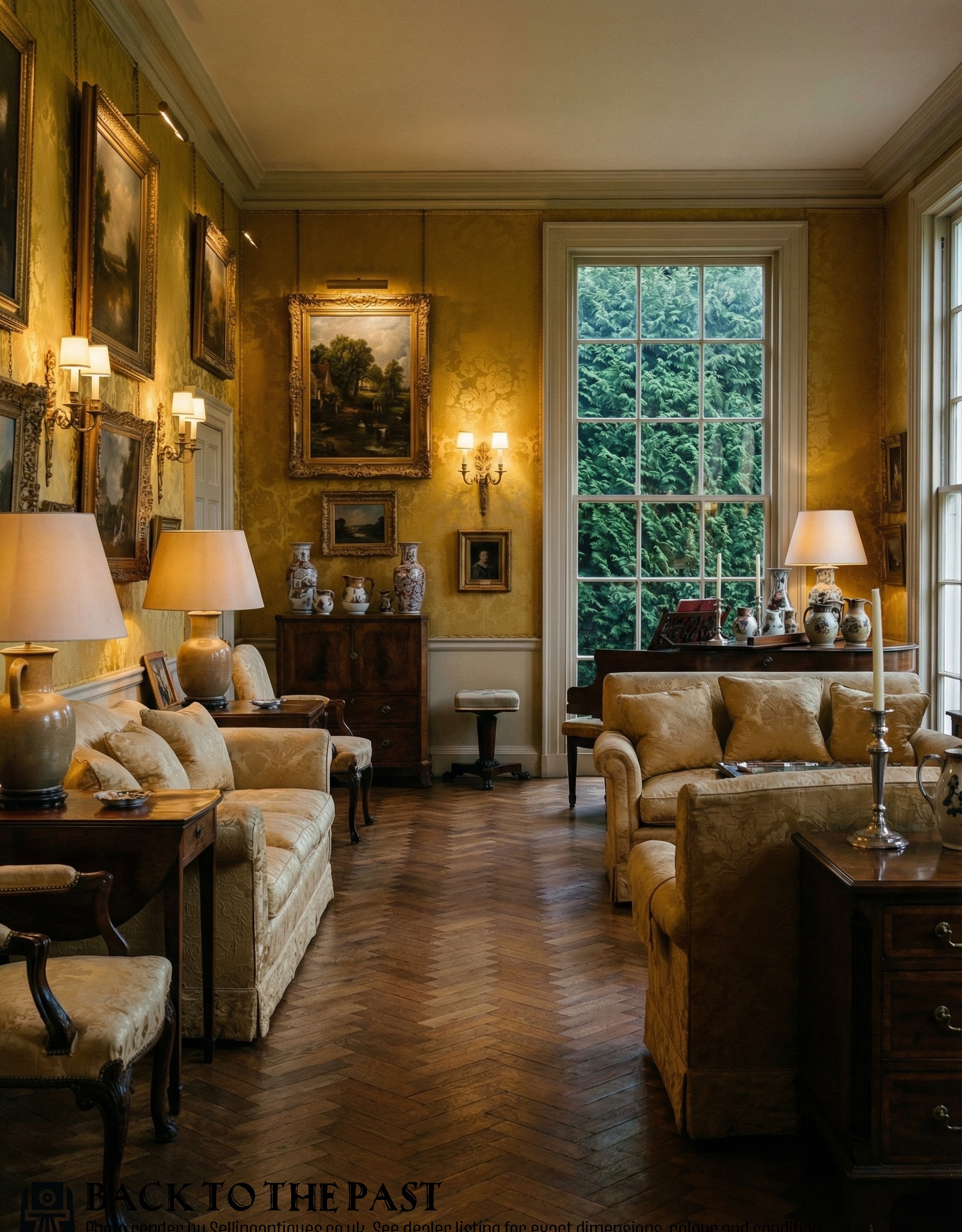
These stools fit easily beside pianos, dressing tables, or as occasional accent seating in living spaces and hallways. Their compact footprint allows them to tuck under surfaces or sit neatly against walls.
Protecting the wool needlepoint from direct sunlight and moths ensures the textile survives well in modern homes. Regular dusting keeps the mahogany, walnut, or rosewood frames in stable condition.