
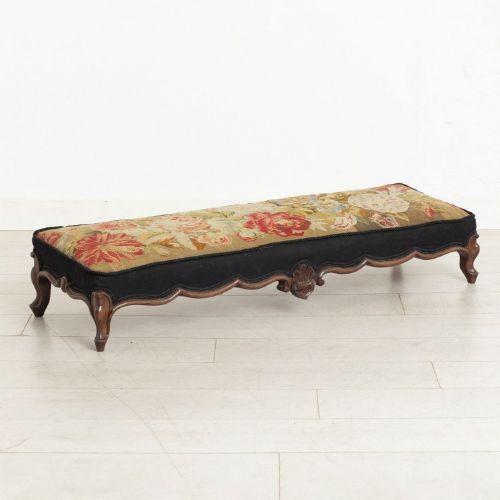


Needlepoint Ottoman Stool
A needlepoint ottoman stool brings working-period textiles and timber frames together, offering a fireside seat with genuine tactile depth.
Needlepoint Ottoman Stool
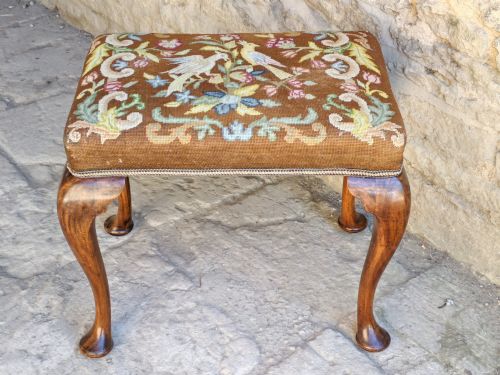
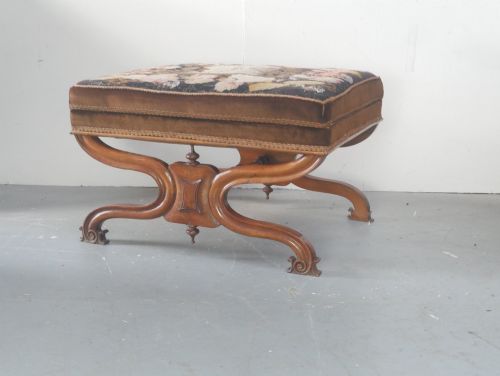
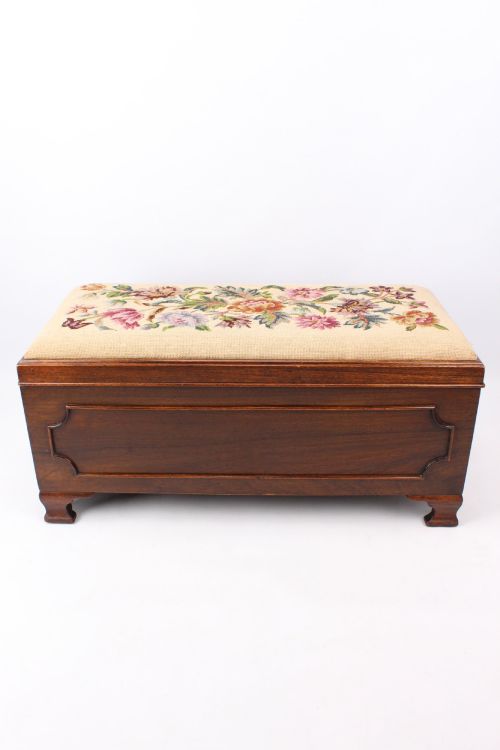
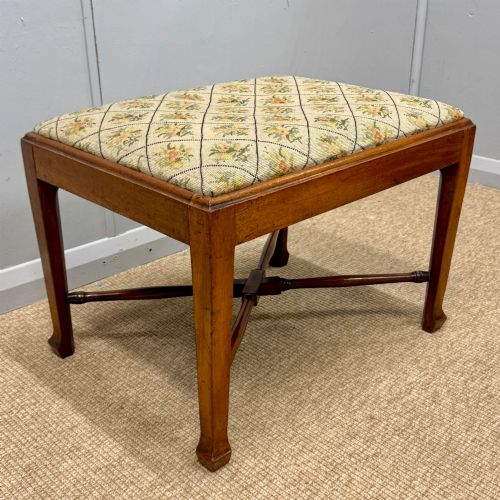
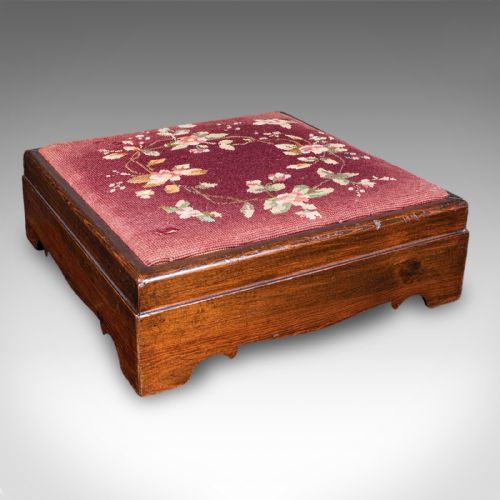
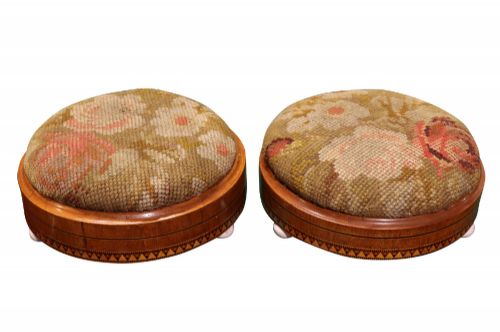
A needlepoint ottoman stool is a low seat designed for domestic comfort, most frequently encountered in Victorian forms alongside pieces from the nineteenth century and the nineteen-twenties. These furnishings appear as compact footstools, circular dressing seats, and longer benches upholstered in worked wool tapestry.
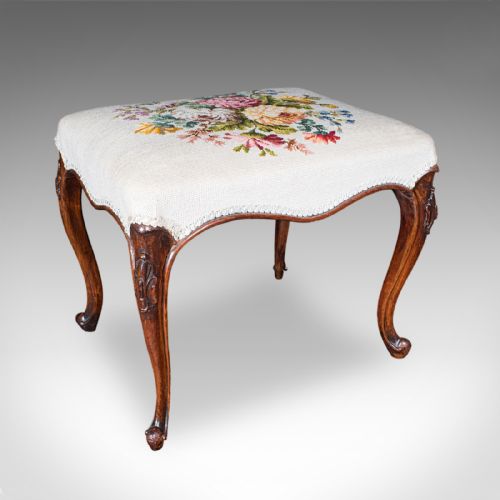
The varieties span straightforward mahogany frames to inlaid walnut pieces, with styles ranging from plain Victorian interpretations to Queen Anne and Georgian revivals. Buyers seeking a needlepoint ottoman stool usually encounter walnut or mahogany structures carrying floral or geometric needlework seats.
Materials and construction
Frames are constructed from dense hardwoods including walnut, mahogany, rosewood, and oak, shaped into cabriole legs, turned supports, or stretcher bases. Joinery methods of the period rely on traditional tenons and dowels to support the weight placed upon a low seat.
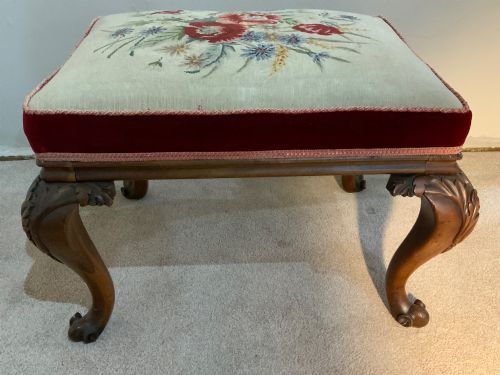
Upholstery combines wool needlepoint or tapestry worked by hand with underlying textile webbing and stuffing, secured over timber frames. Selected examples integrate specialised decorative elements such as Tunbridge Ware inlay or carved rosewood details.
Listings feature walnut, mahogany, rosewood, and pitch pine, paired with wool tapestry and velvet upholstery across the Victorian and Edwardian eras.
Distinctions in craftsmanship
Quality rests in the crispness of the timber carving and the tightness of the needlepoint stitchwork on the seat. Finer examples display balanced proportions in turned legs and substantial hardwood frames rather than lighter secondary pines.
The preservation of original needlework and upholstery materials dictates the standing of a piece within its period. Tightly worked wool tapestries set on sturdy walnut or rosewood carcasses represent the upper tier of surviving examples.
The Needlepoint Ottoman Stool Glossary
- Needlepoint
- A type of counted-thread embroidery stitched onto an open-weave canvas foundation. It forms the durable pictorial or geometric top typical of these stools.
- Ottoman
- A low upholstered seat without arms or a back, frequently utilised as a footrest. In older pieces it often describes a larger scaled stool.
- Cabriole leg
- A furniture leg that curves outward at the knee and tapers inward toward the foot. This profile appears frequently on Victorian and revival walnut frames.
- Tunbridge Ware
- Small decorative woodwork characterised by tiny mosaic tiles formed from differently coloured woods to create geometric patterns. It decorates specific Victorian pieces on this page.
- Stretcher
- A horizontal timber rail connecting the legs of a stool to provide structural rigidity. Cross stretchers add stability beneath the seat frame.
Needlepoint Ottoman Stool: Frequently Asked Questions
What is a needlepoint ottoman stool used for?
These pieces function primarily as low footrests or fireside seats in domestic interiors. They provide a portable resting place for feet or an extra low seat in a room.
Historically they sat before armchairs or dressing tables, serving both practical seating and decorative display needs. Their compact size allows them to fit easily beside larger upholstery.
How do I date a Victorian stool?
Dating relies on observing timber choices such as walnut and rosewood alongside specific stylistic revivals. Cabinet makers of the Victorian era drew heavily on earlier Queen Anne and Georgian motifs.
Turned leg profiles, construction joints, and the density of the primary wood help separate mid-century pieces from later nineteenth-century examples. Original needlework style also offers clues to the decade of creation.
Are these stools sturdy enough to sit on?
Most surviving hardwood frames remain robustly constructed using traditional joinery methods. Walnut, mahogany, and oak provide durable foundations for everyday weight.
Buyers should consider the internal webbing and stuffing condition if daily seating is intended. The underlying timber frame dictates the actual physical strength of the piece.
What is the difference between an ottoman and a footstool?
In historical terminology, footstools generally refer to smaller, lower platforms intended strictly for resting the feet. Ottomans often describe slightly larger or longer upholstered seats.
On this page the terms frequently overlap to describe low wooden frames topped with tapestry. Both share the characteristic absence of backs and armrests.