


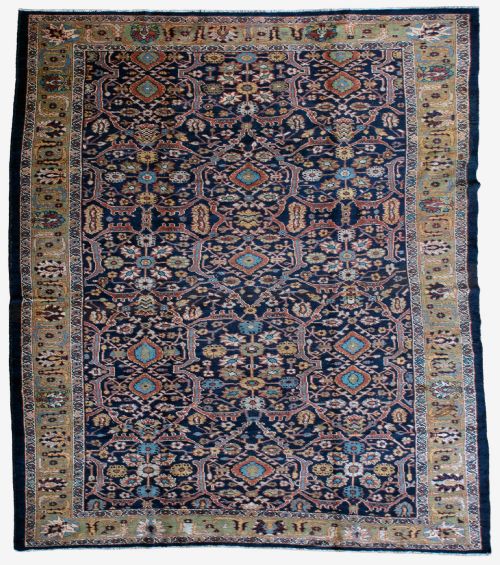
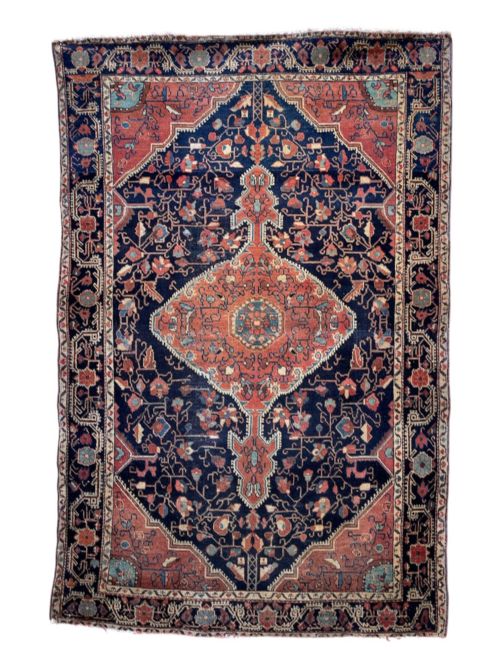
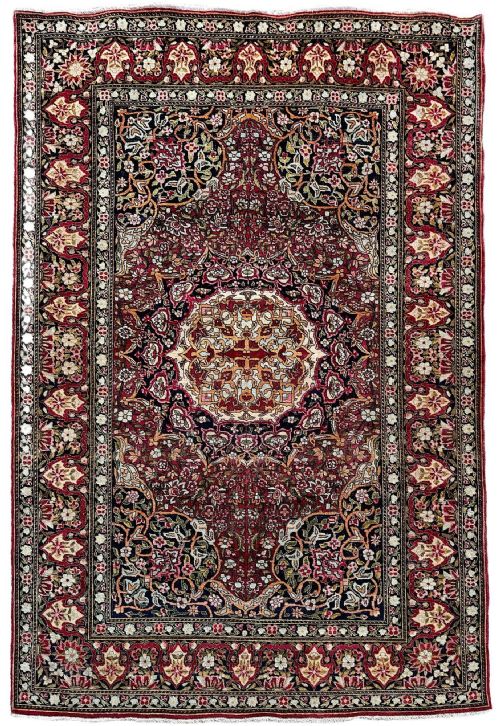
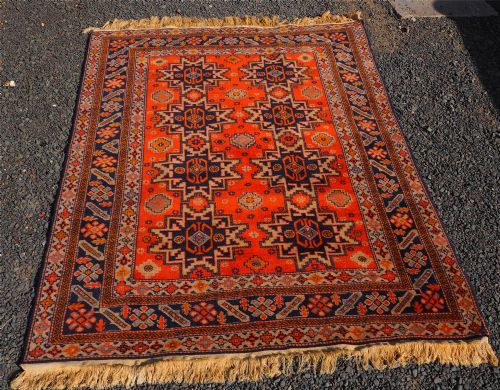
Navy Wool Oriental Carpet
A navy wool oriental carpet brings deep indigo ground tones and traditional knotting together underfoot, anchored in centuries of weaving heritage.
Navy Wool Oriental Carpet
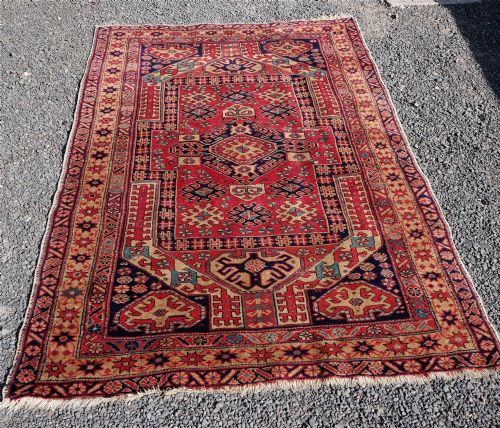
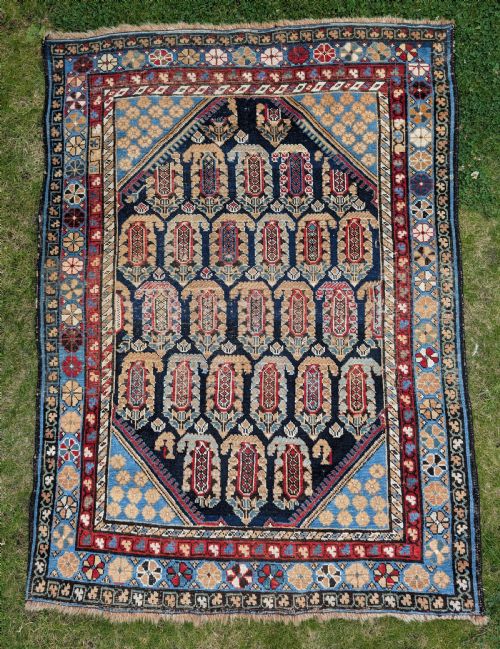
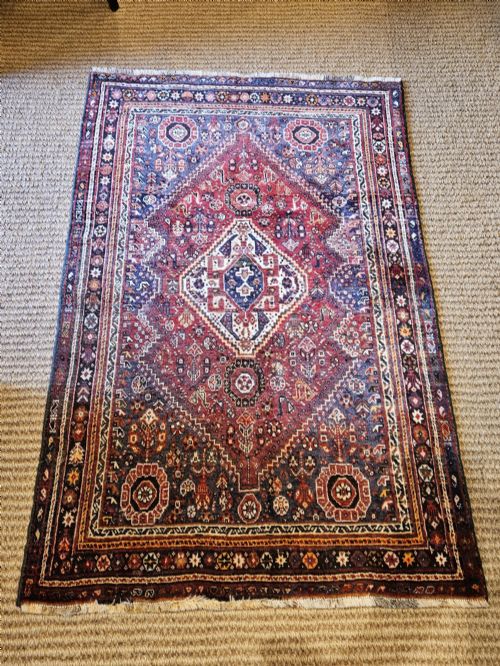
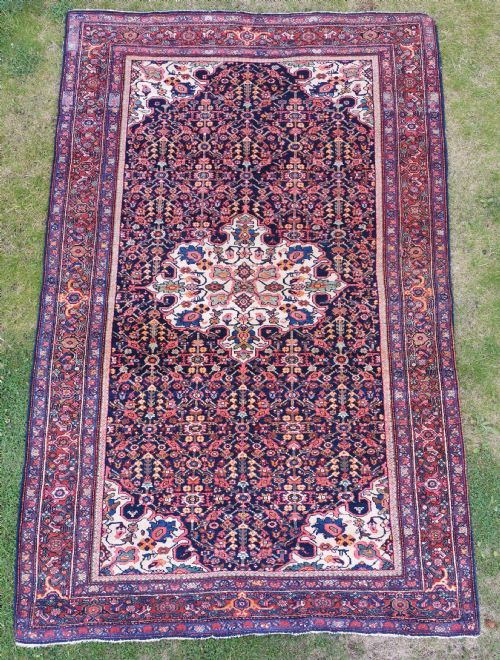
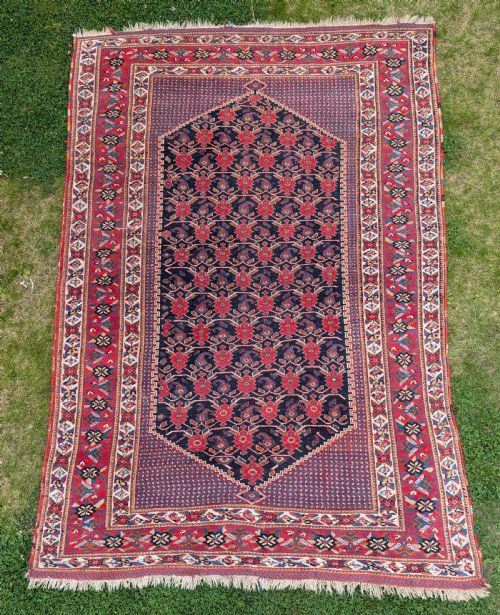
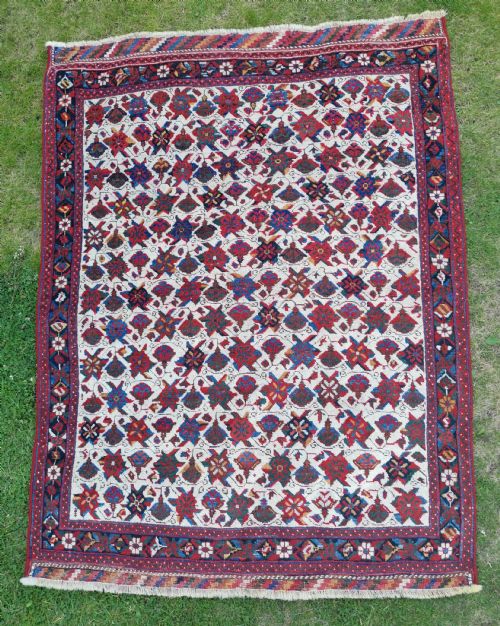
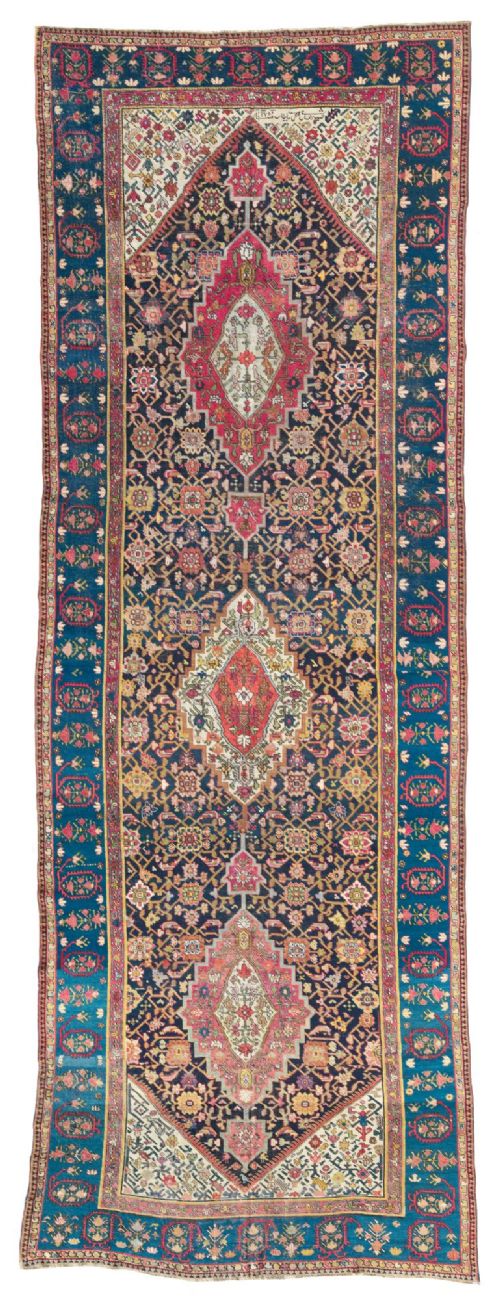
A navy wool oriental carpet encompasses room-sized floor coverings, smaller area rugs, and long hallway runners originating from Persian and Caucasian weaving traditions. Buyers searching for a navy wool oriental carpet encounter examples structured around geometric medallions, intricate lattice motifs, or floral patterns woven across deep blue fields.
The selections span from the mid-nineteenth century through the early twentieth century, incorporating village and tribal formats alongside grander city carpets. Pieces range from compact prayer rugs and cushion conversions to expansive room-scale Heriz, Mahal, and Serapi carpets.
Origin designations reflect specific regional weaving centres and tribal confederacies, including Khamseh, Bakhtiar, Afshar, and Isfahan. Each piece demonstrates the distinct palette and structural composition characteristic of its particular district of manufacture.
How they were made
Construction relies primarily on natural wool, cotton foundations, and occasional silk accents, with hand-spun wool providing the tactile substance for the pile. Weavers knotted these materials by hand onto sturdy warps and wefts, creating dense structures designed to endure generations of use.
Dyes derived from natural sources interact with the wool fibres to produce deep navy grounds and secondary tones of rust, ivory, and mellow multicolour accents. Hand-weaving techniques dictate the tension of the pile and the crispness of the geometric or floral design elements.
Some nineteenth-century nomadic weavers tucked small protective amulets directly into the wool pile.
What varies in quality
Quality reveals itself in the density of the knotting and the precision with which the design articulates across the field. Finer execution yields sharper botanical curves and cleaner geometric lines in medallions and borders.
The handling of the wool and the depth of the dye saturation distinguish the construction standard. Material purity, such as the use of hand-spun wool, contributes to a resilient pile and a rich visual texture.
The Navy Wool Oriental Carpet Glossary
- Mihrab
- A niche design element often found in prayer rugs, indicating the direction of prayer. This architectural motif guides the layout of the central field.
- Medallion
- A central ornamental design motif placed in the middle of the carpet field. It serves as the focal point for the surrounding geometric or floral patterns.
- Kelleh
- A large, elongated format of carpet traditionally used in Middle Eastern reception rooms. These pieces offer a narrow proportion distinct from square room carpets.
- Runner
- A long, narrow carpet format designed for corridors, hallways, and staircases. Runners repeat motifs along an extended linear axis.
- Kilim
- A flat-woven carpet produced without a pile by tightly interweaving warp and weft strands. This technique creates a lightweight, reversible textile.
Navy Wool Oriental Carpet: Frequently Asked Questions
How do I identify a Heriz carpet?
Heriz carpets typically display a bold, dominant geometric medallion set against a contrasting field. Their construction is known for robust cotton foundations and substantial wool knotting.
Look for large-scale corner spandrels and robust, stylized floral motifs rather than flowing curvilinear lines. The palette often includes deep navy, terracotta, and ivory tones.
Where were Caucasian rugs made?
Caucasian rugs originate from the mountainous region situated between the Black Sea and the Caspian Sea. Weaving groups across areas such as Daghestan, Gendje, and Shirvan produced these distinctive textiles.
These pieces are characterised by striking geometric patterns, hooked polygons, and saturated primary colours. Their construction reflects the distinct cultural traditions of Caucasian village and tribal weavers.
What is a Baluch prayer rug?
Baluch prayer rugs are portable mats created by nomadic and village weavers of Baluchistan. They frequently feature double mihrab niches and rich, dark wool piles.
These compact textiles served practical devotional purposes while incorporating traditional tribal symbols and deep indigo or brown dye lots.
How do I care for an antique wool carpet?
Care for an antique wool carpet requires gentle, regular vacuuming without a rotating brush roll to protect the vintage pile. Keep the carpet out of direct, continuous sunlight to preserve natural dye integrity.
Rotate the rug periodically to ensure even wear across high-traffic areas. Consult a specialist professional for any deep cleaning or conservation needs.