


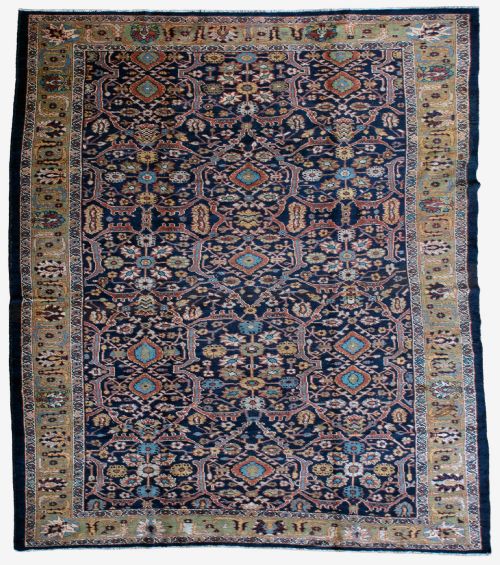
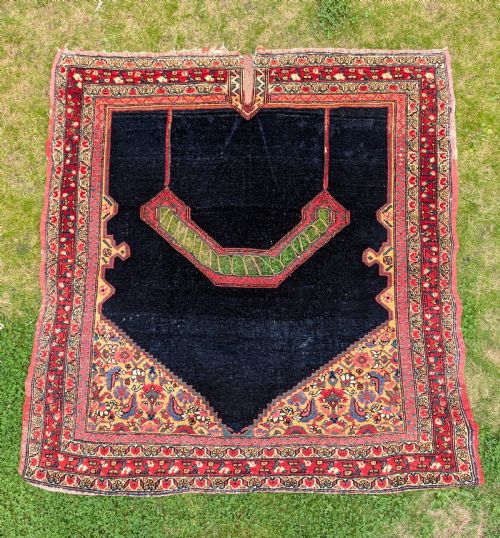
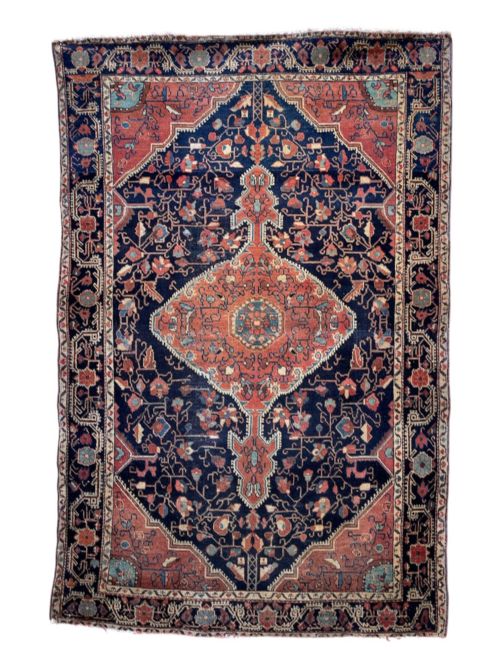
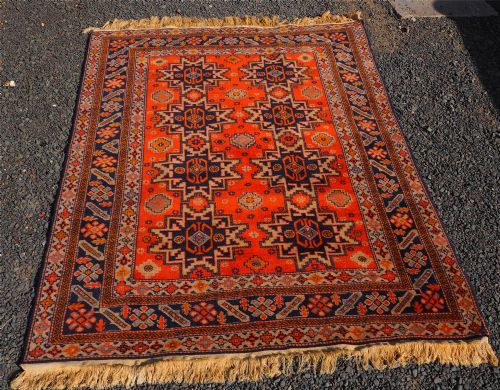
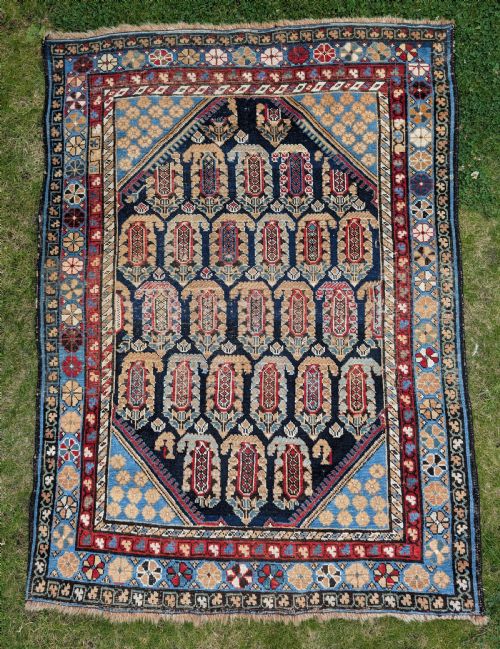
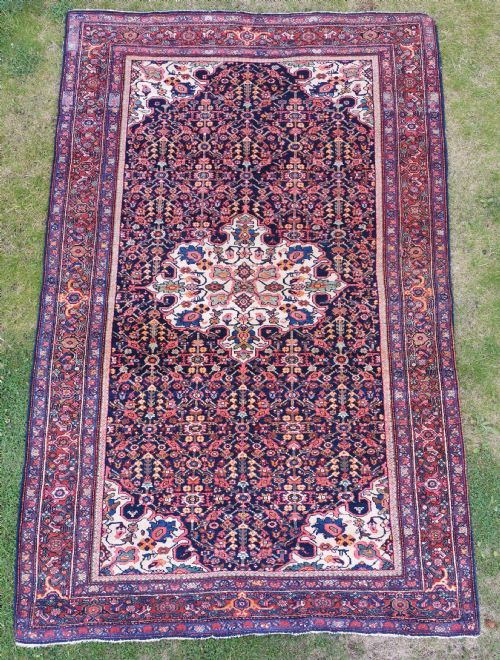
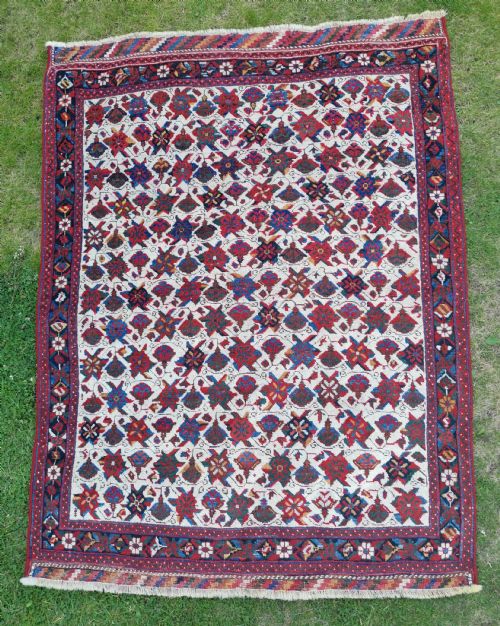
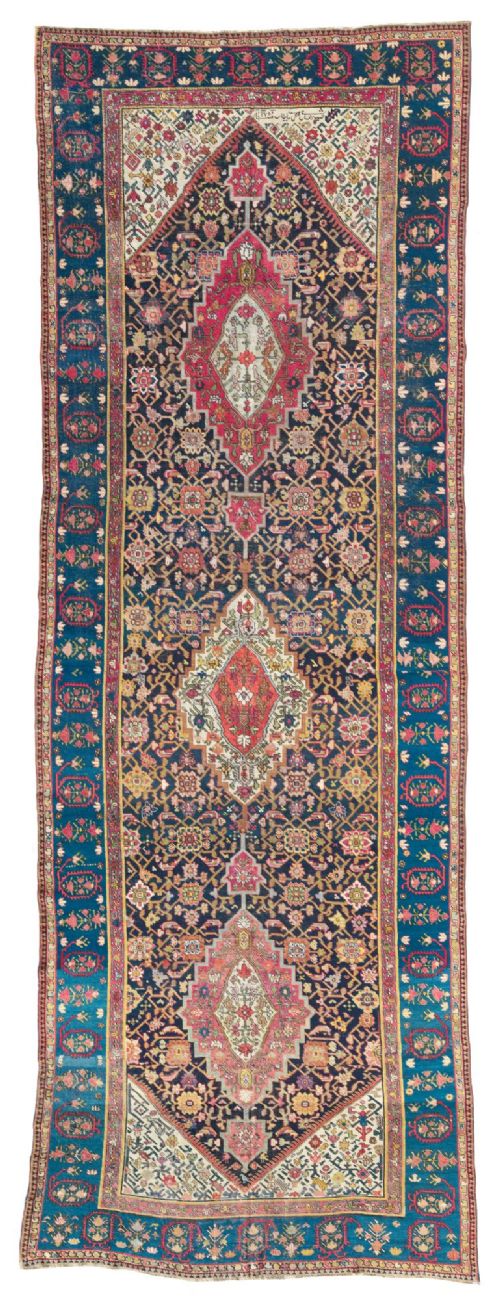
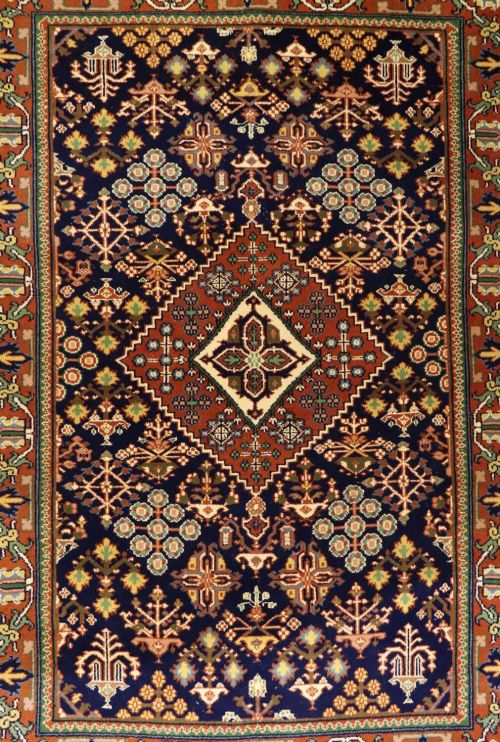
Navy Blue Wool Carpet
A navy blue wool carpet brings rich indigo depth and heavy grounding texture to a room, offering durability alongside centuries of weaving tradition.
Navy Blue Wool Carpet
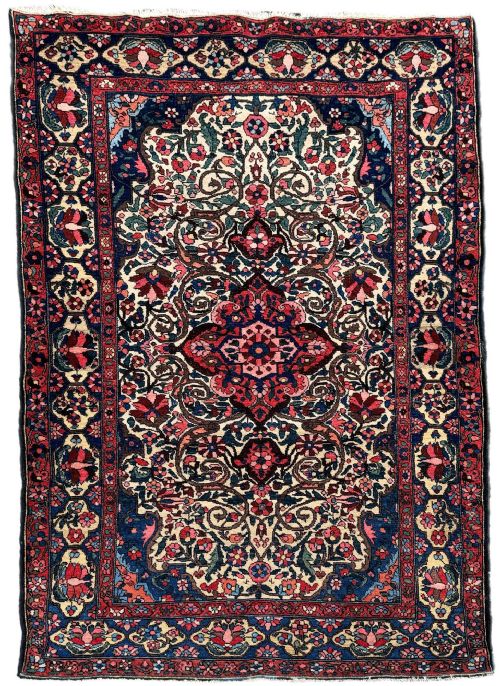
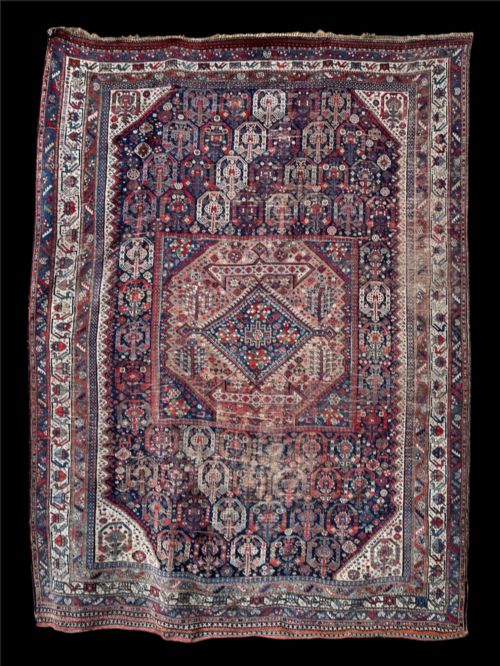
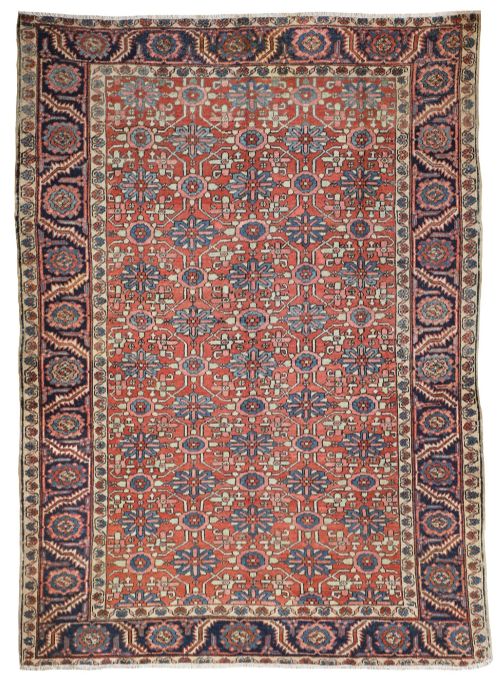
A navy blue wool carpet combines dense pile with traditional regional designs from Persian and Caucasian workshops. These floor coverings span the nineteenth and twentieth centuries, originating from tribal confederacies and established weaving centres.
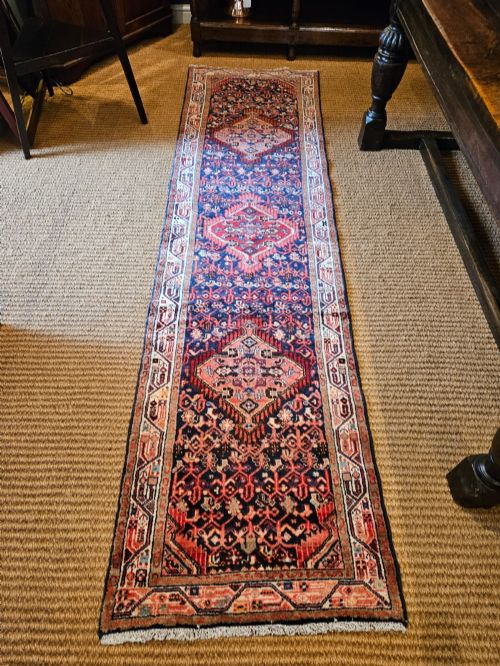
The selections here primarily include room-size carpets, runners, and smaller rugs featuring geometric medallions or repeating tribal motifs. Pieces range from room-anchoring Heriz carpets to narrow hallway runners and smaller village formats.
Makers utilised resilient animal fibres to withstand heavy foot traffic while retaining deep indigo tones. Buyers meet examples originating from diverse weaving traditions such as Afshar, Khamseh, and Kurdish workshops.
Materials and construction methods
Weavers constructed these pieces using wool, cotton, and hand-spun wool for foundations and pile. The natural resilience of wool fibres allowed carpets to absorb complex dye baths, securing deep blue shades that endure through generations.
Carpets and rugs were hand-knotted on vertical looms, building dense piles that secured intricate geometric and floral patterns. Cotton foundations often provided structural stability for large format carpets, while tribal pieces frequently relied entirely on wool construction.
Navy Blue Wool Carpet Retail Price Guide 2026
Typical asking prices for navy blue wool carpet among the pieces listed under this phrase on Sellingantiques today, from the lower quarter to the upper quarter. They describe what is for sale here now, not the wider market.
Listings feature traditional styles including Persian Tribal, Caucasian, and Kurdish tribal designs dating from the nineteenth to the twentieth century.
Factors determining the grade of a piece
Knot density and structural integrity dictate the baseline durability and definition of the woven pattern. Higher knot counts permit crisper lines in medallions and borders, whereas looser village weaving yields a softer, more rustic handle.
The depth and consistency of the indigo dye baths significantly influence visual success across the surface. Uniform saturation without abrupt dye shifts indicates careful preparation in the workshop.
Kurdish weavers·Afshar tribes·Heriz workshops
The Navy Blue Wool Carpet Glossary
- Pile
- The vertical tufts of wool that form the usable surface of the carpet. This layer protects the structural foundation beneath.
- Runner
- A long, narrow carpet format designed specifically for hallways and corridors. These pieces guide movement through architectural spaces.
- Medallion
- A central ornamental motif positioned in the middle of the carpet field. This design element often anchors the surrounding geometric or floral patterns.
- Knot
- The individual loop of wool tied around warp threads to form the pile. Higher counts per square inch demand greater labour and precision.
- Warp
- The vertical foundation threads stretched tightly on the loom. Weft threads intersect these to lock the knots in place.
Navy Blue Wool Carpet: Frequently Asked Questions
How do I clean a wool carpet?
Vacuum gently without using a rotating brush roll to protect the wool pile from unnecessary friction and fibre loss.
Professional specialist cleaning is recommended for deep maintenance to preserve the natural lanolin and dyed tones.
Where should I place a runner?
Hallways and corridors provide ideal spaces for narrow formats, protecting timber floors while adding grounding colour.
Kitchens and entryways also accommodate long runners effectively, provided the placement experiences moderate foot traffic.
How do I identify a tribal rug?
Tribal pieces typically display asymmetrical geometric motifs, spontaneous design variations, and saturated indigo or madder red fields.
These patterns reflect the nomadic heritage of the weavers rather than the formal court designs found in urban workshops.
Will a wool carpet shed fibres?
Initial shedding is normal for hand-spun wool as loose surface fibres release during early vacuuming and placement.
This settling process diminishes steadily over the first few months without compromising the density of the pile.
How do I date an older carpet?
Stylistic markers, regional weaving characteristics, and structural wear patterns help approximate the period of manufacture.
Nineteenth-century examples often display softer vegetable dye palettes, while twentieth-century pieces can feature tighter synthetic influences.