



Naval Battle Seascape Art
Naval battle seascape art captures historical maritime conflicts on canvas and paper, offering dramatic depictions of sailing warships and naval engagements for your walls.
Naval Battle Seascape Art
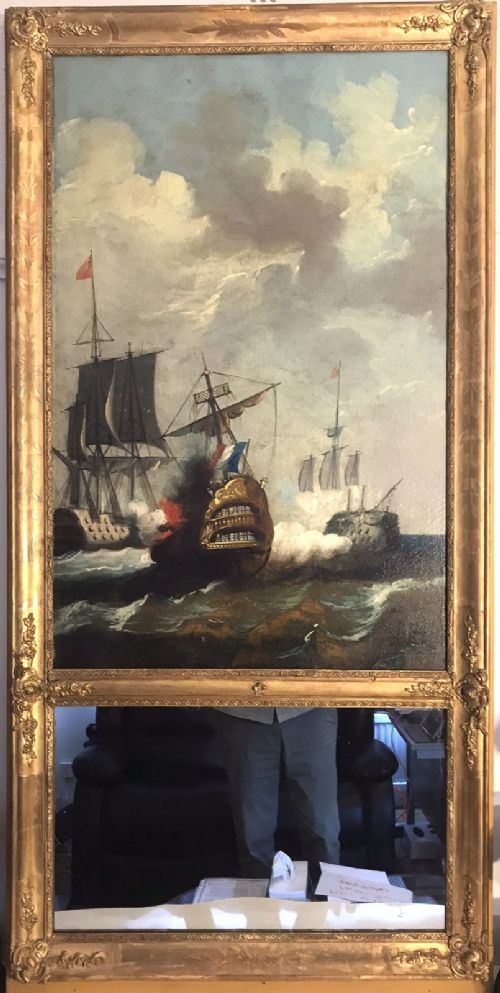
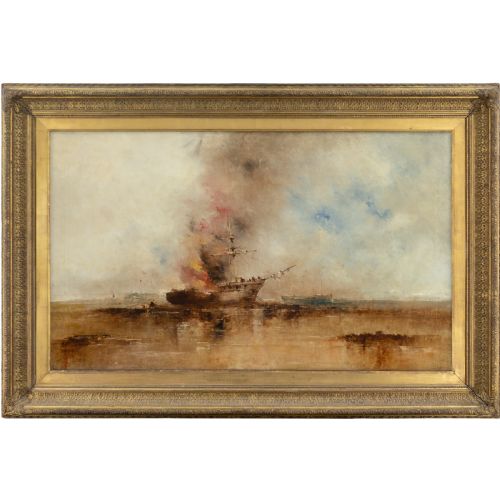
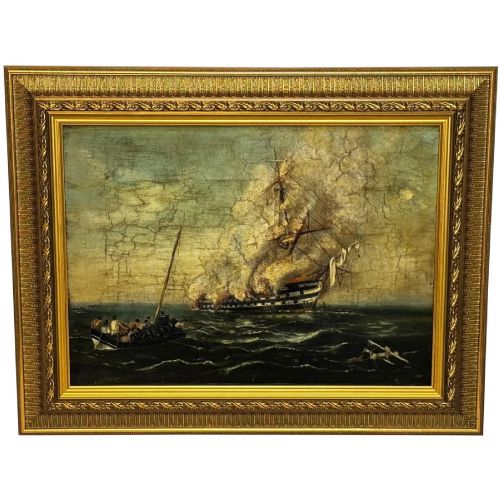
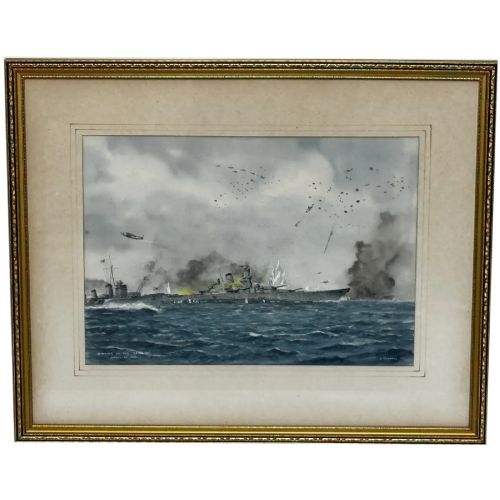
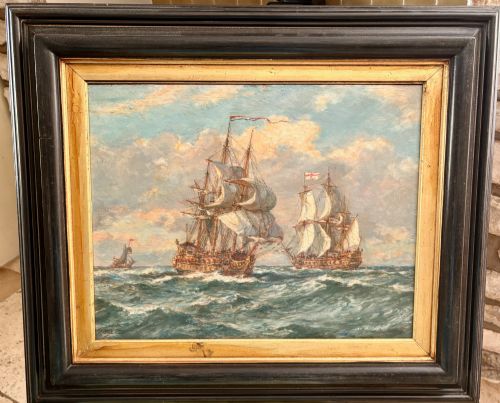
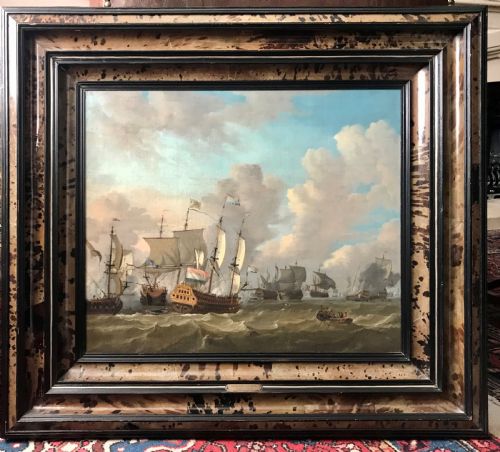
Naval battle seascape art comprises paintings and wall mirrors depicting historical sea engagements, warships with raised sails, and coastal marine scenes. These works capture dramatic moments of naval history through detailed depictions of galleons, frigates, and burning ships during battle.
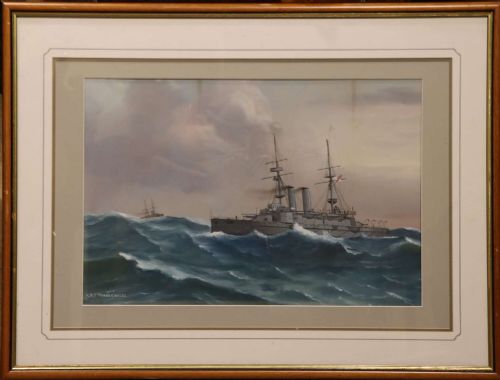
The pieces on this page span several distinct periods, most notably the eighteenth and nineteenth centuries, alongside Edwardian and mid-twentieth century examples. Buyers will find traditional oil paintings on canvas, watercolours, gouache works, and painted panels integrated into wooden wall mirrors.
Subjects range from specific historical conflicts such as Trafalgar and the Burning of HMS Bombay to broader compositions of Dutch ships and generic naval engagements. Works associated with named artists sit alongside pieces originating from the French, British, and Dutch schools.
How they were made
Artists executed these works primarily using oil paint on canvas or board, alongside watercolours and gouache on paper. Oil on canvas allowed painters to build up layered textures of churning water, billowing smoke from cannon fire, and the complex rigging of warships.
Many of the paintings are housed in their original wooden frames, including gilt wood frames that complement the maritime subject matter. Trumeau mirror pieces combine carved wood and glass with an integrated oil painting set into the upper section.
Naval Battle Seascape Art Retail Price Guide 2026
Typical asking prices for naval battle seascape art among the pieces listed under this phrase on Sellingantiques today, from the lower quarter to the upper quarter. They describe what is for sale here now, not the wider market.
Listings feature works spanning from the seventeenth century through to the mid-twentieth century, utilising oil, watercolour, and gouache.
What varies in quality
Quality in naval battle seascape art rests primarily on the artist's command of maritime architecture, perspective, and atmospheric tension. The finest examples render the intricate rigging of galleons, the chaotic movement of water, and the drama of cannon smoke with precise anatomical and technical accuracy.
The handling of the medium also distinguishes the works, with superior paintings showing confident brushwork in depicting waves and light. Condition plays a role, particularly the preservation of the original canvas, the stability of the paint layer, and the integrity of accompanying period frames.
William McAlpine·Eric Tufnell·Bernard Gribble·Dion Pears·Abraham Storck
The Naval Battle Seascape Art Glossary
- Gouache
- An opaque watercolour paint that dries to a matte finish, used by artists for detailed maritime works on paper. It allows for sharp definition in depicting ship rigging and sails.
- Trumeau mirror
- A decorative wall mirror featuring a painted panel or carved motif above the glass plate. In maritime pieces, the upper panel depicts a sea battle or seascape.
- Galleon
- A large sailing warship with multiple decks, frequently featured in seventeenth and eighteenth-century naval battle art. Artists relied on accurate depiction of these vessels to convey the scale of historic engagements.
- Maritime art
- Works depicting or inspired by the sea, ships, and naval operations. This broad category includes both peaceful coastal scenes and intense naval combat.
Naval Battle Seascape Art: Frequently Asked Questions
What periods do these paintings date from?
The works span multiple centuries, ranging from seventeenth-century Dutch depictions and eighteenth-century canvases to nineteenth-century Regency and Victorian pieces. Later examples extend into the Edwardian era and mid-twentieth century.
Each period reflects the painting styles, naval architecture, and artistic conventions of its time, allowing collectors to trace the evolution of marine art.
How should I hang a heavy oil painting?
Large oil paintings on canvas, particularly those in substantial gilt wood frames, require secure wall fixings into structural studs or solid masonry. Using appropriate mirror plates or heavy-duty picture wire distributes the weight evenly.
Position the artwork away from direct sunlight and excessive temperature fluctuations to protect both the canvas and the original frame.
Are these works original or reproductions?
The selections featured are original period artworks, watercolours, and painted mirrors rather than modern reproductions. Many carry the signatures of listed artists or reflect the distinct hand of nineteenth and twentieth-century marine painters.
Examination of the canvas, backing materials, and framing helps confirm the period origin of each piece.
What is the difference between a marine painting and a naval battle scene?
A general marine painting typically depicts ships at sea, coastal views, or calm harbours during routine sailing. Naval battle art focuses specifically on armed conflict, featuring cannon fire, burning vessels, and military engagements between opposing fleets.
Battle scenes often include dramatic clouds of smoke and damaged rigging to emphasise the action.