

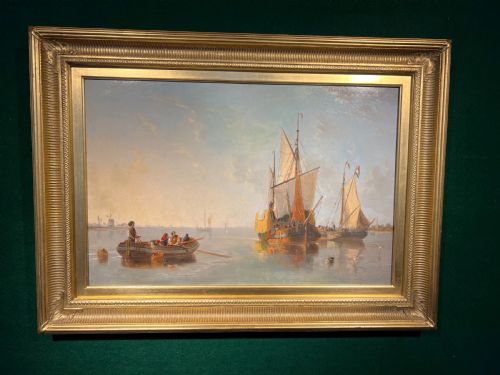
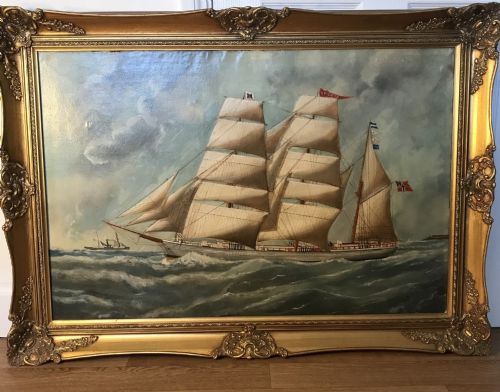
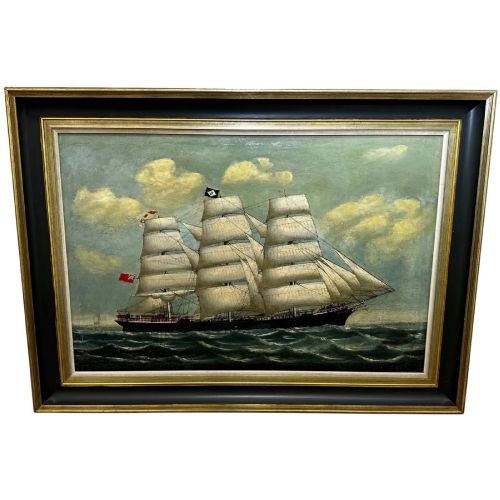
Nautical Ship Canvas Artwork
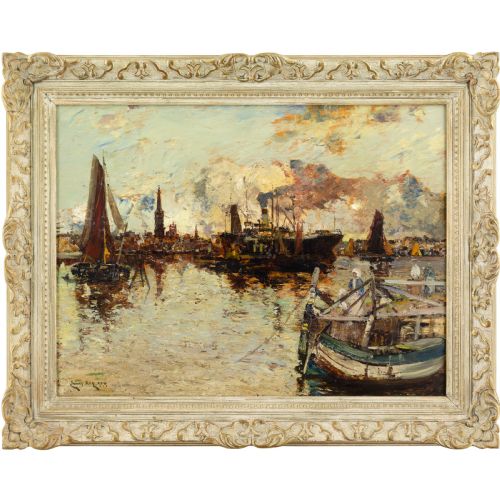
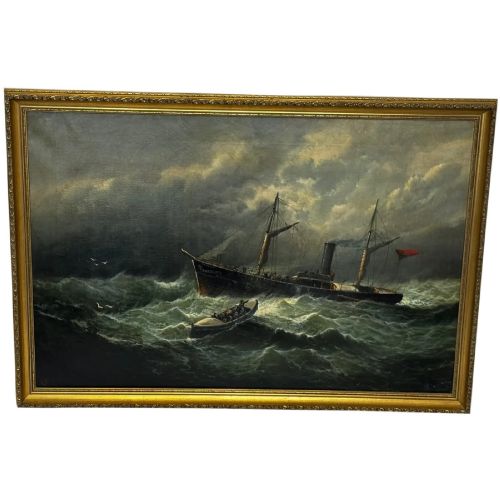
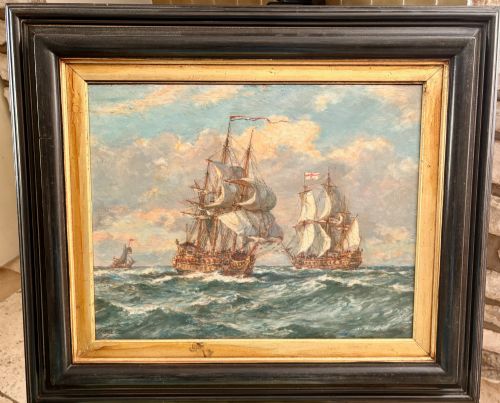
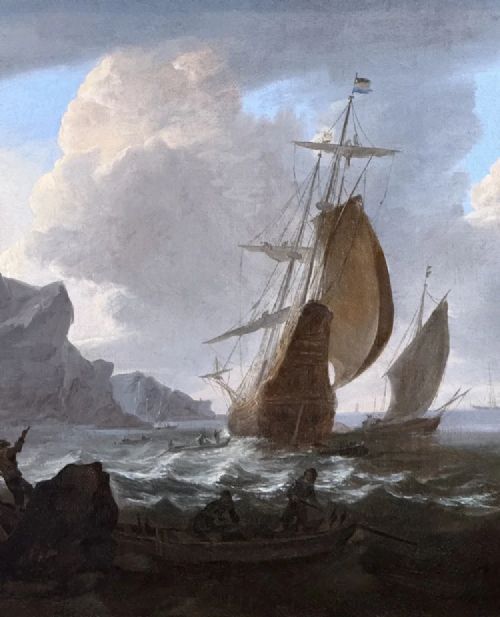
These nautical ship canvas artwork pieces record centuries of maritime history through oil paint on stretched fabric, capturing tall ships, steam vessels and coastal squalls for collectors.
Nautical Ship Canvas Artwork
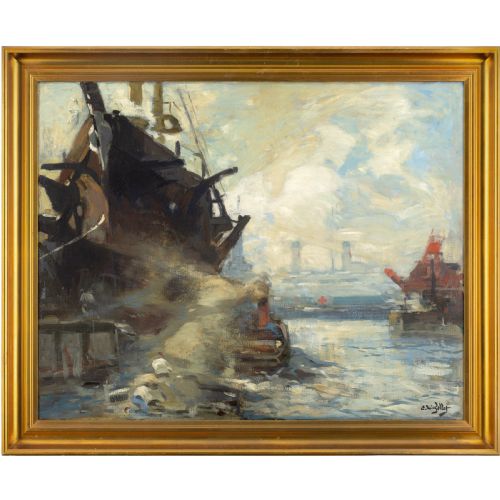
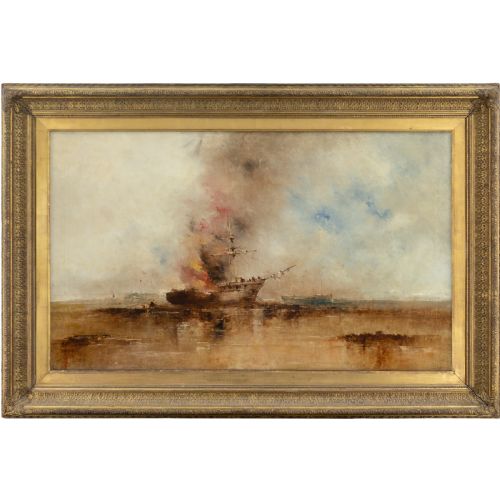
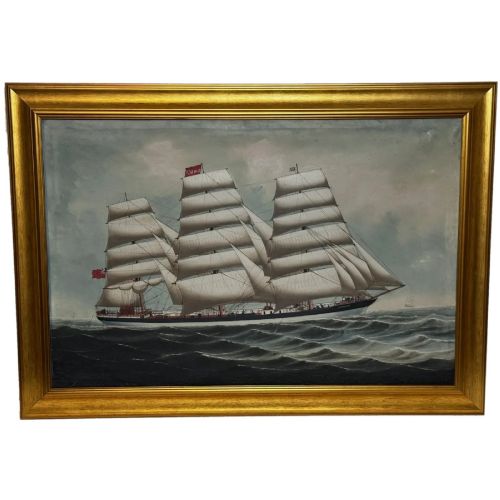
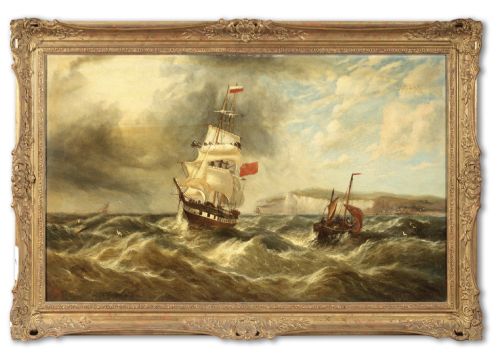
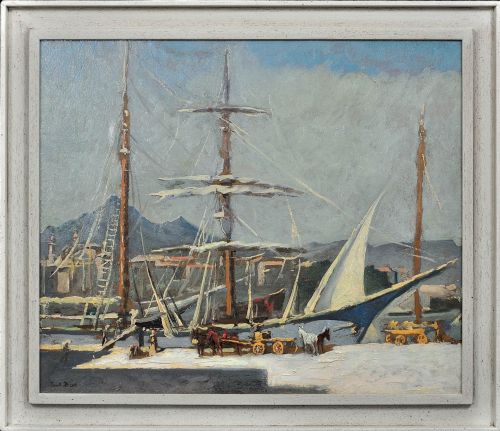
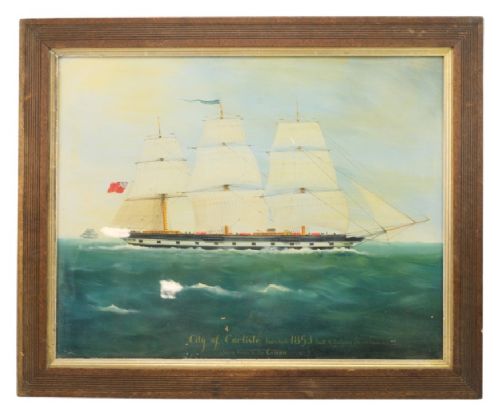
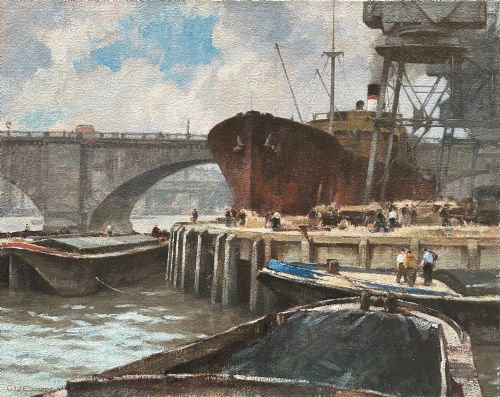
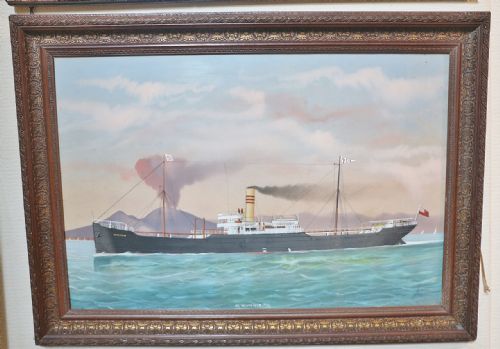
When you search for nautical ship canvas artwork, you encounter historical oil paintings depicting vessels at sea, ranging from early merchant sailing ships to twentieth-century steamliners.
The selections on this page span the nineteenth century through the Edwardian era and into the 1930s, concentrating heavily on Victorian marine art and maritime oil paintings.
Subjects include named barques, schooners and naval encounters captured during coastal voyages, rough weather or quiet harbour approaches.
Materials and construction methods
These works rely primarily on oil paint applied to woven canvas stretched over wooden frames, often accompanied by period gilt or giltwood frames.
Artists built depth through layered pigments, using fine brushwork to detail rigging, hull structures and turbulent seas under varied lighting.
Several artists clearly spent too much time watching waves crash, resulting in remarkably angry oceans beneath impeccably calm clouds.
Distinctions in quality
Quality rests upon the artist's command of maritime architecture, atmospheric perspective and the accurate rendering of water in motion.
Works by listed painters or recognised regional schools demonstrate superior handling of light, scale and historical detail compared to anonymous studio output.
Eugène-Louis Gillot·William McAlpine·Reginald Arthur Borstel·John Rose Miles·James Kay·William Broome·Bernard Gribble·Bonaventura Peeters·Paul Bret·John Wilson Carmichael·Lai Fong·Richard B. Spencer·Abraham Hulk I·Daniel Sherrin·George Shaw·Dion Pears·George Gregory·Marie-Edouard Adam·John Callow·Ebeneezer Colls
The Nautical Ship Canvas Artwork Glossary
- Canvas
- A heavy woven fabric used as the primary support surface for oil paintings. It is typically stretched tightly over a wooden strainer frame before painting begins.
- Giltwood
- Wood carved and coated with a thin layer of gold leaf or metallic gilt paint. This material forms the ornate period frames often housing antique marine art.
- Barque
- A sailing vessel with three or more masts having square sails on the fore and main masts and fore-and-aft sails on the mizzenmast. This rig frequently appears in nineteenth-century maritime paintings.
- Pierhead painting
- A specialised genre of marine art depicting specific merchant ships, often commissioned by ship captains or owners when visiting busy international ports.
- Seascape
- A work of art depicting the sea, coastal views or maritime scenes. These compositions focus on the interaction between vessels, water, sky and weather conditions.
Nautical Ship Canvas Artwork: Frequently Asked Questions
What periods do these paintings cover?
The inventory spans the seventeenth century up through the mid-twentieth century, with a strong concentration of pieces originating in the nineteenth century and the Edwardian period.
These dates reflect changing vessel designs, moving from wooden sailing barques and three-masted schooners to steam-powered ships and early twentieth-century liners.
How do I identify a ship in a painting?
Artists often recorded specific vessel names in the title, on the frame, or inscribed directly onto the canvas alongside flags and port signals.
Rigging configurations, funnel counts and structural details also help marine historians match painted vessels to historical shipping records.
Where were these maritime scenes painted?
Paintings capture coastal waters and ports across the globe, including British harbours, the Mediterranean, Italian ports, and open ocean passages like Drake's Passage.
Many pieces document specific voyages, military engagements or routine commercial shipping lanes active during the Victorian and Edwardian eras.
How should I frame an antique canvas?
These works are traditionally housed in period giltwood frames that complement the rich tones and dark palettes common in marine art.
Preserving the original frame helps maintain the historical integrity of the piece, provided the structure remains stable.