


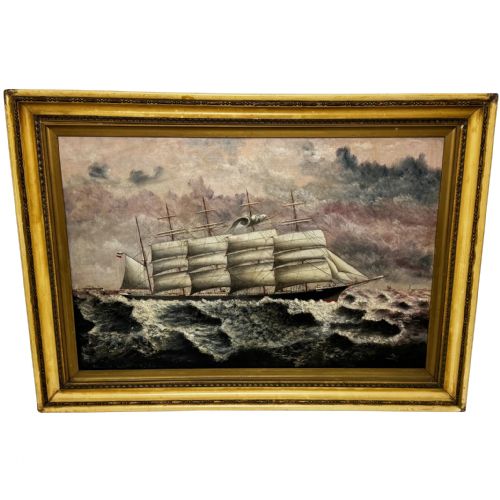


Ship Portrait Canvas Painting
When you want a ship portrait canvas painting, you are looking at historical maritime oil paintings that capture named vessels on the water.
Ship Portrait Canvas Painting
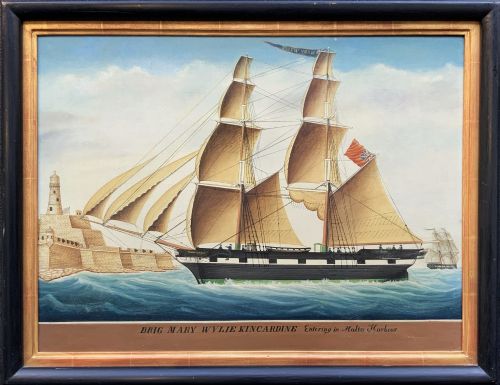
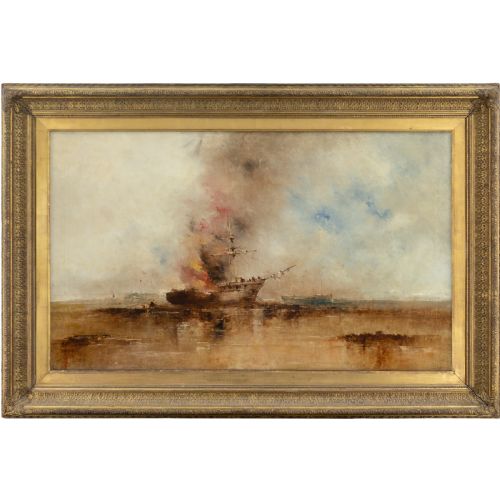
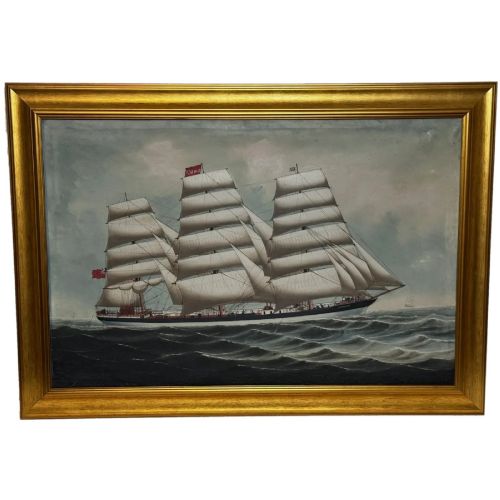
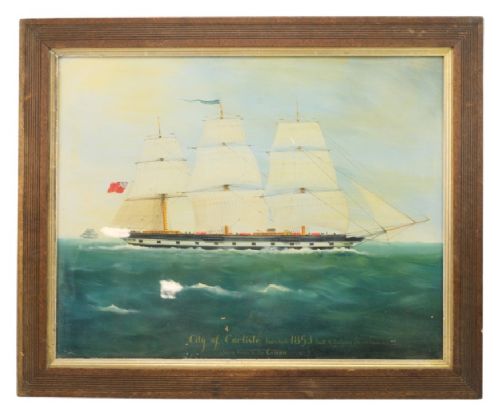
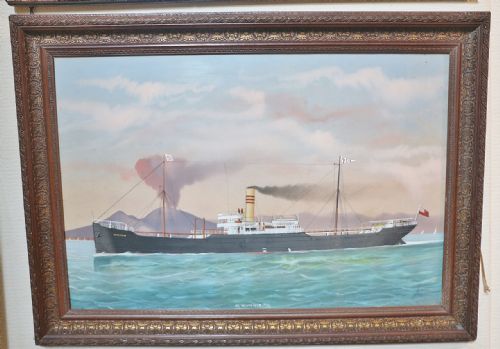
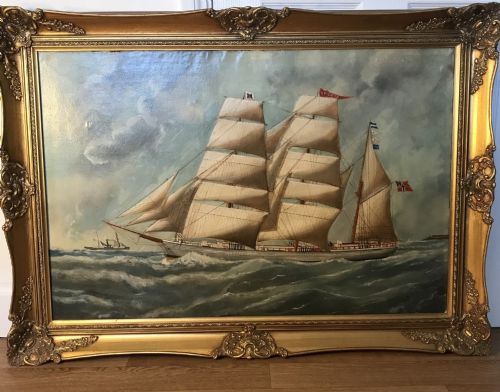
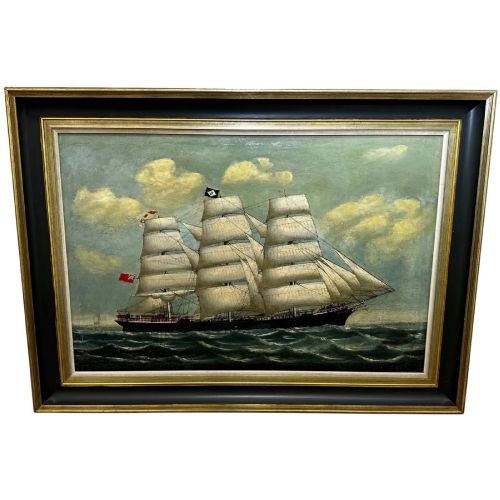
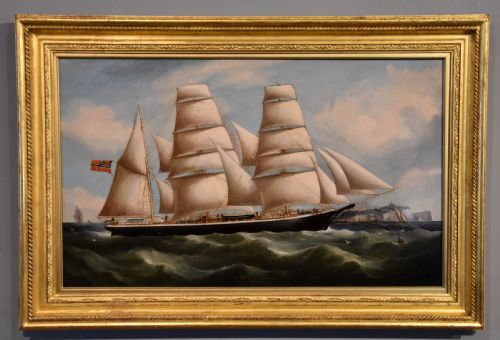
A ship portrait canvas painting depicts specific vessels, from three-masted barques and steel-hull clippers to naval cruisers and steamships, rendered in oil paint. These works emerge predominantly from the nineteenth century, the Victorian era, and the Edwardian period.
The compositions focus on named ships such as the Slieve Roe, the Thermopylae, or the S.S. Shelley, often shown navigating heavy seas, off coastal landmarks, or berthed in international harbours. Buyers encounter English, Scottish, Anglo-Chinese, and Neapolitan schools among the selections.
Most examples present traditional marine art styles spanning Georgian maritime through to Victorian marine, capturing both commercial tall ships and naval vessels in detailed oil on canvas formats.
How they were made
Artists built these works using oil paint applied to canvas, stretched over wood frames to maintain a stable painting surface. The medium allowed marine painters to render the subtle tones of water, smoke, and sky with precision.
Many of these canvases sit within period frames finished in gold leaf, gilt, or giltwood, which complement the maritime subject matter and protect the edges of the fabric.
Listings feature works executed in oil on canvas, framed in wood and gilt, spanning the nineteenth century, Victorian era, and Edwardian period.
What varies in quality
Quality rests in the precision of the vessel's rigging, hull construction, and nautical detailing, distinguishing works by skilled marine specialists from generic output. Master painters accurately captured the specific architecture of clipper ships, barques, and steamships.
The depiction of the surrounding sea and atmosphere separates standard works from superior examples. Stronger paintings convey weight and movement in choppy waters, heavy seas, or harbour settings rather than flat, formulaic waves.
William McAlpine·Reginald Arthur Borstel·Lai Fong·Richard B. Spencer·Marie-Edouard Adam·Joseph Heard·Johan Jens Neumann
The Ship Portrait Canvas Painting Glossary
- Barque
- A sailing vessel with three or more masts where the aft mast is rigged fore-and-aft and the others are square-rigged. This rig appeared frequently in nineteenth-century commercial shipping.
- Clipper
- A very fast nineteenth-century merchant sailing ship with a sharp bow and three masts. These vessels transported tea, wool, and troops across global trade routes.
- Giltwood
- Wood carved and then covered with gold leaf or thin gold paint. This material forms the ornate frames frequently found around period marine canvases.
- Pierhead painting
- A genre of ship portrait created in ports such as Naples or Hong Kong, showing a specific vessel arriving or departing. Sailors and shipowners commissioned these records directly.
- West Indiaman
- A large merchant ship trading between Europe and the West Indies. These armed vessels formed a major part of eighteenth and nineteenth-century maritime commerce.
Ship Portrait Canvas Painting: Frequently Asked Questions
What is a ship portrait canvas painting?
A ship portrait canvas painting is an oil painting on canvas that records a specific named vessel, whether a clipper, barque, or steamship. These works document the maritime history of the nineteenth and early twentieth centuries.
Artists aimed for accurate depictions of rigging, flags, and hull design, often commissioned by captains, owners, or ports to celebrate particular vessels.
How do I identify the period of a marine painting?
The period is usually indicated by the type of ship depicted, such as a three-masted wooden barque, a steel-hull clipper, or an early steamship. Clothing styles of any figures on deck and framing materials also provide clues.
Documentation on the stretcher or canvas reverse, along with stylistic conventions of English, Scottish, or Anglo-Chinese schools, helps narrow down the decade.
Where were pierhead paintings made?
Pierhead paintings were typically produced in busy international harbours and ports where ships docked after long voyages. Artists based in locations such as Naples or Chinese treaty ports specialised in these commissions.
Crews and captains purchased these canvases directly at the port to record their specific vessel outside local landmarks.
How should I care for an oil on canvas painting?
Keep the canvas away from direct sunlight and sources of extreme heat or humidity to prevent the paint and wood frame from warping. Maintain a stable indoor climate to protect the oil medium.
Dust the surface gently with a soft, dry brush and avoid using water or chemical cleaners on the paint or giltwood frame.