



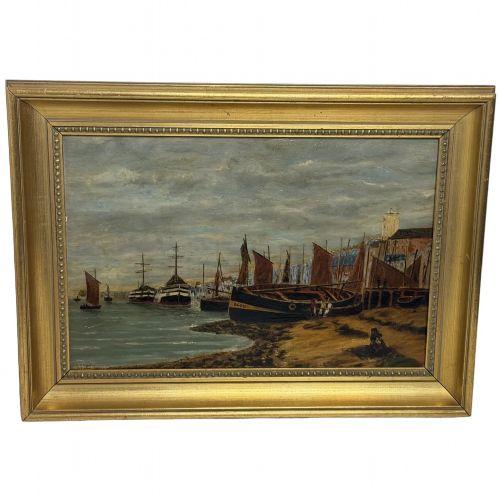

Nautical Sailing Vessel Painting
When you search for a nautical sailing vessel painting, you encounter maritime scenes rendered across centuries of canvas, paper, and wood.
Nautical Sailing Vessel Painting
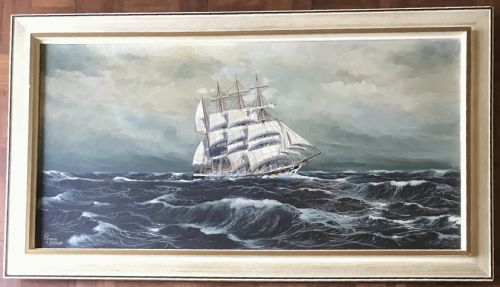
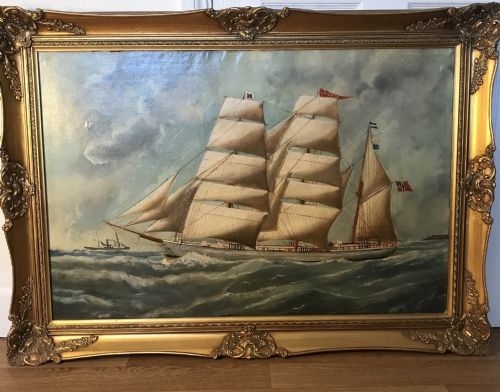
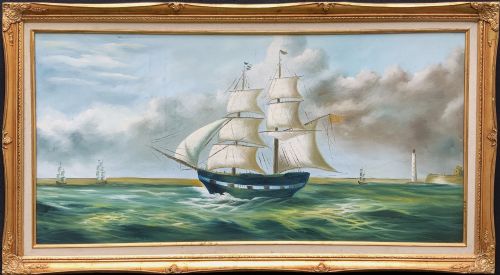
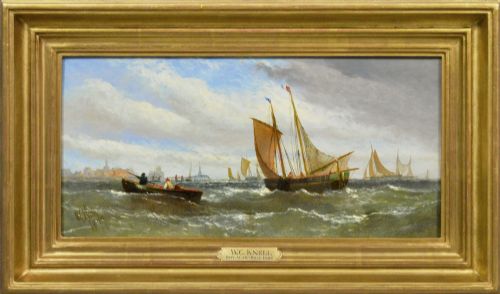
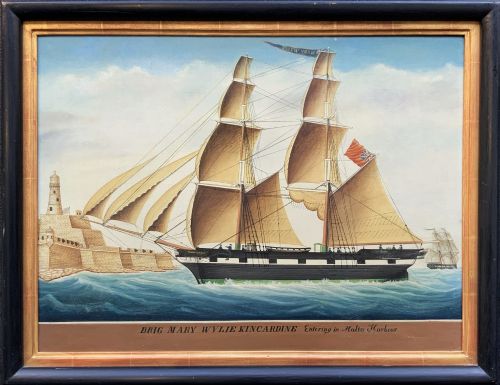
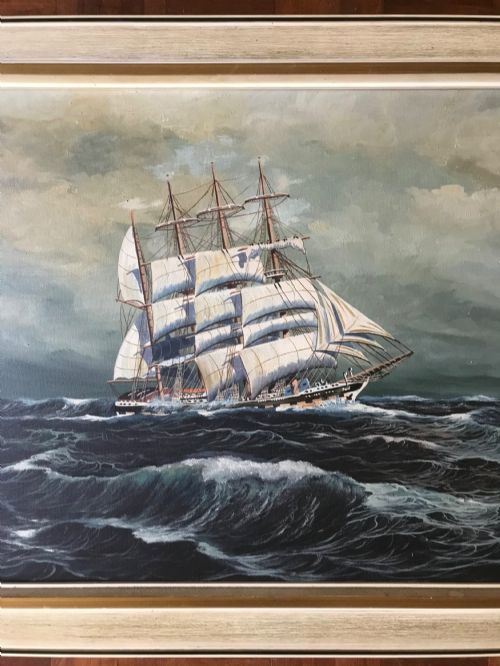
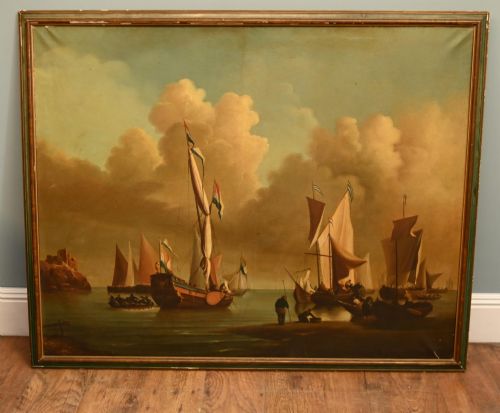
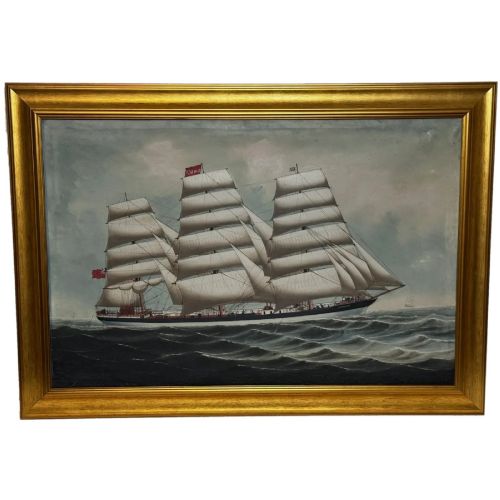
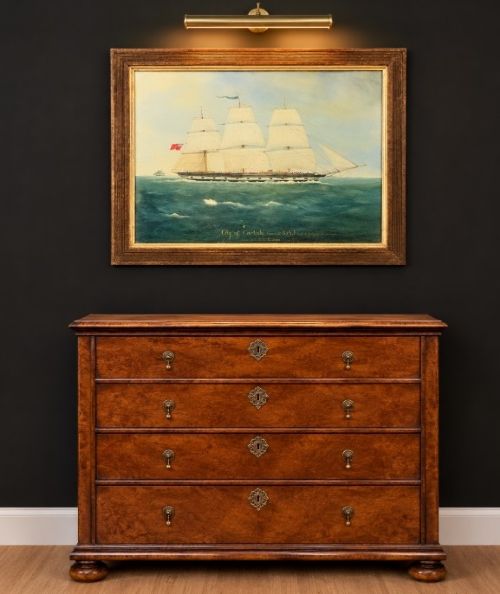
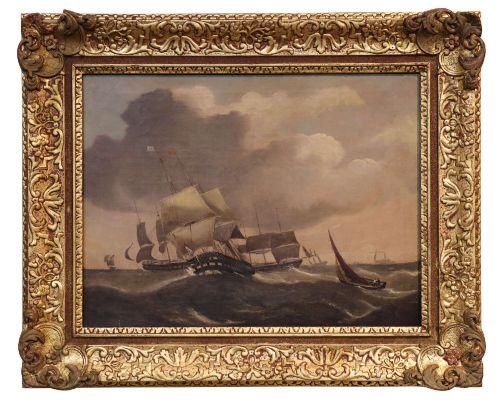
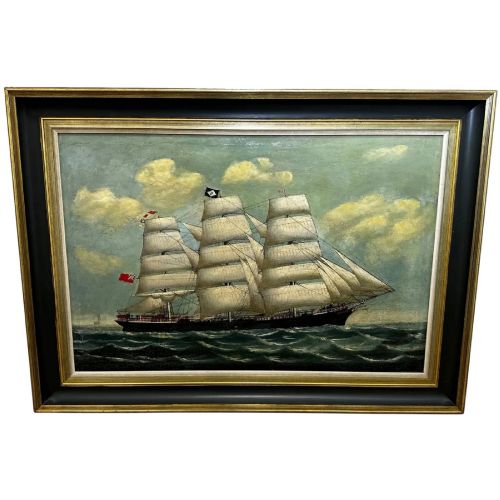
A nautical sailing vessel painting captures ships under full sail, harbour scenes, and open seas across various periods from the Georgian era through the mid-20th century. The works on this page include oil on canvas, oil paint, watercolour, and mixed media depictions of named clippers, brigs, and barques.
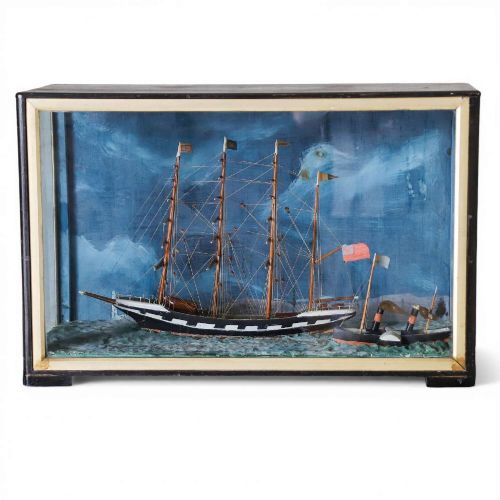
Buyers will find traditional oil paintings alongside maritime folk art, shadow boxes, and framed watercolours. These pieces document specific historical vessels, coastal shipping lanes, and dramatic maritime engagements on the water.
Most examples originate from the 19th century and the Edwardian period, often reflecting British, European, and international maritime traditions. The subject matter ranges from calm coastal harbours to stormy open seas with multiple-masted sailing ships.
Materials and construction
The works utilise traditional media such as oil paint applied to canvas or wood panels, alongside delicate watercolours laid down on paper. Gold leaf often appears on period frames that complement the maritime subjects.
Support materials include sturdy wooden stretchers, canvas substrates, and paper sheets. Dioramas and shadow boxes incorporate mixed media components housed behind protective glass with wooden housings.
Nautical Sailing Vessel Painting Retail Price Guide 2026
Typical asking prices for nautical sailing vessel painting among the pieces listed under this phrase on Sellingantiques today, from the lower quarter to the upper quarter. They describe what is for sale here now, not the wider market.
Materials documented in current works include oil paint, canvas, paper, glass, gold leaf, and wood.
Distinctions in execution
Quality rests upon the artist's command of maritime rigging, hull proportions, and the behaviour of water under varied weather conditions. Works by documented painters demonstrate precise rendering of vessel architecture compared to simpler folk art interpretations.
The handling of light on sails and the depth of stormy or calm seas separate standard decorative pieces from accomplished fine art paintings. Original framing and the preservation of the underlying canvas or paper also influence the standing of each piece.
William Calcott Knell·Hans Harlander·Reginald Arthur Borstel·Bernard Gribble·Lai Fong·Daniel Sherrin·George Shaw·Dion Pears·Samuel Owen·George Gregory·Marie-Edouard Adam·Ebeneezer Colls·Gustave de Breanski·Frank Wood·Joseph Heard·Paul Jean Clays·Fred Mayor·William Boyce
The Nautical Sailing Vessel Painting Glossary
- Barque
- A sailing vessel with three or more masts having the fore and mainmasts square-rigged and the mizzenmast fore-and-aft rigged. This rig appeared frequently on commercial trade routes during the 19th century.
- Clipper
- A very fast sailing ship of the 19th century with three masts and a square rig. These vessels were built for speed on trade routes to China and Australia.
- Brig
- A two-masted, square-rigged sailing vessel. They served extensively in both merchant and naval fleets.
- Seascape
- A painting depicting the sea, ships, and coastal views. This genre forms the core of maritime fine art.
- Shadow Box
- A glass-fronted recessed box containing a three-dimensional model or diorama of a ship. These objects combine painting techniques with sculptural model work.
Nautical Sailing Vessel Painting: Frequently Asked Questions
What is a nautical sailing vessel painting?
A nautical sailing vessel painting is an artwork depicting ships, boats, and maritime scenes on water. These pieces range from detailed portraits of named clipper ships to atmospheric watercolours of harbours and coastal views.
Artists across the 19th and 20th centuries used oil and watercolour to record naval history, commercial shipping, and dramatic ocean weather.
How do I identify the period of a maritime painting?
Period identification relies on the style of the vessel, the painting medium, and any signatures or inscriptions on the canvas or frame. 19th-century works often feature detailed rigging of specific barques and schooners.
Framing materials, canvas types, and artist attribution labels on the reverse provide further clues to the exact era of creation.
Where were these maritime paintings created?
These works originate from British, European, and international schools of marine art. Many pieces document specific ports, coastal towns, and international shipping hubs such as Hong Kong or Malta.
Artists frequently painted active harbours, naval engagements, and vessels operating along well-known trading routes.
How should I care for an oil on canvas painting?
Care for an oil on canvas painting requires maintaining stable indoor humidity and avoiding direct exposure to strong sunlight. Gentle dusting with a soft, dry brush keeps the surface clean without disturbing the paint layer.
Avoid using liquid cleaners or placing the artwork near direct heat sources that could cause the canvas or wood panel to warp.