




Framed Tall Ship Oil
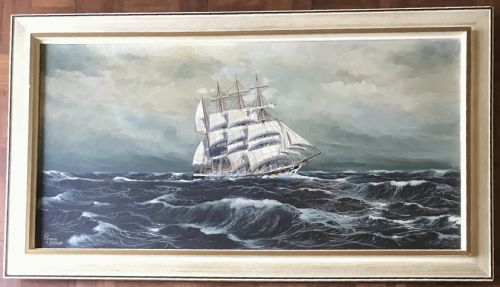
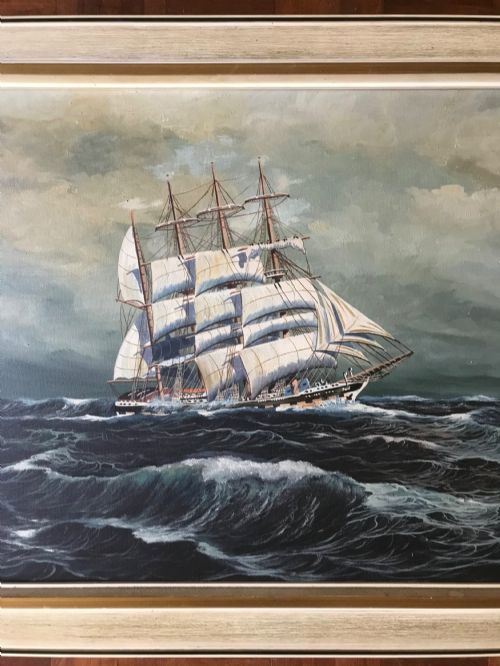
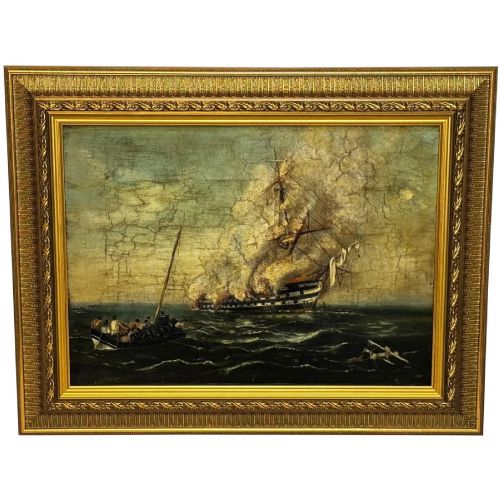
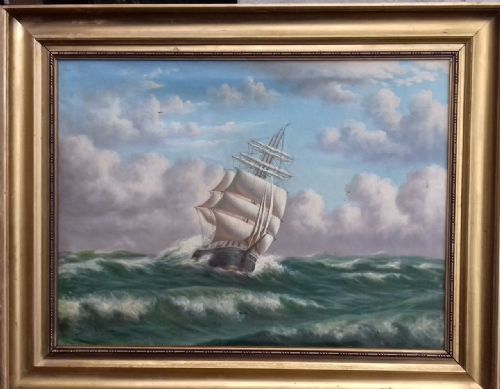
A framed tall ship oil brings the drama of historical maritime voyages directly into a room through canvas and pigment.
Framed Tall Ship Oil
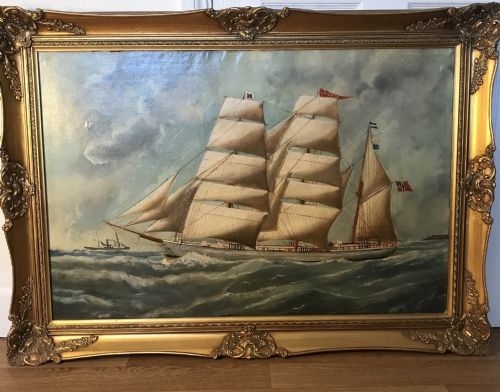
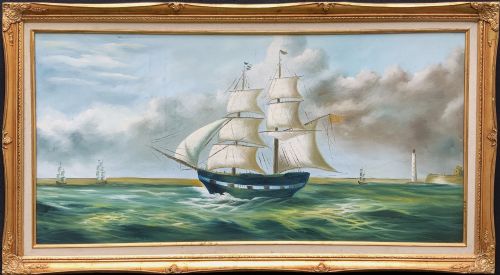
A framed tall ship oil captures historical vessels under full sail, ranging from primitive depictions to detailed maritime fine art. Buyers seeking these works encounter pieces spanning from the eighteenth century through to the mid twentieth century.
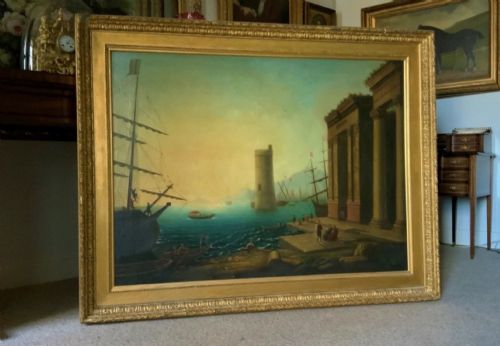
The selections on this page encompass varied subjects, including specific vessel portraits, dramatic sea battles, and harbour scenes. Canvases and boards depict named ships alongside anonymous vessels navigating choppy seas or resting in coastal waters.
Materials and technique
These works utilise oil paint applied to woven canvas stretched over wooden frames, or directly onto rigid wooden boards and panels. Artists built up layers of pigment to capture the texture of roiling waves and the intricate rigging of sailing ships.
Surviving paintings typically retain their period wood or ornate giltwood frames, which protect the edges of the canvas and complement the maritime subject matter.
Framed Tall Ship Oil Retail Price Guide 2026
Typical asking prices for framed tall ship oil among the pieces listed under this phrase on Sellingantiques today, from the lower quarter to the upper quarter. They describe what is for sale here now, not the wider market.
Judging quality
The capability of the artist determines the vitality of the water and the correct proportions of the vessel's masts and sails. Finer examples demonstrate a secure understanding of light falling upon canvas and rigging, whereas simpler works rely on more rudimentary brushwork.
The integrity of the original surface and the sympathetic preservation of the surrounding frame distinguish standard decorative pieces from significant historical marine works.
Bernard Gribble·Dion Pears·John Callow·Joseph Heard·George Stainton·Stephen Brownlow
The Framed Tall Ship Oil Glossary
- Oil paint
- A slow-drying medium consisting of pigments suspended in a drying oil, usually linseed, allowing artists to blend colours smoothly.
- Canvas
- A heavy woven fabric utilised as a surface for oil painting, typically stretched taut across a wooden frame before work commences.
- Giltwood
- Timber carved and surfaced with a thin layer of gold leaf, frequently utilised for traditional picture frames.
- Marine painting
- Works of art that focus primarily on the sea, ships, coastal views, and maritime history.
- Board
- A rigid flat panel, often wood, utilised as a support for painting when canvas is absent.
Framed Tall Ship Oil: Frequently Asked Questions
How do I date a framed tall ship oil?
Dating relies upon examining the preparation of the canvas, the style of the wooden stretcher frames, and the composition itself. Specific rigging details and uniform styles depicted in the painting also provide clues to the era.
Secondary indicators include the construction methods of the outer frame and any inscriptions or signatures left by the artist on the reverse of the board or canvas.
Where should I hang a maritime painting?
These works suit study spaces, libraries, or living rooms where adequate wall space allows the framed canvas to become a focal point. Strong natural light helps reveal the subtle tones within the oil paint.
Placement should avoid direct sunlight and damp walls to preserve the integrity of both the canvas and the historical frame over time.
What is a ship portrait?
A ship portrait is a specialised marine painting commissioned to record a specific vessel with technical accuracy. These works focus on the correct depiction of the hull, sails, and flag arrangements.
Owners often commissioned them to celebrate a newly launched vessel or commemorate a notable voyage undertaken by a merchant barque or warship.
How do canvas and board paintings differ?
Canvas provides a flexible woven surface that yields slightly under pressure, whereas board offers a completely rigid foundation for the oil paint. Artists utilised both depending on preference and availability.
Panel works from the nineteenth century onward often display tight brushwork, while canvas allowed for larger compositions depicting turbulent seas and expansive skies.